
Along the shorelines of Nova Scotia, land and water are constantly reshaping one another and small, thoughtful interventions can have an outsized impact. That’s where Green Shores for Homes comes in.
The Green Shores for Homes program helps homeowners protect and restore their shorelines using nature-based solutions. The program encourages the use of natural materials and designs to reduce wave action and mitigate risks such as erosion and flooding. Homeowners can enjoy benefits like increased accessibility for activities, improved habitat for wildlife, and enhanced security against erosion and flooding.
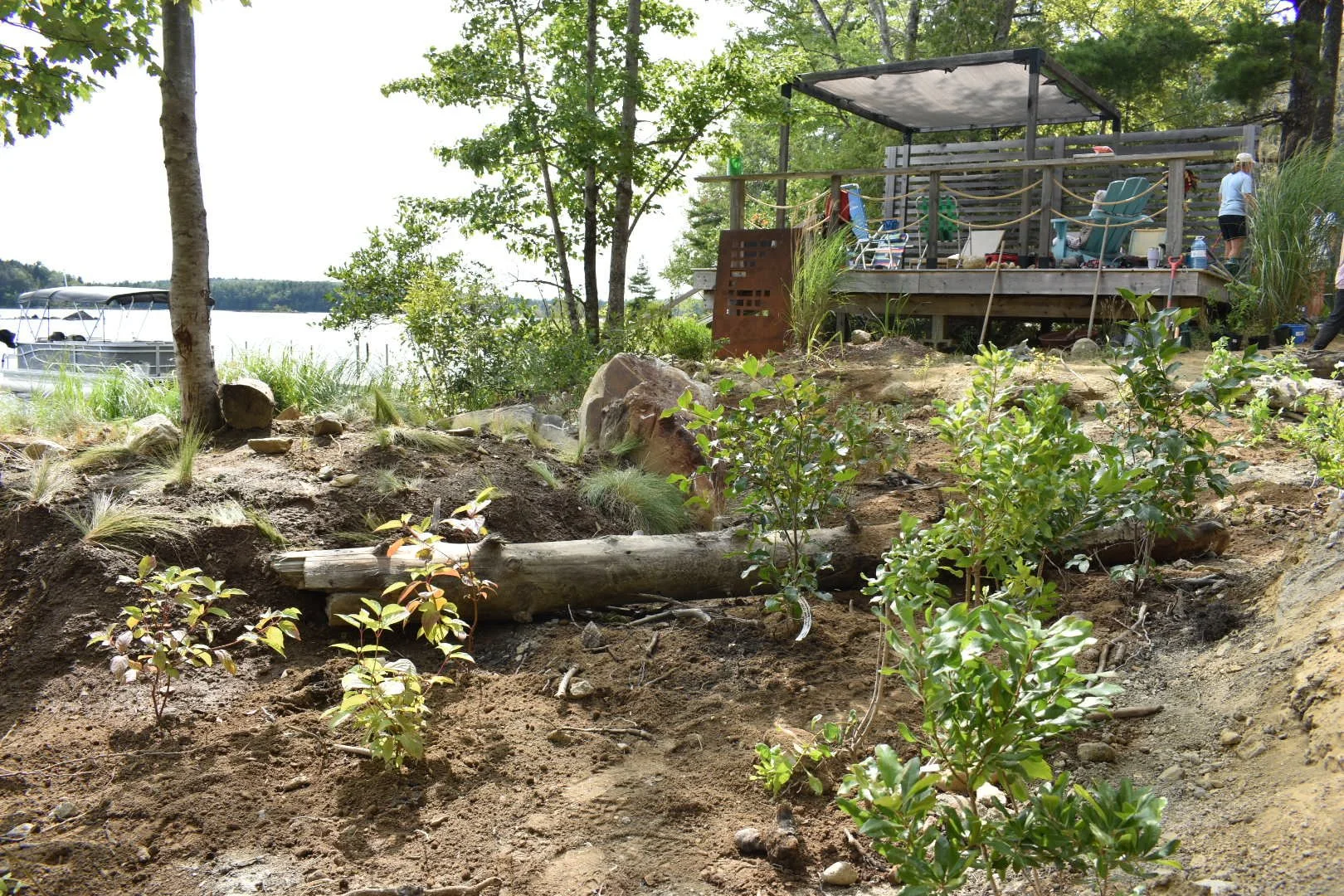
Restored lakeshore riparian zone on Molega Lake
In 2023, the Green Shores for Homes program evolved to better reflect the realities of the Atlantic coast. It introduced new guidance tailored to this region and a new credit designed to support stewardship of Species at Risk (SAR) habitat.
Welcome to Kespukwitk
Kespukwitk is a Mi’kmaq province, which translates to “end of flow,” as it’s an edge of Mi’kma’ki, the unceded and traditional territory of the L’nu. The Kespukwitk region is one of 11 priority places across Canada due to both its biodiversity and its cultural value.
This region is home to an extraordinary concentration of life. 94% of Nova Scotia’s terrestrial SAR can be found is the Kespukwitk/Southwest Nova Priority Place. Among these are Atlantic Coastal Plain Flora (ACPF), a group of at-risk shoreline plants that are highly specialized to wet areas, such as lakeshores, wetlands, and estuaries along the Atlantic coast of North America. The rarest of the at-risk ACPF in Canada grow almost exclusively within the Kespukwitk region.
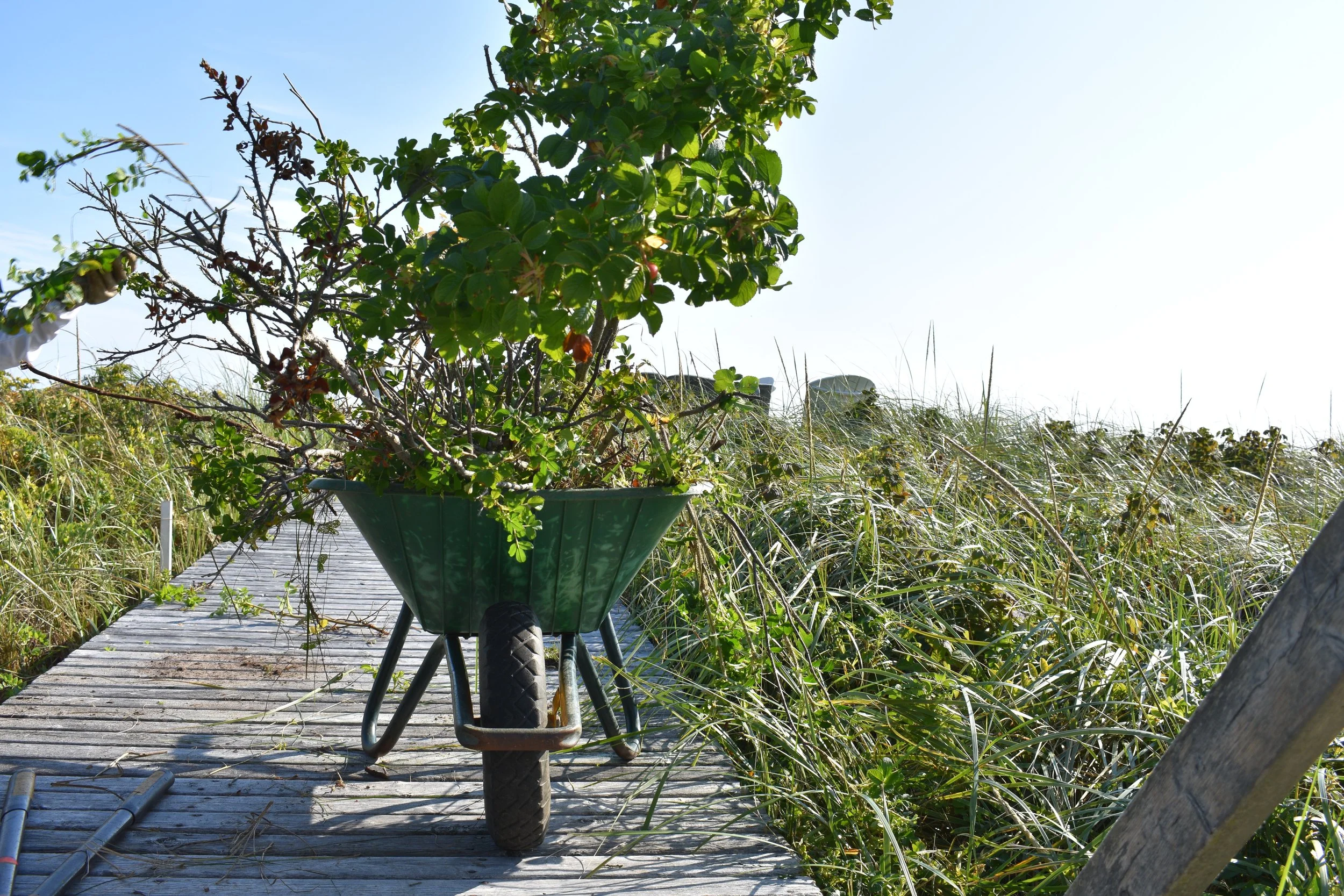
Invasive rose removal on Kingsburg Beach dunes
Eighteen shoreline SAR were identified as target species for which our projects could benefit:
*Species with an asterisk are ACPF.
To test the new Green Shores for Homes (GSH) Credit 2.1: Enhanced Critical, Sensitive, and Migratory Bird Habitat Stewardship, Environment and Climate Change Canada supported TCA to implement two projects within the Kespukwitk Priority Place. We wanted to explore how the credit could benefit SAR both on a coast and on a lakeshore, on a restoration site and on a relatively unaltered site.
Throughout 2024, we searched for home or cottage owners with properties on the shorelines mentioned above and who had at least one of our target 18 SAR onsite. We were fortunate enough to find two properties that met all the criteria we were looking for!
Molega Lake
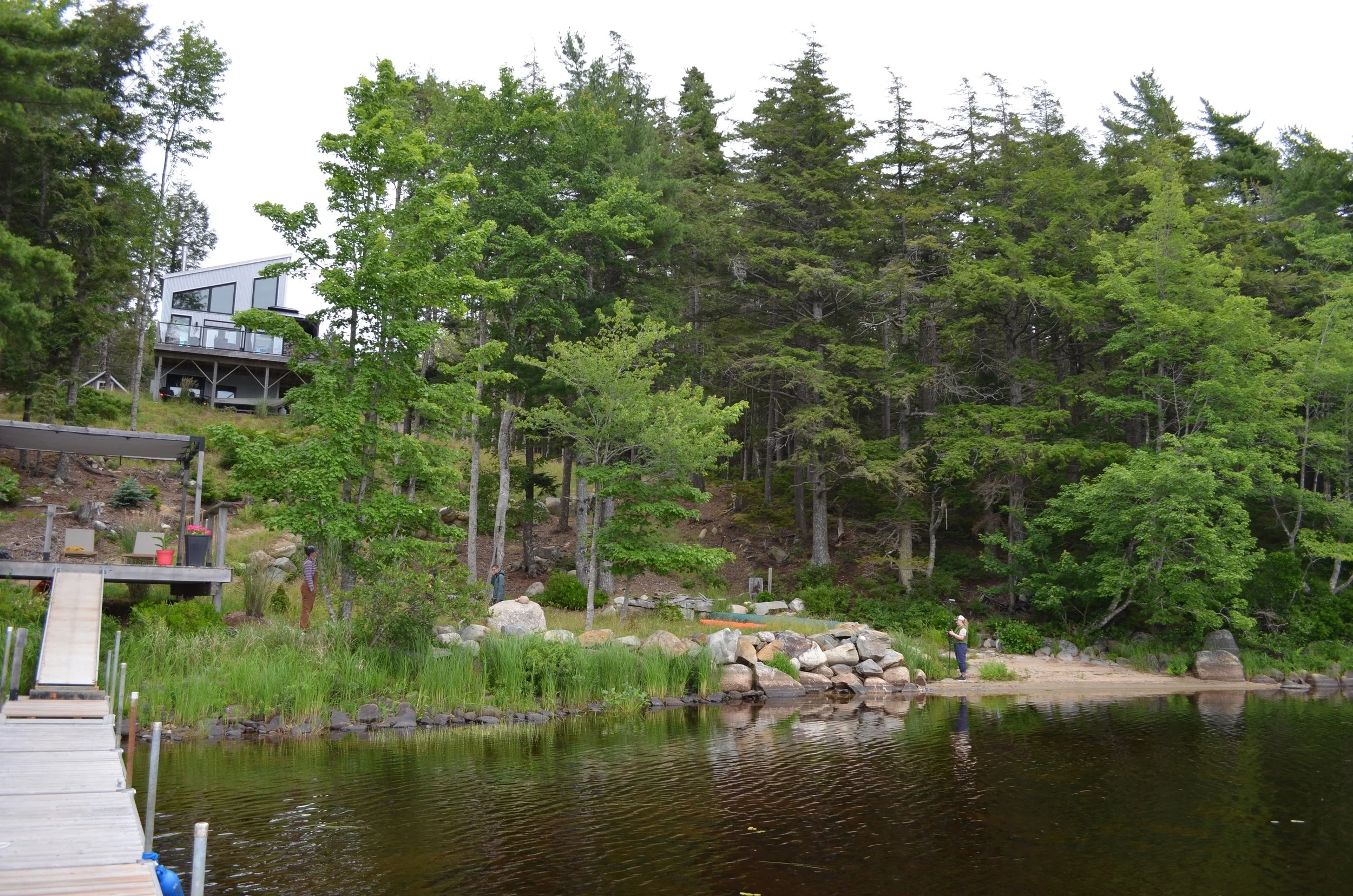
The site visit before construction showing the rock wall, fill, and artificial beach to the right.
At Molega Lake, the shoreline told a familiar story. Years earlier, infilling and armouring had reshaped the land by burying natural substrate, removing habitat, and destroying habitat for at-risk species.
Only 4 years earlier, the Mersey Tobeatic Research Institute had recorded Redroot (an at-risk ACPF species) on-site. Now, it had completely disappeared. Endangered reptiles also could be found in the area, but the clay fill and rock wall wasn’t being used as nesting habitat since there were more suitable sites elsewhere on the lake.
In the summer of 2025, restoration began on the Molega Lake project. CB Wetlands and Environmental Specialists (CBWES) collected the background data and designed the project and their Rising Tide Nursery supplied the majority of the native plant species that were planted onsite. TransCoastal Adaptations staff supported CBWES on the project.
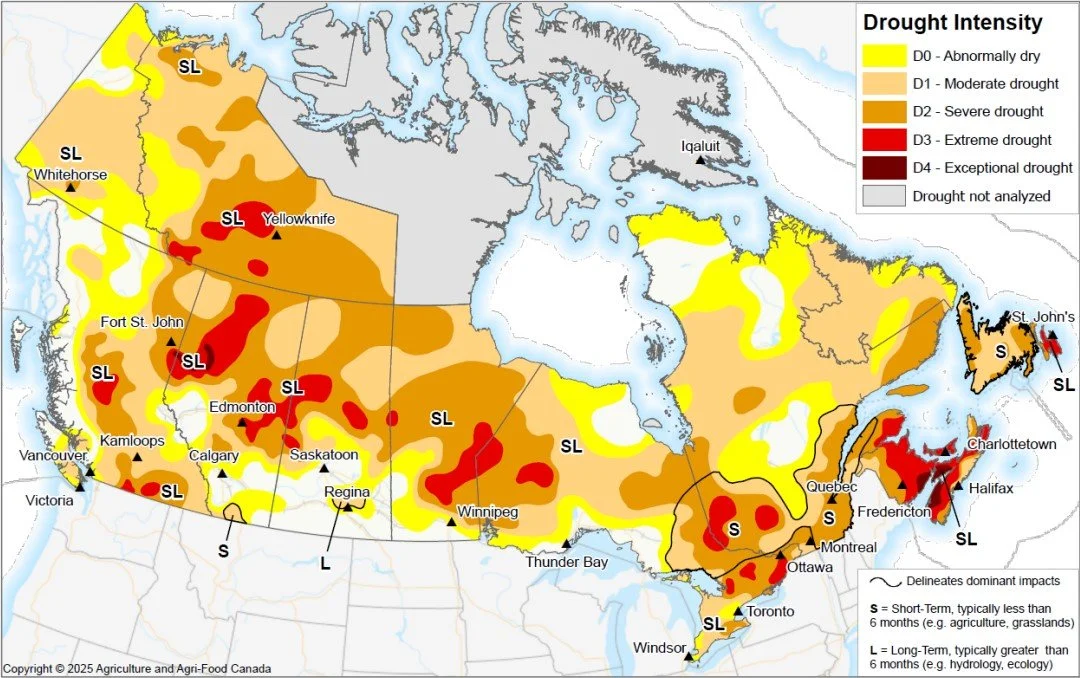
Sept 2025 Drought conditions
Nova Scotia experienced severe, extreme, and in some areas, exceptional drought conditions by September 30, 2025. (Source: Agriculture and Agri-Food Canada Drought Monitor).
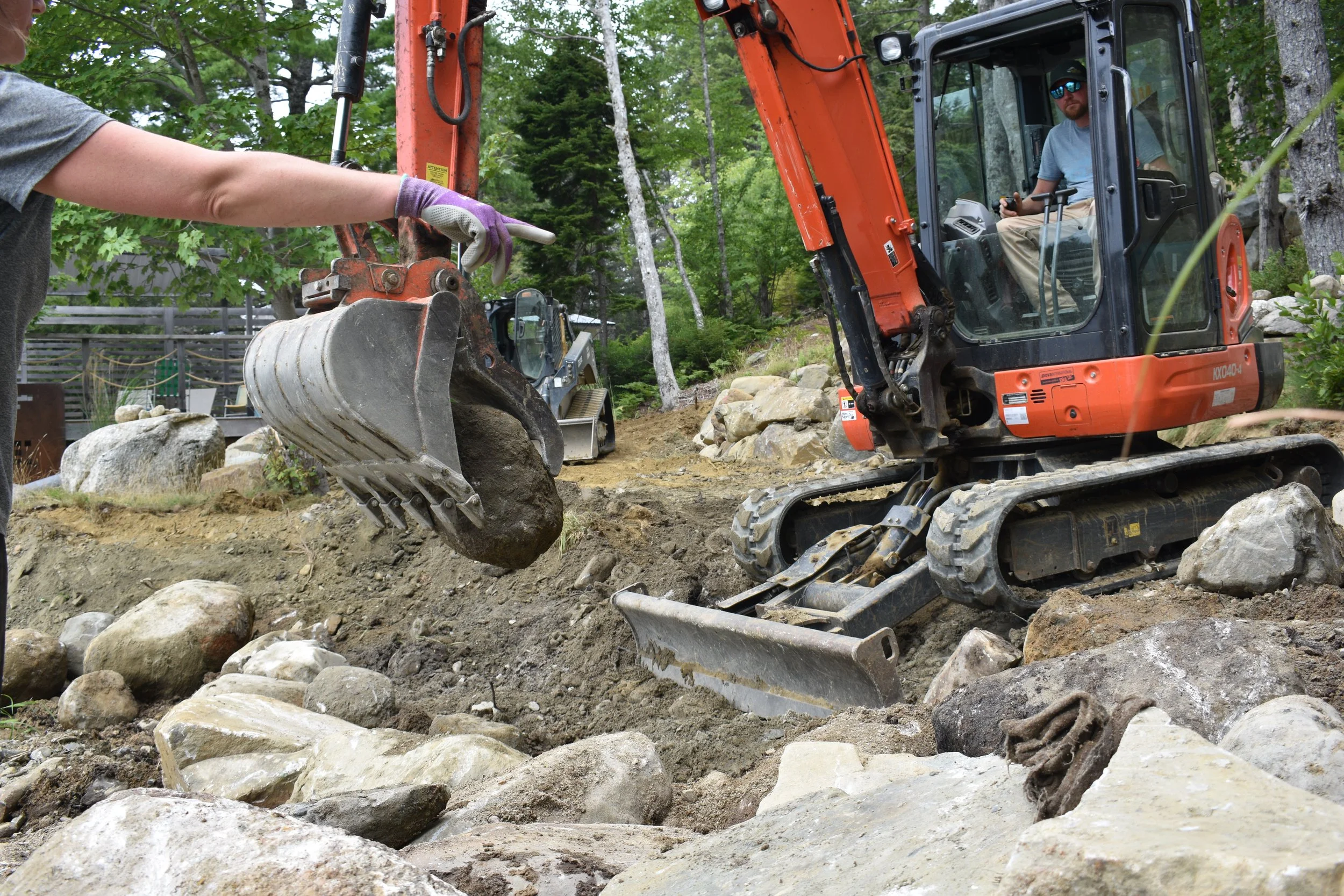
CBWES directs Manzer Brothers on where to place repurposed retaining wall rocks in the riparian zone.
To address prior destruction of ACPF habitat, Manzer Brothers Excavation & Landworks removed over 76 cubic meters of infill to re-expose much of the natural substrate.
The rock wall was dismantled, and the rocks were placed throughout the riparian zone in a manner that reflected the neighbouring natural shoreline.
Over 322 native grasses, rushes, flowering perennials, and ACPF shrubs were planted in the riparian zone. Due to this summer’s severe to extreme drought conditions, water levels were far lower than usual, and plants were stressed. The team adapted in real time, incorporating additional watering and care to ensure the plants survived.
By the end of the season, a remarkable 150 square metres of habitat had been restored! The shoreline could once again function as a living system, supporting rare plants, fluctuating lake levels, and at-risk reptiles.
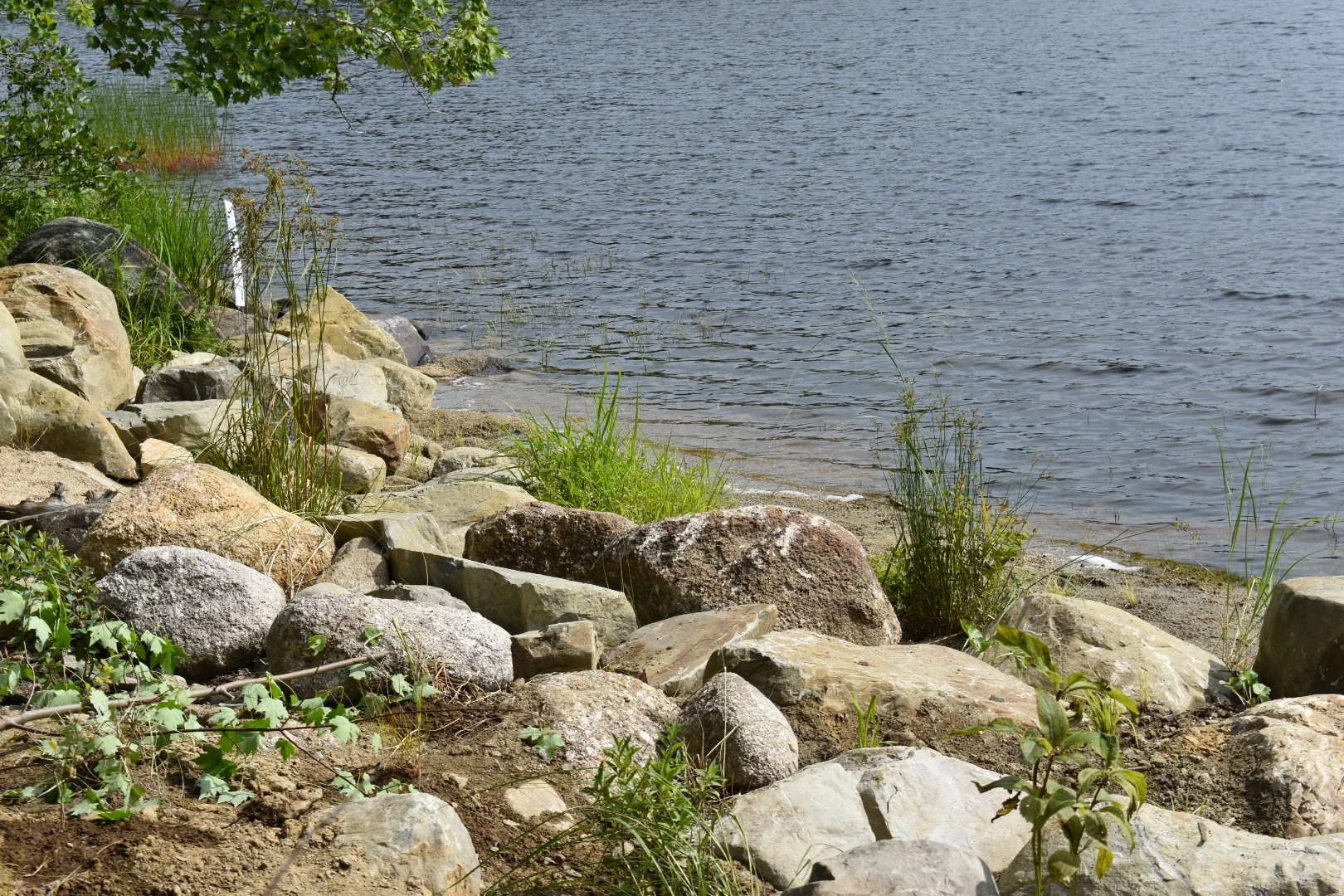
Restored Riparian Zone
The connectivity between the water and land has been restored, the artificial beach removed, and the riparian zone planted with native lakeshore species.
Kingsburg Beach
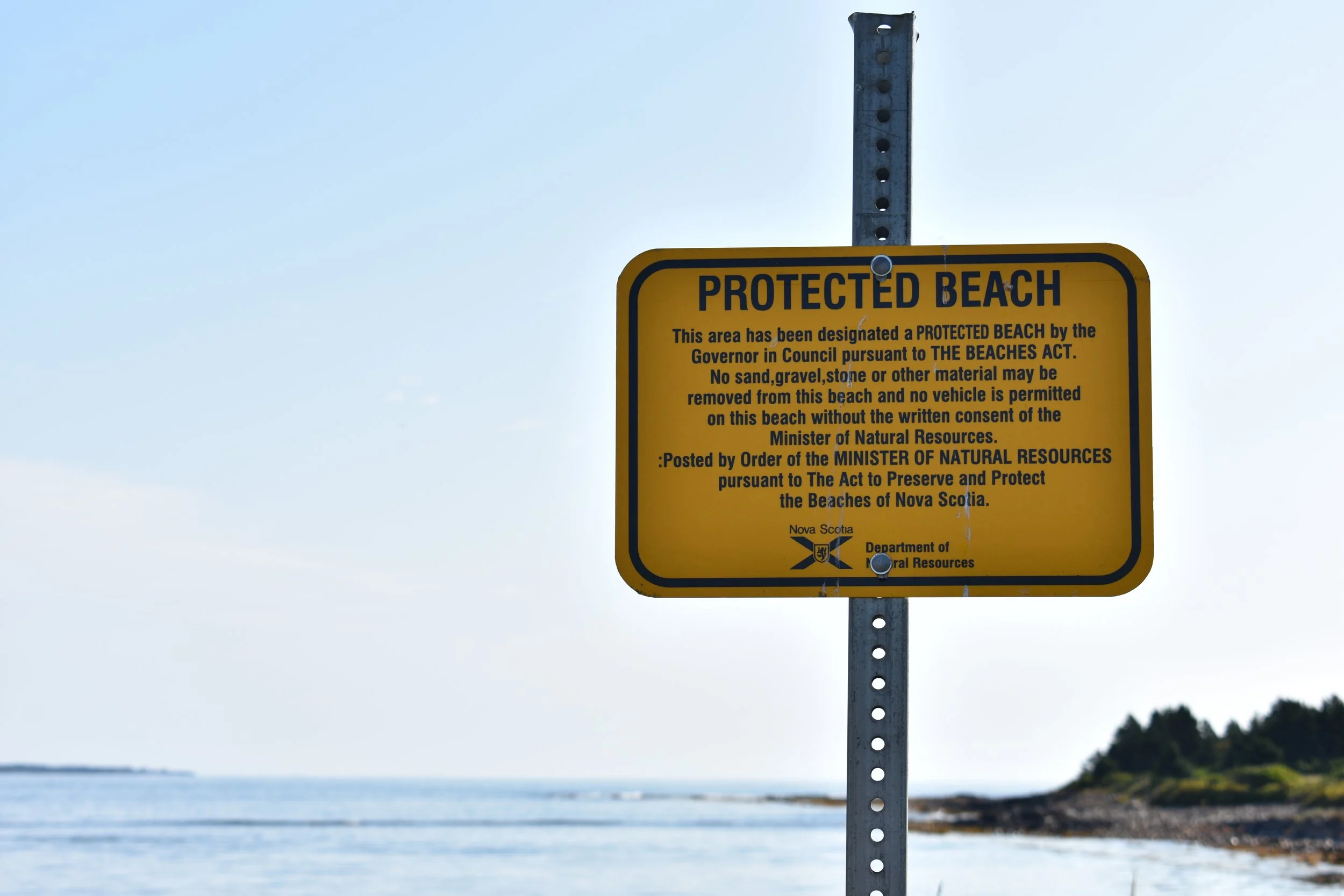
Protected beach signage provided by the Department of Natural Resources NS.
On Kingsburg Beach, the challenge was different. Here, the coastal dune system had minimal disturbance. However, we were starting to see some storm erosion and compaction from vehicle traffic on the dunes. The habitat is critical for foraging Piping Plovers and Bank Swallows and had been designated as a protected beach by the provincial Department of Natural Resources. Here, the goal was to work with the system and guide human behaviour to better support it.
The Kingsburg Beach project was implemented in early September of 2025. Helping Nature Heal Ltd. (HNH) designed the project across multiple properties across the beach. HNH supplied the grasses, shrubs, and organic material (wattle fence stakes, veggie groyne, Abundance fertilizer) for the installation.
Rather than restoring a destroyed habitat, the alterations to this system were mainly to adjust human behaviour to better protect the dune system. A wattle fence made of alder stakes and branches dissected a right of way on the property to only allow for pedestrian traffic. The right of way had originally been the width of a large vehicle, allowing vehicles to drive onto the beach and compress the ground below. Shrubs were planted on the restored part of the right of way in an effort to release some of that compaction.
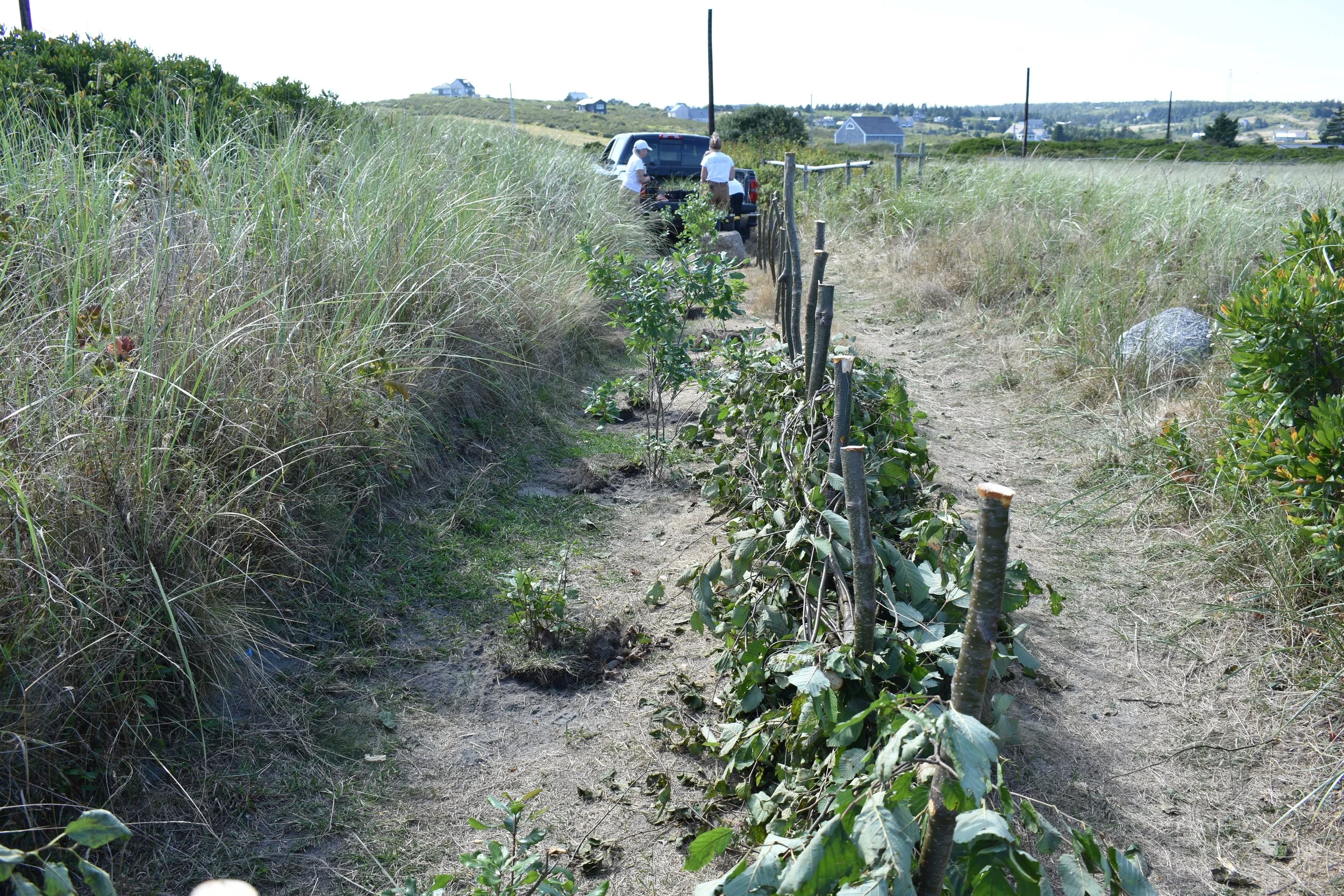
Wattle fencing in progress
Native dune shrubs were planted to the left of the wattle fence. To the right, a pedestrian path remains for beach access.
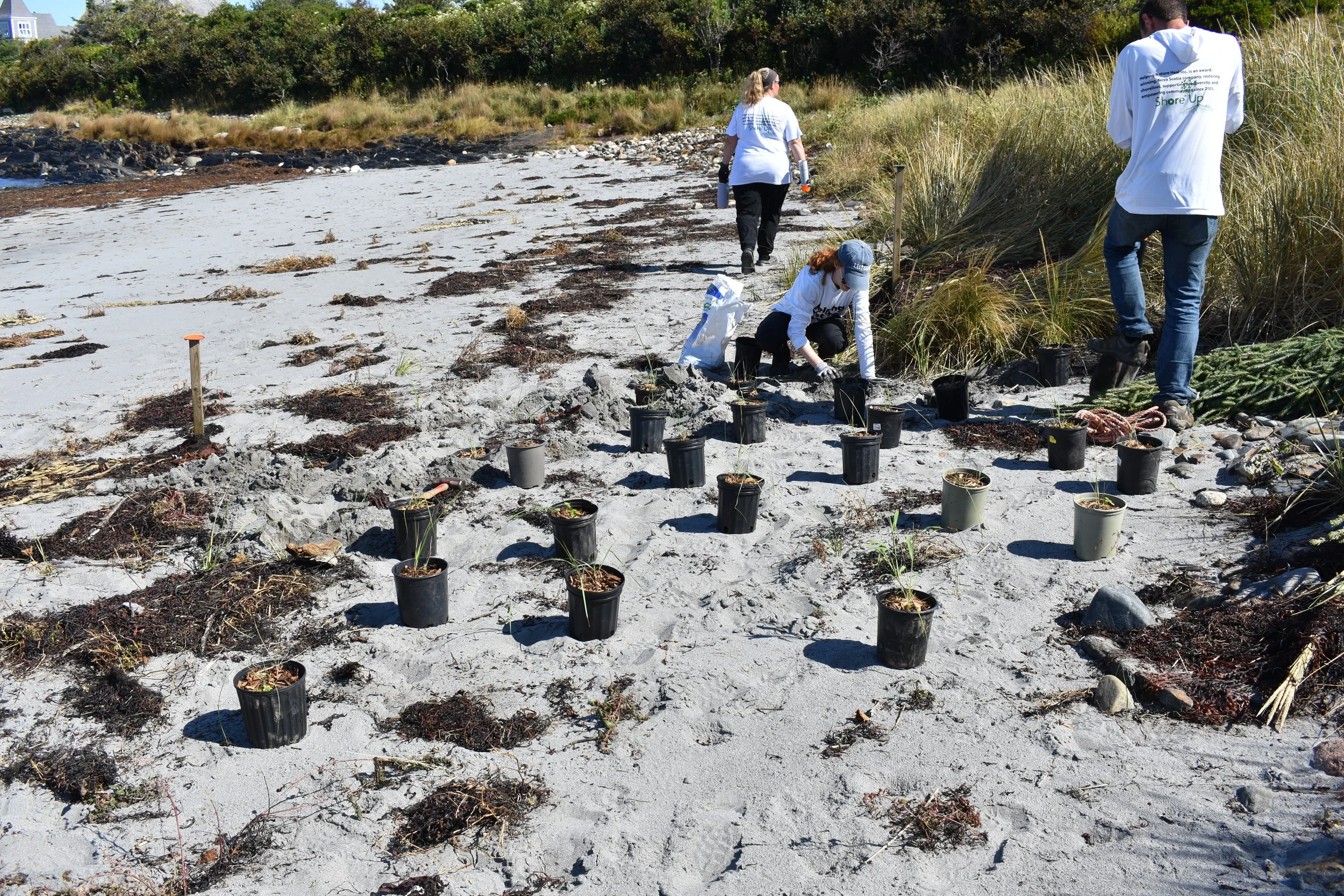
Planting dune grasses at the dune toe near the veggie groyne installation.
Our team also removed invasive roses on the dunes, installed a sand capture technique called a “veggie groyne,” and planted dune grasses. These efforts will support natural dune rebuilding after storm erosion from the prior year.
However, the team didn’t end up planting as many dune grasses as we anticipated because the dune was already building itself back up quite well — a testament to how resilient the ecosystem already was.
Green Shores Ratings
Both projects achieved a gold rating through the Green Shores for Homes program! Below is a table of the credits that shows which credits each project received points under.
| Credit | Molega Lake | Kingsburg Beach |
|---|---|---|
| 1.1 No Shoreline Protection Structures | x | |
| 1.2 Setback/Impact Avoidance | x | x |
| 1.3 Hard Armour Removal | x | |
| 1.4 Groin Removal | ||
| 1.5 Nature-Based Erosion and Flood Management | ||
| 1.6 Managed Retreat | ||
| 2.1 Enhanced Critical, Sensitive, and Migratory Bird Habitat Stewardship | x | x |
| 2.2 Riparian and Emergent Vegetation | x | x |
| 2.3 Trees and Snags | x | |
| 2.4 Invasive Plants | x | |
| 2.5 Organic Material | x | x |
| 2.6 Overwater Structures | x | |
| 2.7 Access Design | x | x |
| 3.1 Site Distrurbance | ||
| 3.2 Reduce and Treat Runoff | x | |
| 3.3 Environmentally Friendly Building Products | ||
| 3.4 Creosote Material Removal | ||
| 3.5 Herbicides, Pesticides, and Fertilizers | x | x |
| 3.6 Onsite Sewage Treatment | x | |
| 4.1 Shoreline Collaboration | x | |
| 4.2 Public Information and Education | x | x |
| 4.3 Conservation Easement or Covenant | ||
| 4.4 Shoreline Stewardship Participation | x | x |
A Shared Outcome
Beyond the rating, these projects tell a larger story. They show that nature-based solutions are not one-size-fits-all. Sometimes, restoration means removing years of damage. Other times, it means stepping back and gently redirecting human impact. In both cases, success comes from understanding the system—and working with it, not against it.
As more communities across Atlantic Canada look toward climate adaptation, these projects offer a hopeful path forward: one rooted in restoration, stewardship, and respect for the landscapes that sustain us. For more in-depth detail, stay tuned for the release of our case studies, which include costs, drawings, construction details, point breakdowns, and more!
