Nature-based Restoration for Piping Plover Habitat
The Chiasson Office Conservation Offsetting Project is a Piping Plover Habitat Compensation project located in Northern New Brunswick. This project created and restored vital Piping Plover habitat on the Chiasson Office barrier spit, located near Shippagan New Brunswick, using nature-based solutions, including a sand engine and a created salt marsh.
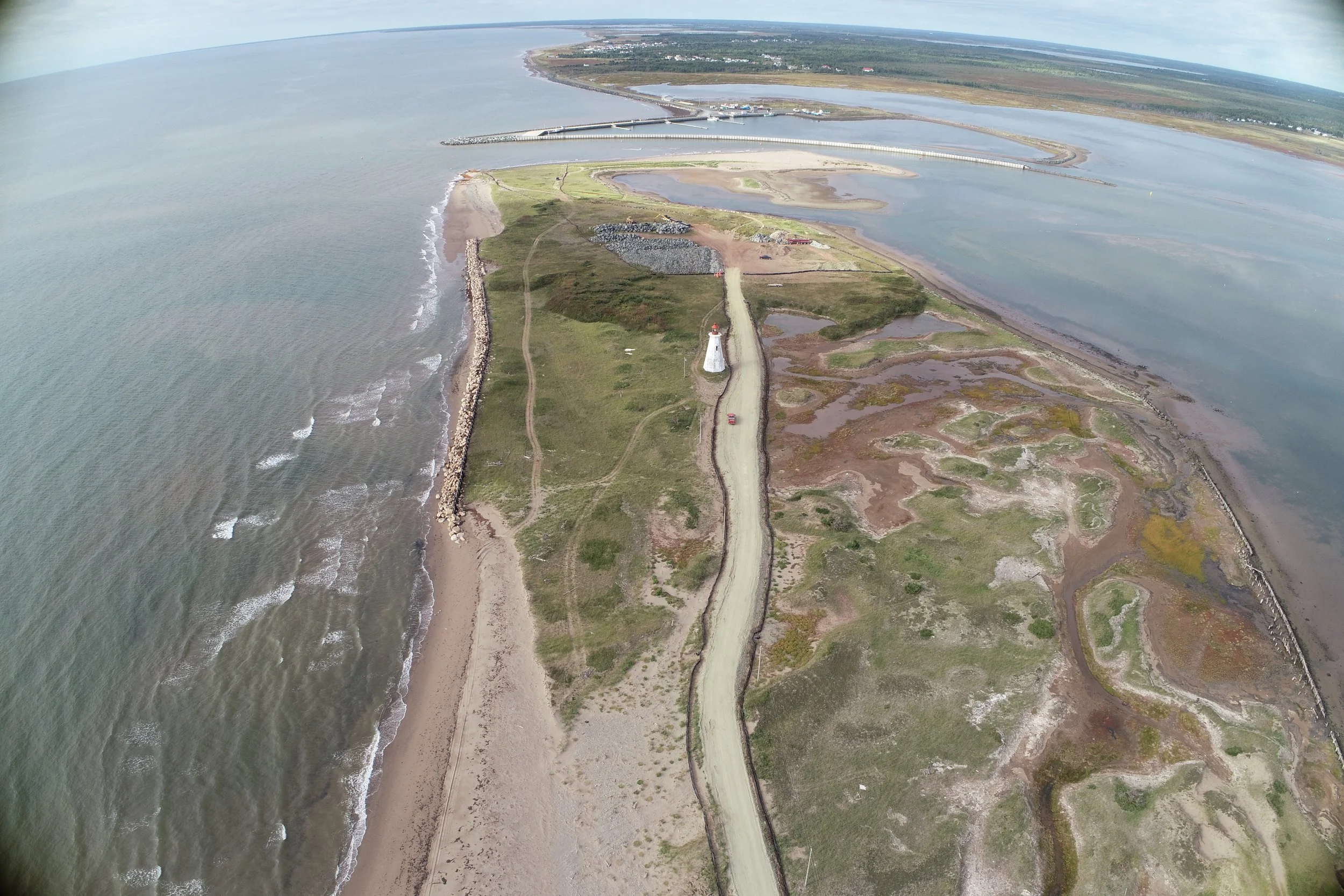
Aerial image of the Chiasson Office Barrier Spit, pre-dredging and breakwater construction, September 2020 (CBWES Inc).
The Shippagan Gully Dredging and Breakwater Construction Project (Department of Fisheries and Oceans – Small Craft Harbours) was implemented in 2022 to address navigation hazards in the Shippagan Gully, an important channel located between the Chiasson Office Barrier Spit and Le Goulet harbour, that provides access to the Shippagan harbour. The dredging operations, construction of the breakwater, and the associated construction activities resulted in significant alterations and impacts to critical Piping Plover habitat. As the Piping Plover is a federal and provincial Species at Risk, CBWES was commissioned to create a Conservation offsetting and Monitoring Plan, that would restore and create critical habitat and restore and remediate adjacent sand dunes and tidal wetlands.
How?
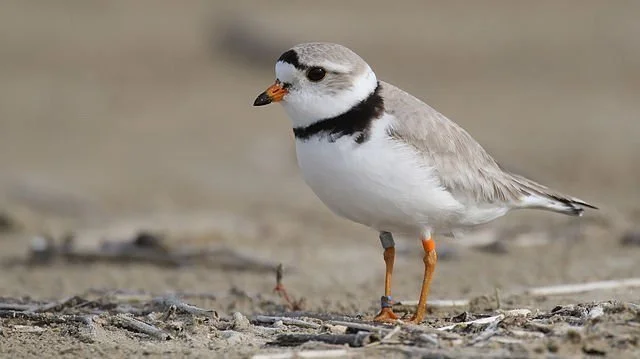
The Piping plover (Charadrius melodus melodus)
is listed as Endangered in Canada and as Threatened in the United States. Piping Plovers arrive on nesting grounds from the end of March to early May. Young may hatch starting in late May or early June onwards. They nest on wide sand, gravel, or cobble beaches, barrier island sandspits, or peninsulas in marine coastal areas.
This project presented a rare opportunity to restore habitat, improve habitat connectivity, and enhance the entire barrier spit system, through innovative nature-based solutions and long-term monitoring efforts. Activities included:
Beach nourishment through re-use the dredge material in a Sand Engine
Creating a tidal wetland with a Marsh Sill
Improving connectivity by removing anthropogenic structures
Implementing a long-term and expanded monitoring plan
What is a Sand Engine?
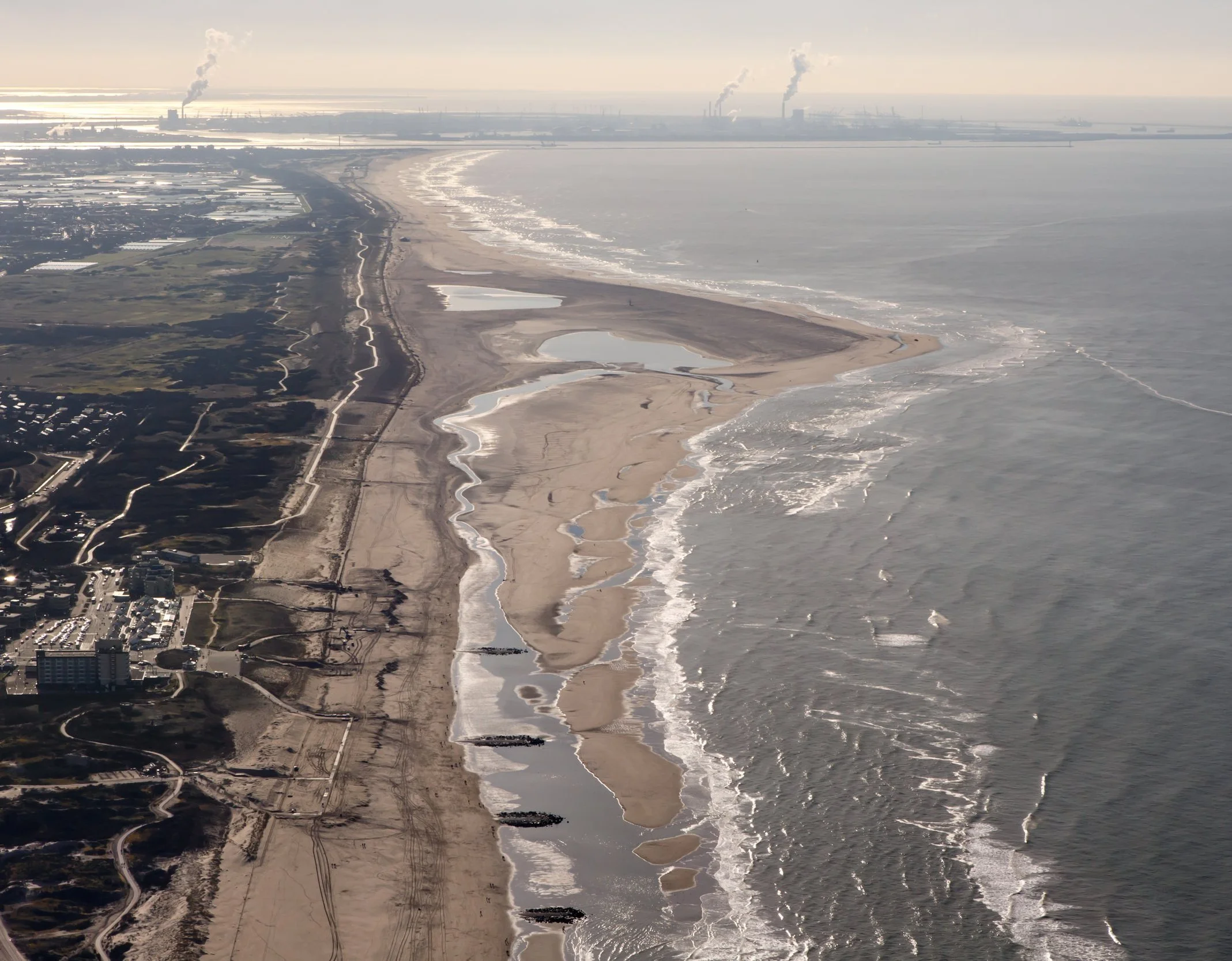
Did You Know?
The first large scale engine project is the Sand Motor, implemented in the Delfland Coast, in the Netherlands. Implemented in 2011, this project deposited 21.5 million cubic metres of sand on the coast, creating a 128 ha peninsula, that has since been shifting and depositing sand along the coast as expected.
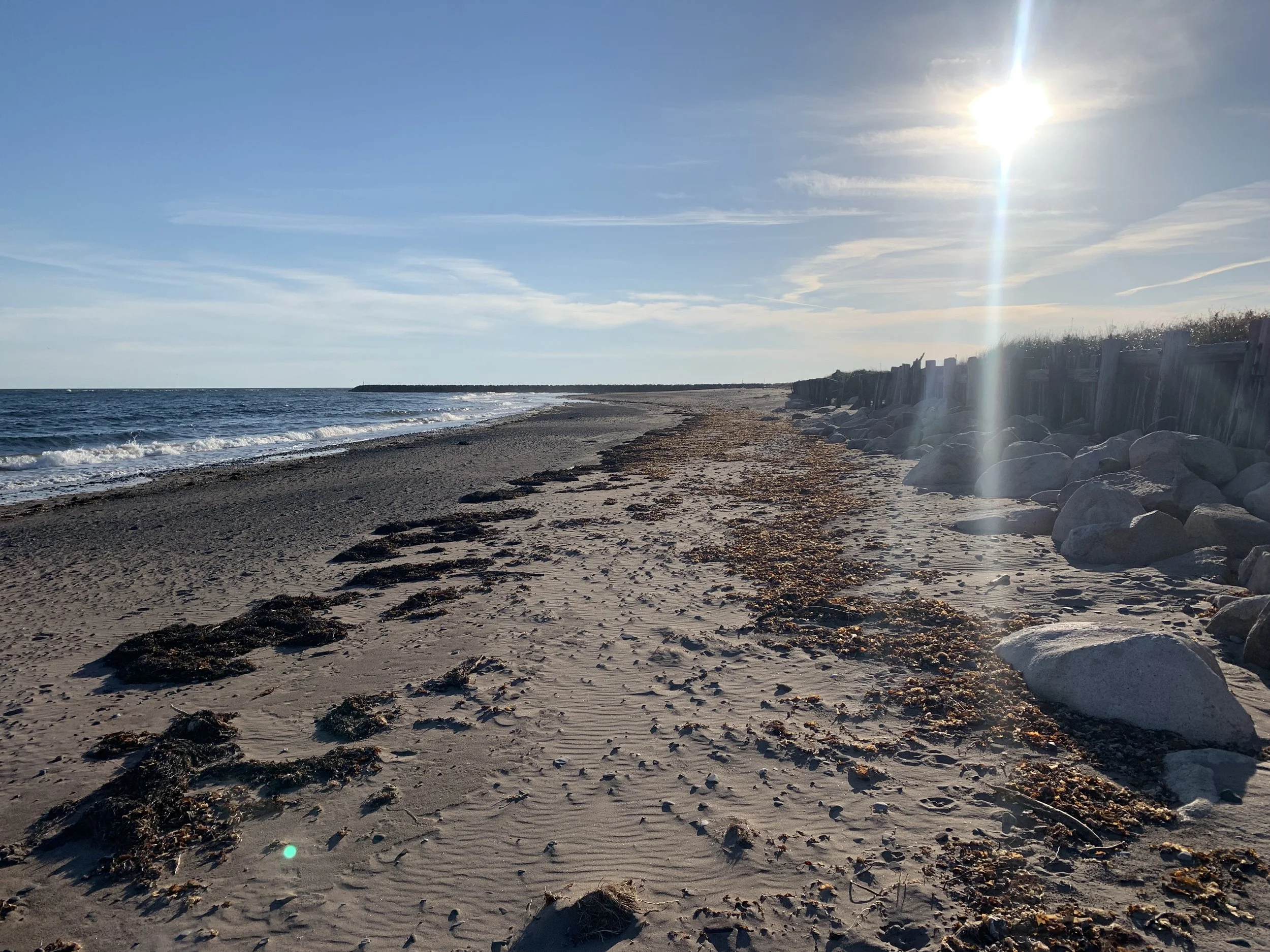
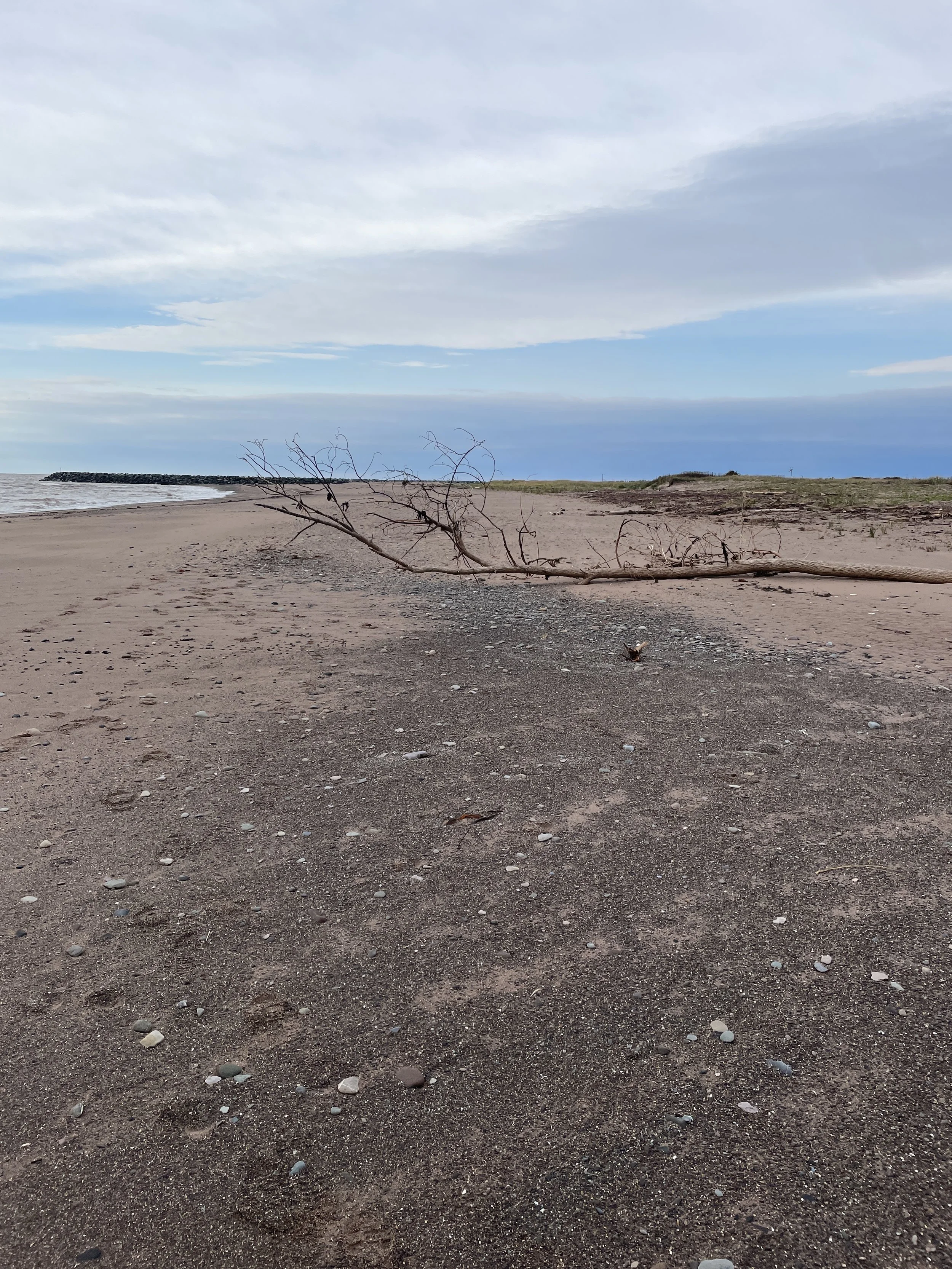
A sand engine is an example of nature-based solution for sandy beach systems. It is a type of beach nourishment, where a large volume of sediment is placed on a coast and allowed to naturally distribute along the shore through natural shoreline processes such as wind, waves and tides. In this project, 180,000 m3 (+/- 30%) of dredge material updrift of the sediment starved beach. By re-using the dredge material, the team was able to avoid transporting the sediment elsewhere or dumping it somewhere detrimental and provide an increased sediment supply for the beach.
Since the sand engine was implemented, the beach has increased in width and elevation overall, and the dunes have shown increases in elevation. The increased width of the beach allows more room for the dune and back-beach to naturally develop, and improves piping plover nesting habitat. Increasing beach elevation will also help to increase the overall resiliency of the spit to sea-level rise and increasing storms, and provide improved protection for the Big Shippagan Lighthouse and other infrastructure on site.
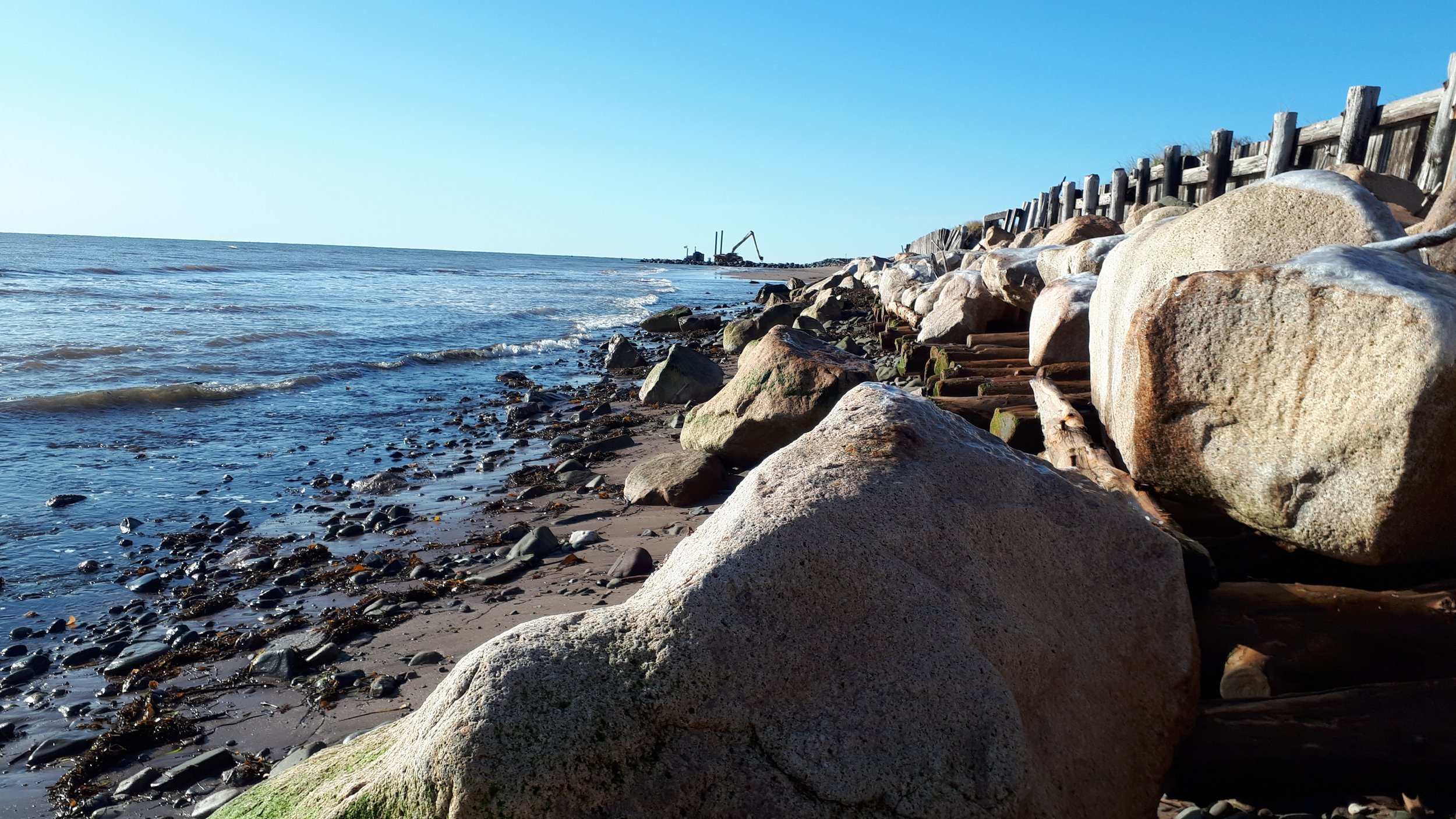
What is a Marsh Sill?
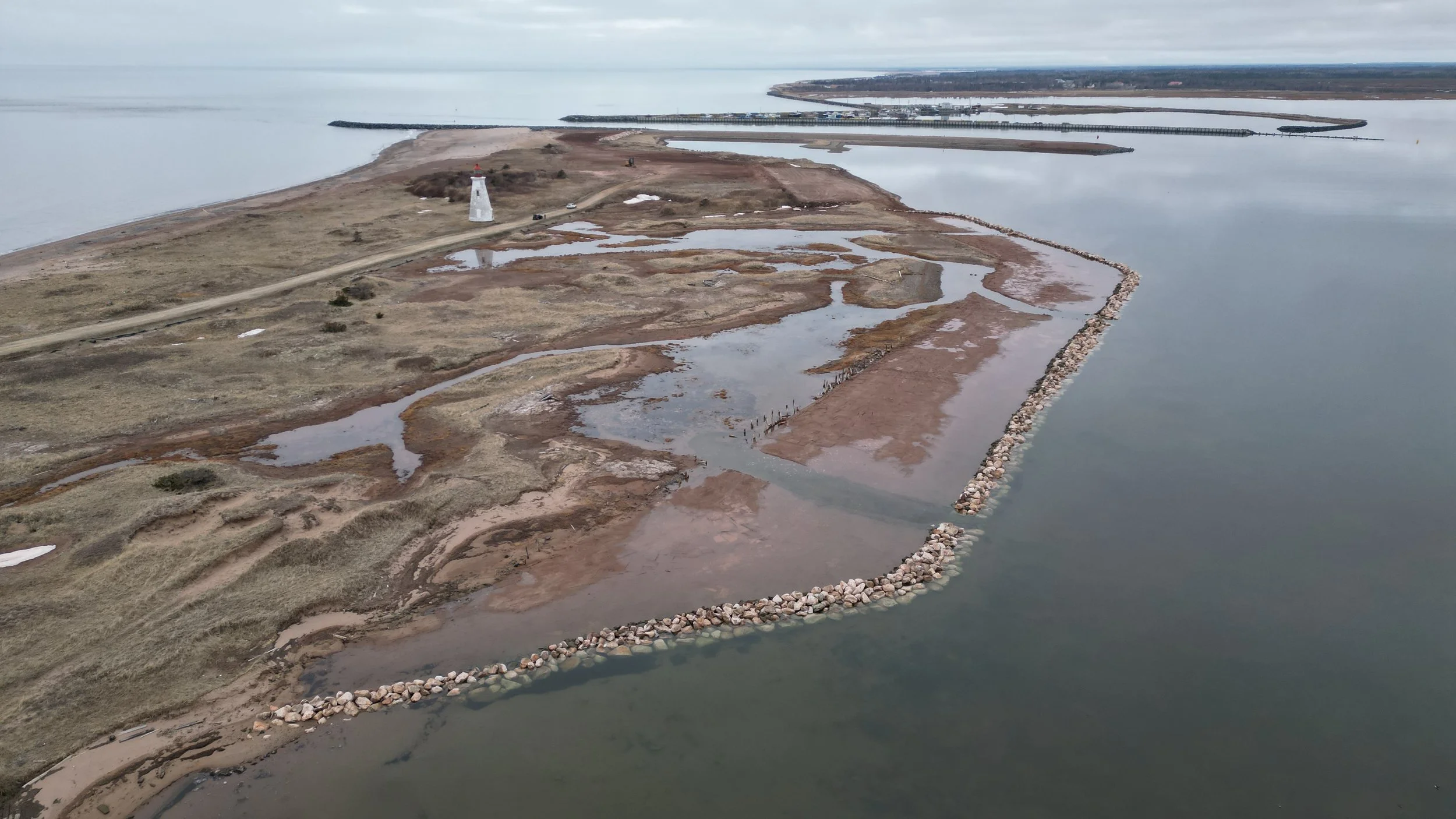
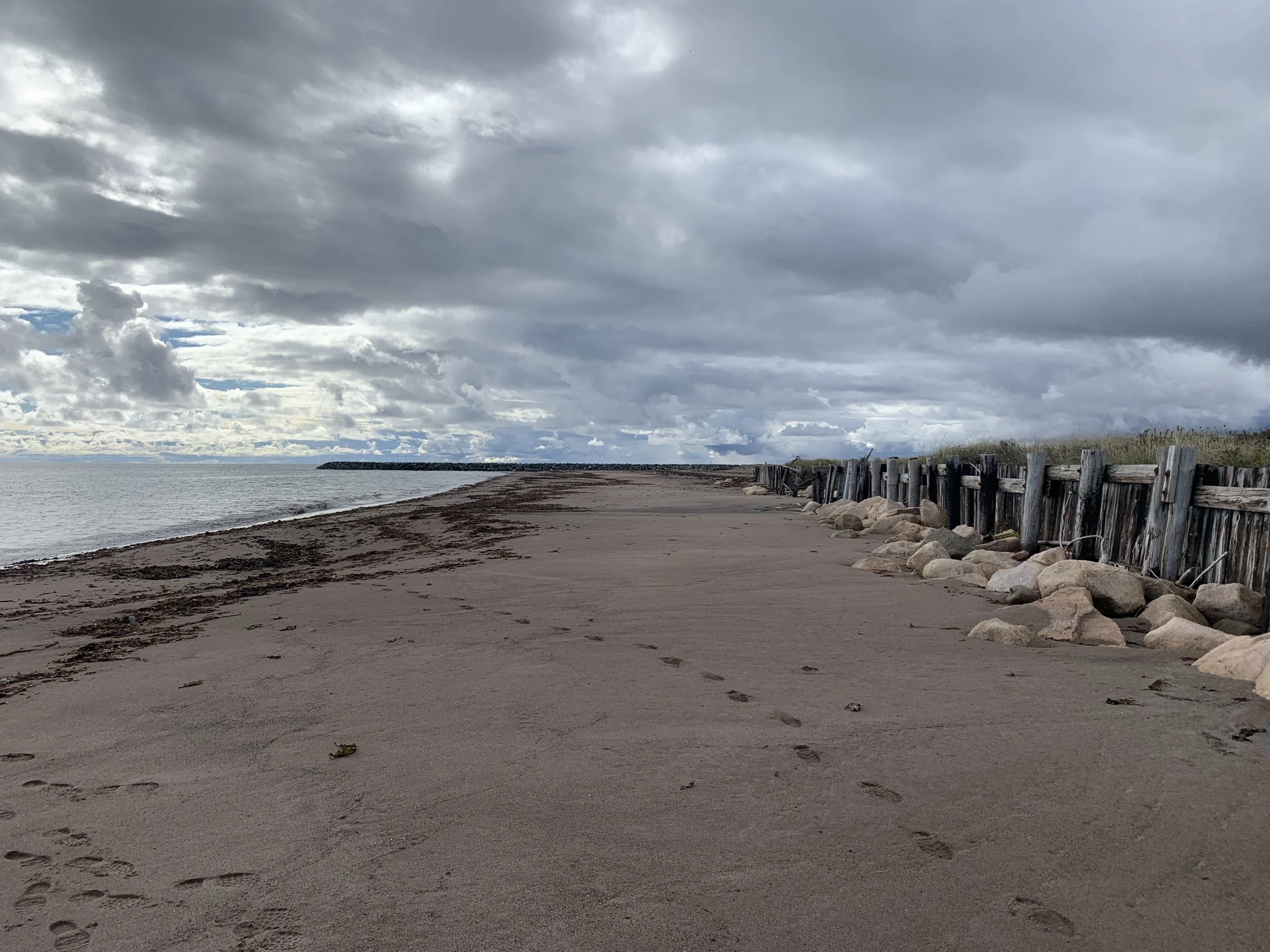
Marsh Sill, before planting, April 2023 (CBWES Inc).
A sill is a structure that runs parallel to shore, usually around the low-water mark, and is often made of rock, or occasionally other material such as logs. Sills are helpful to both retain sediment and reduce wave energy, and are often implemented in combination with a created/planted marsh, together an example of a hybrid nature-based solution. In Shippagan, a sill was created adjacent to the degraded wetland habitat, built with rock material found on site, and filled with more dredge material. In the summer of 2023, native salt marsh vegetation was planted to help develop the new region of salt marsh.
After a year, the vegetation in the new marsh is slowly establishing and spreading. As the new marsh continues to grow, it will provide better protection for the interior of the barrier spit, allowing more room for tidal waters, slowing erosional wave energy, and provide improved habitat for wetland species.
Improving Connectivity
Before the project, there was a variety of seawalls and sand-fencing on the site, in addition to the lighthouse and the causeway needed to conduct the dredging activities. These structures reduced connectivity on the site in a variety of ways. To improve sediment transport and the natural movement of dunes, sand fencing along the beach-dune system was removed. Additionally, the remnant seawall running through the wetlands was removed, reconnecting tidal flow to the unhealthy wetland environment.
By removing as many anthropogenic structures as possible, the team restored the connectivity of the natural physical processes within and between environments. The return of natural physical processes will help to enhance the health of the barrier spit ecosystems and allow for more natural movement of organisms.
Monitoring Plan
To better understand how the site is progressing, and ensure actions are meeting their anticipated outcome, a long-term monitoring plan has been implemented on the site. Monitoring attributes include:
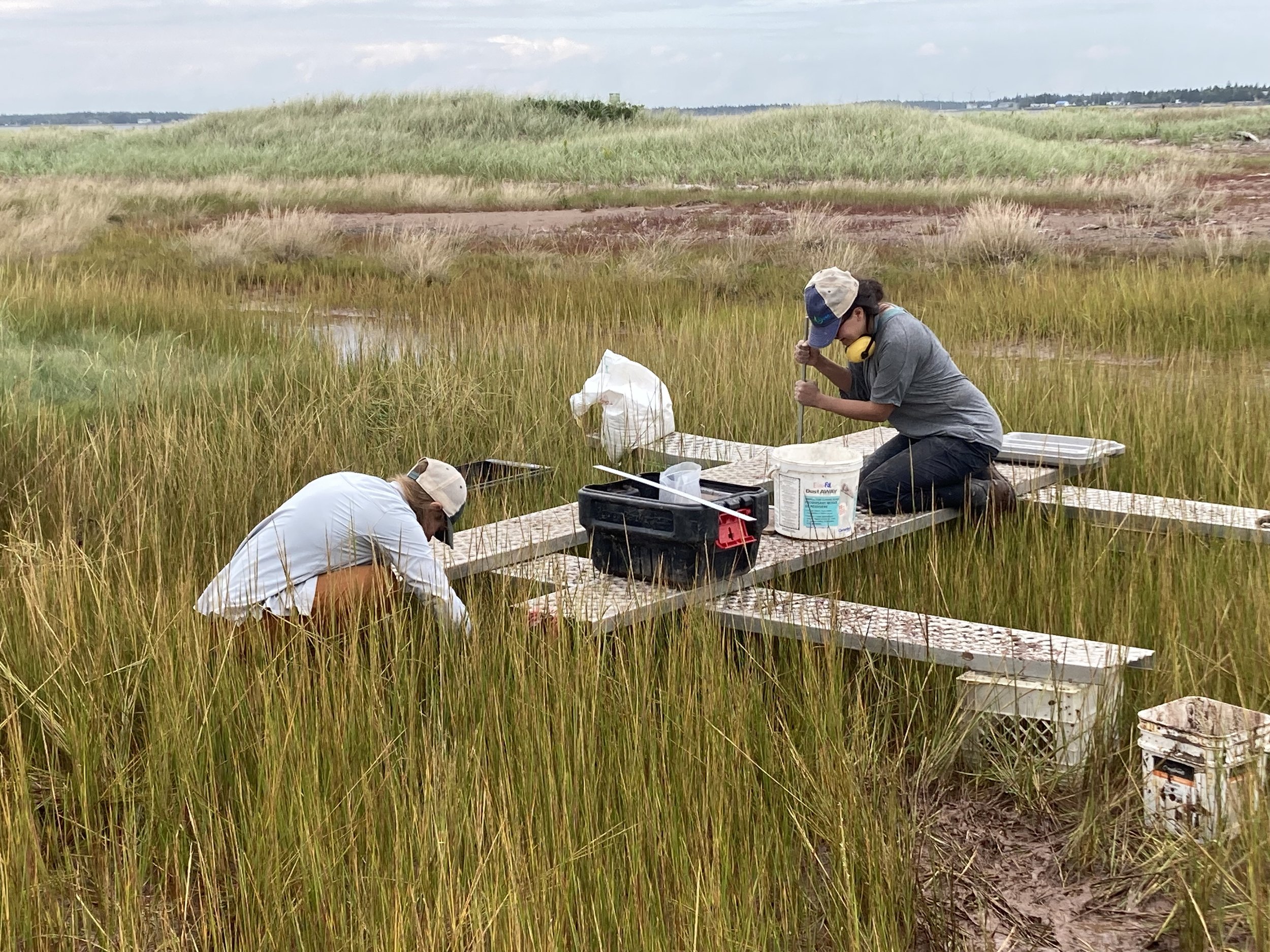
Installing a Rod Surface Elevation Table (RSET) station in the marshland, August 2023, (CBWES Inc).
Geospatial
Vegetation
Piping Plover & Shorebird Habitat
Soils and Sediments
Hydrology
Wetland Habitat Function
Invertebrates
Human Use
Winter Conditions and Visual Assessments
Expanded Monitoring and Research:
This project is a unique opportunity to restore an environment using an entire system approach, and implements a variety of nature-based solutions novel to cold regions. As such, this project is an exciting opportunity for additional research projects.
Nature-based Infrastructure for Shoreline Resilience (National Research Council):
The application of a sand engine and construction of a marsh sill are of interest not just as habitat offsets for destruction of Piping Plover habitat but also as a demonstration of the application of a nature-based climate change adaptation option to mitigate the effects of coastal erosion and flooding in the Acadian Peninsula. It also serves as a case study that may be applicable in other cold Canadian coastal regions, primarily on the East Coast. In particular, the beneficial re-use of dredge material for beach nourishment or marsh sill construction has not been demonstrated in a Canadian climate. The Shippagan project will augment and build on research being conducted through the NRC-led Nature-Based Infrastructure for Coastal Resilience project, effectively adding a fifth field site and broadening the range of nature-based features investigated to include the beneficial re-use of dredge material for beach nourishment and marsh sill construction.
PhD Projects:
Emily Baker (PhD Candidate, 2021-present):
Master’s Projects:
Makadunyiswe Ngulube (MSc Applied Science, 2022-2024):
Juliana Granzoti (MSc Applied Science, 2024-present):