2026 Nature-Based Solutions for Coastal Resilience Conference Wrap-Up
The 2026 Nature-Based Solutions for Coastal Resilience Conference has wrapped! The growth of nature-based solutions in Mi'kma'ki were on full display during the 5-day conference.
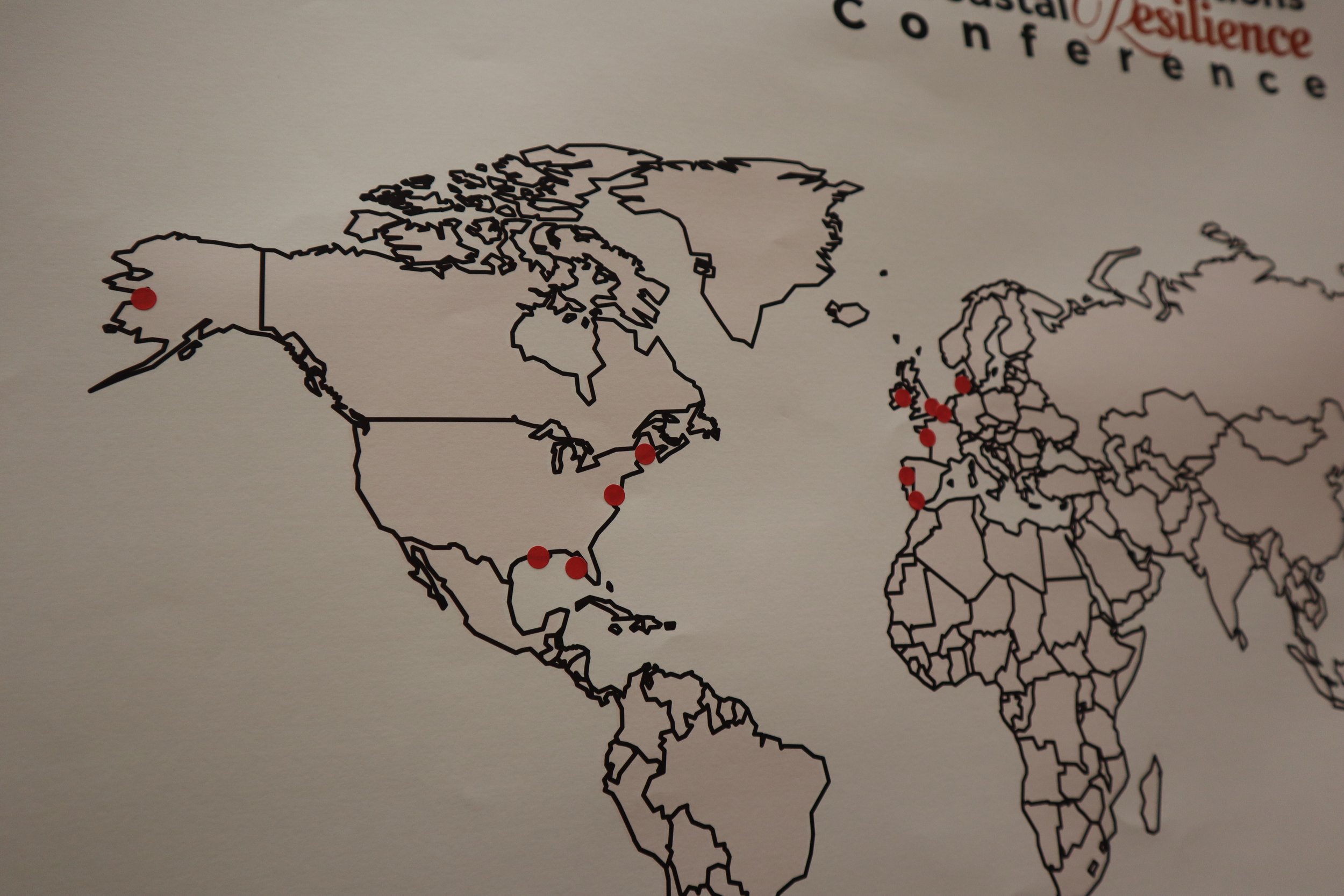
We welcomed 160 participants from 10 different countries here in Halifax. We had over 70 speakers, including keynotes, sessions, posters, workshops, and field trips. We took 40 attendees on four field trips across Nova Scotia and welcomed over 150 community members at our Expo. Our networking is growing! You can read a full recap of the conference below:
June 21
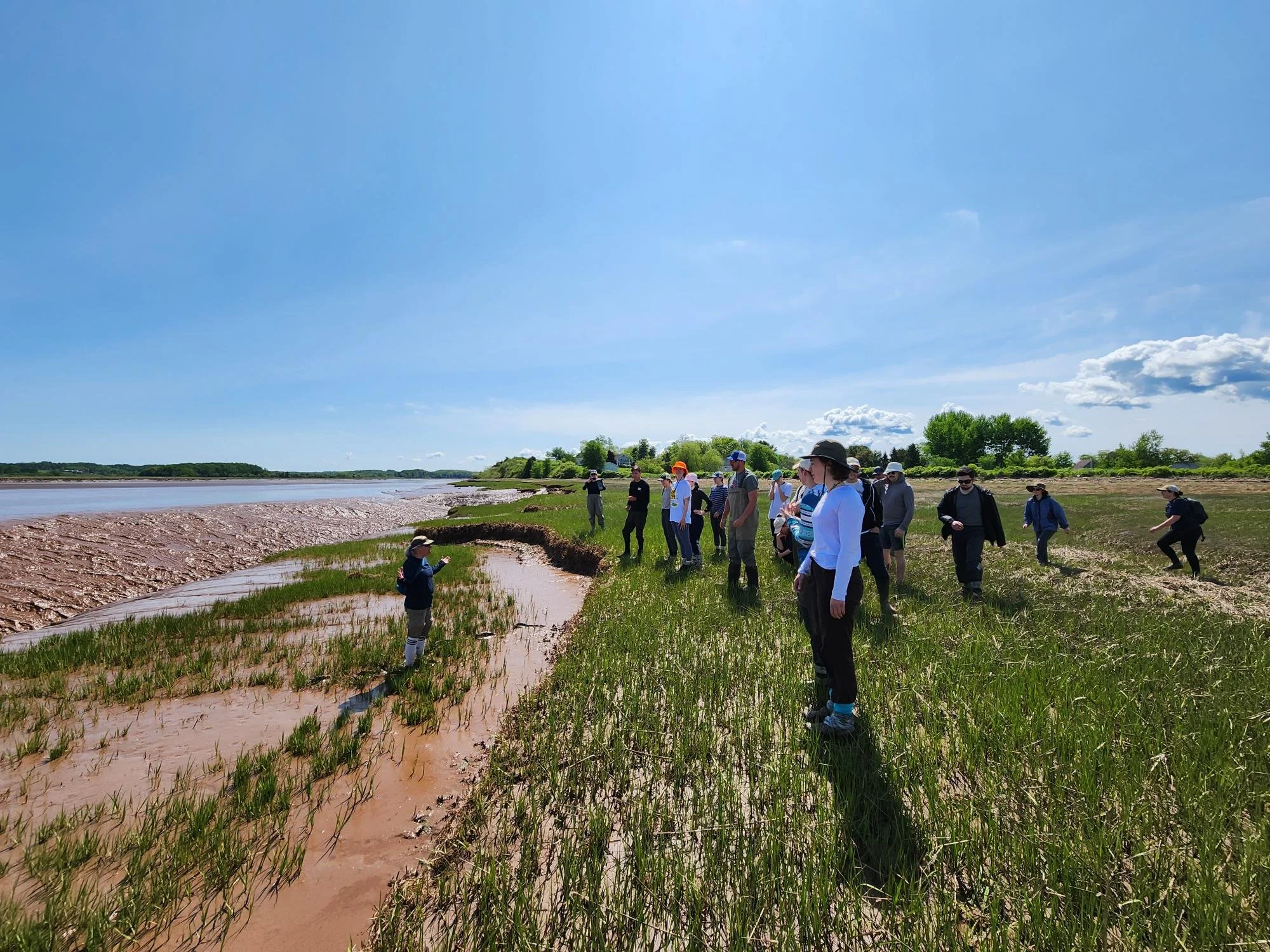
To kick off the the conference, we hosted two exciting field trips, taking participants to explore some of our local salt marsh restoration projects. ↴
-
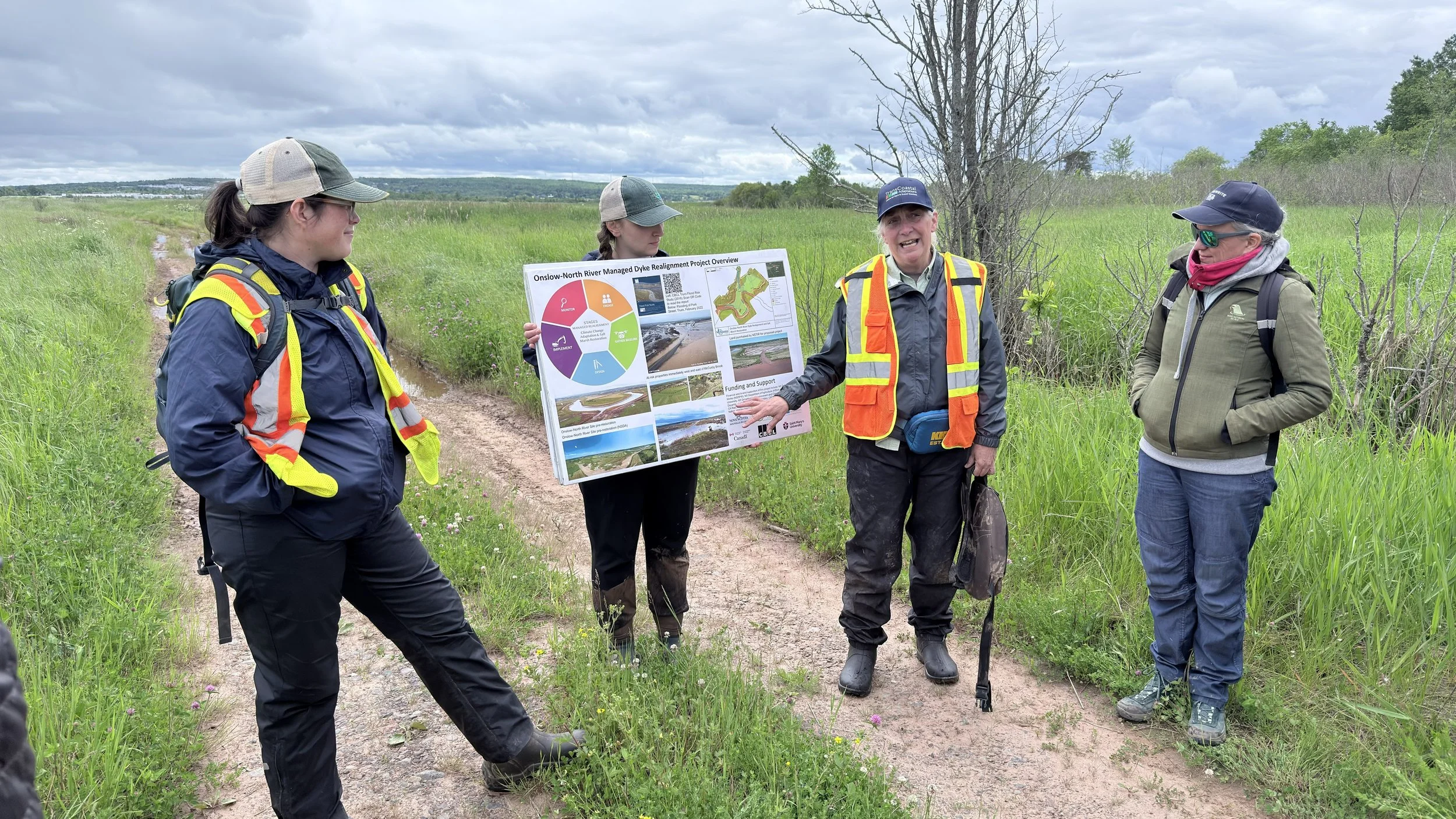
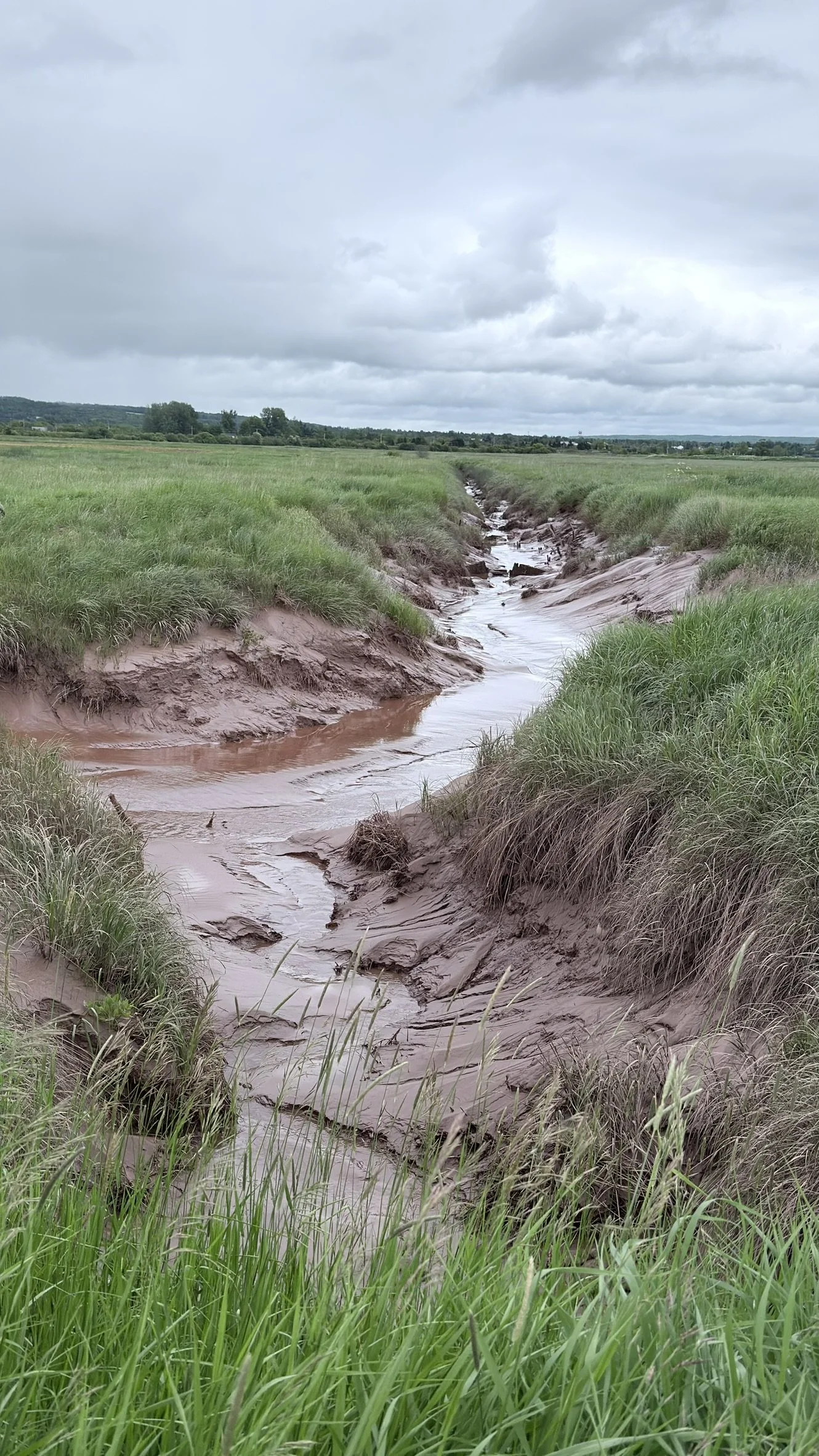
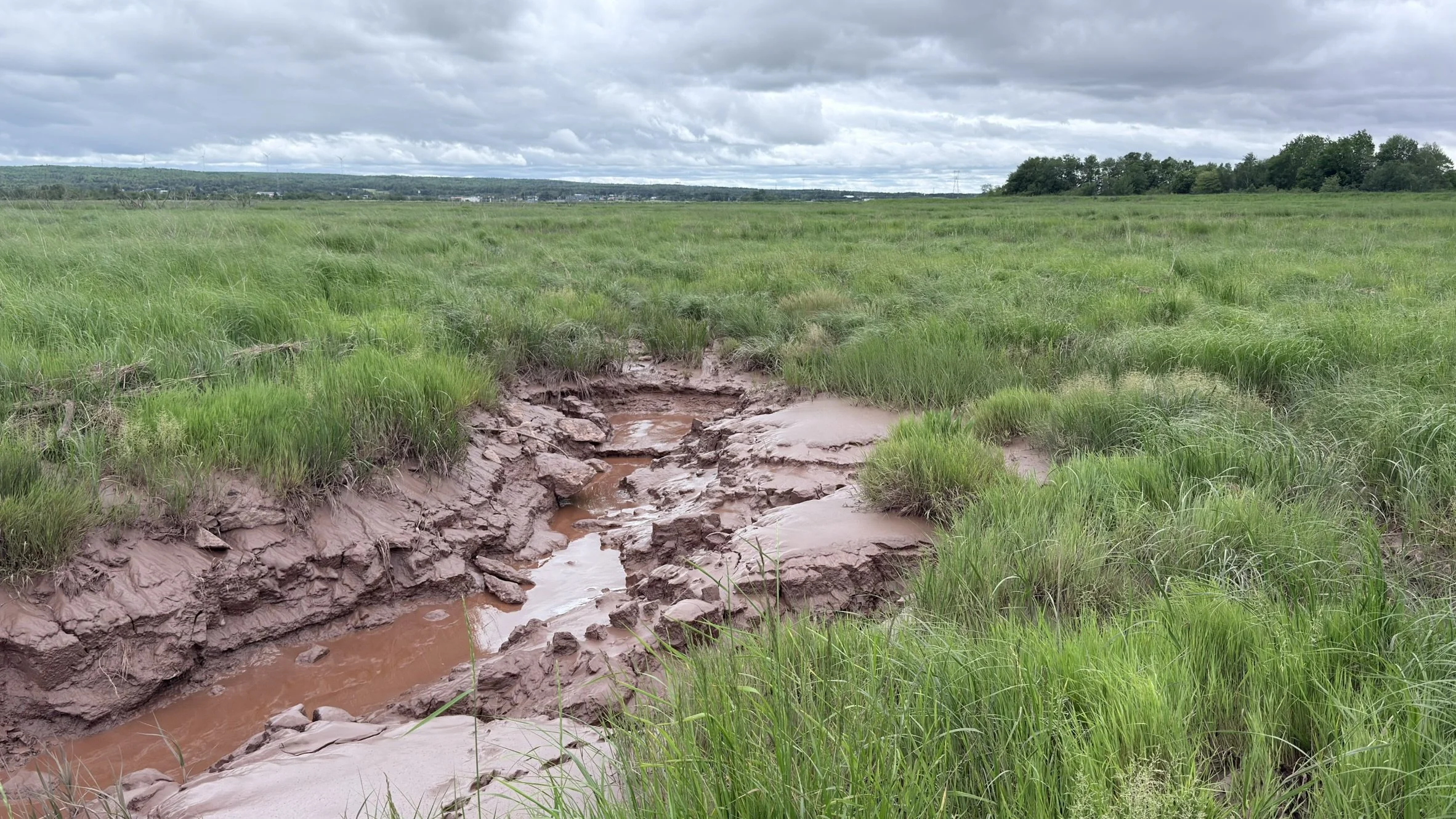
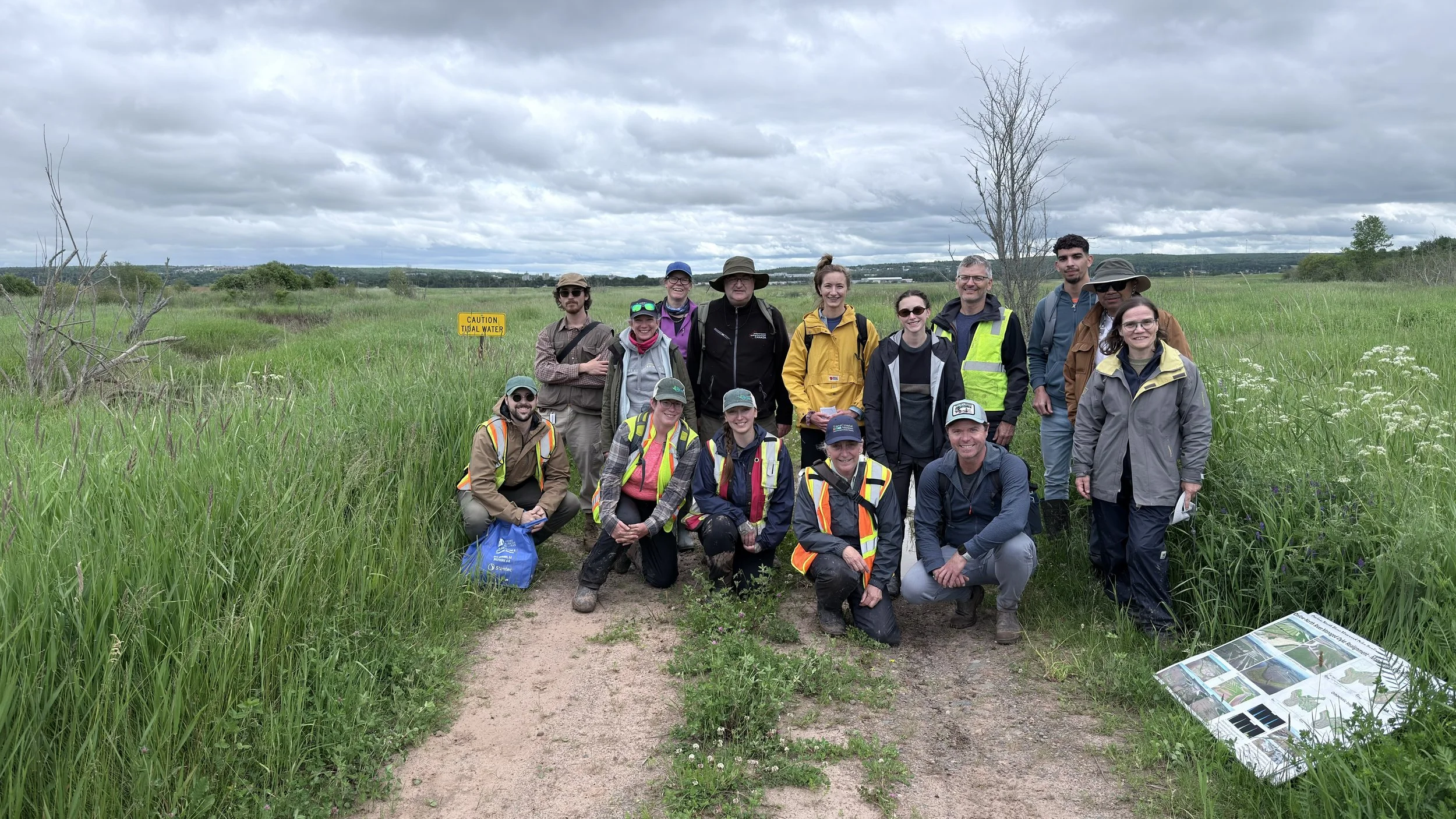
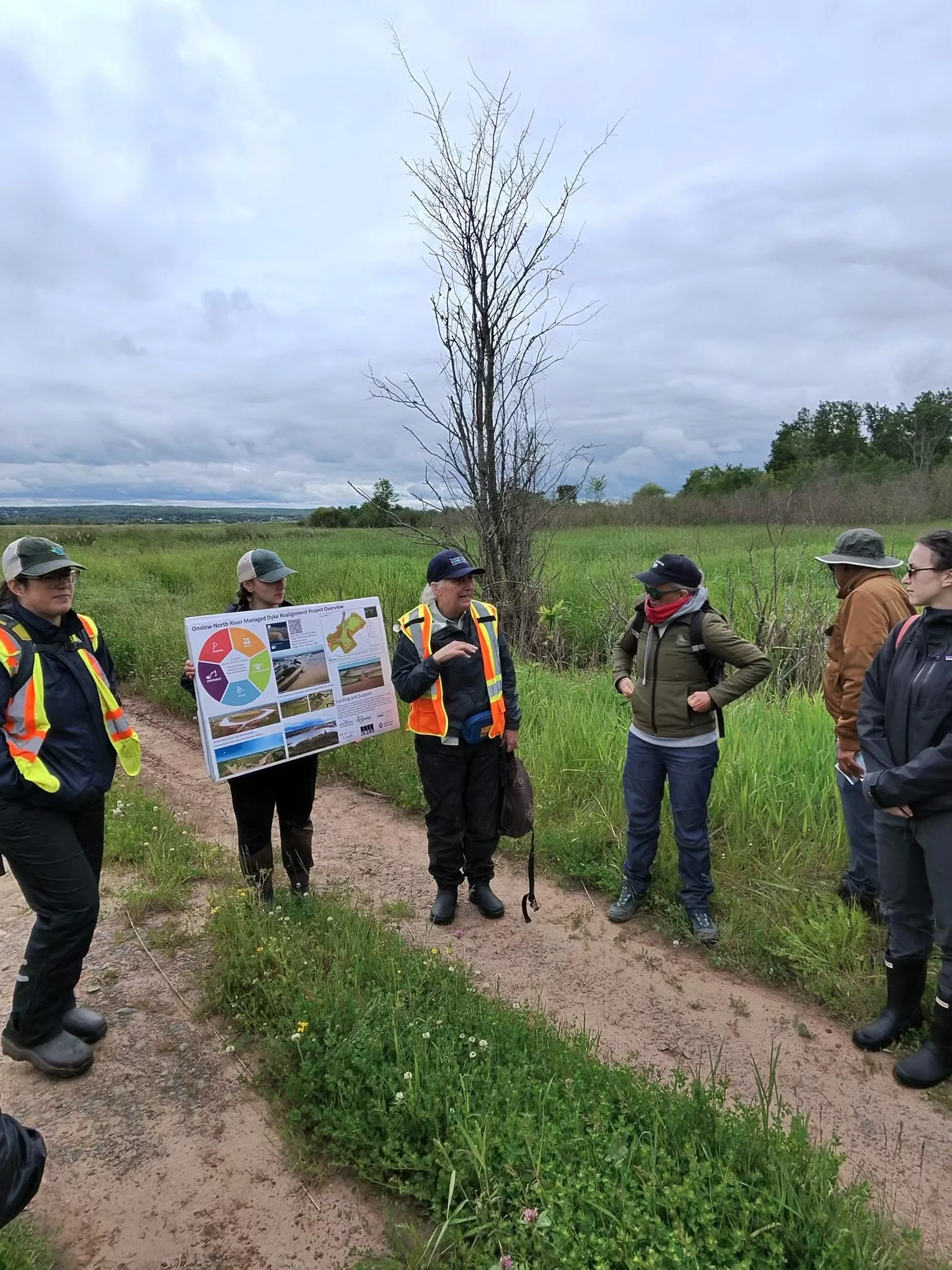
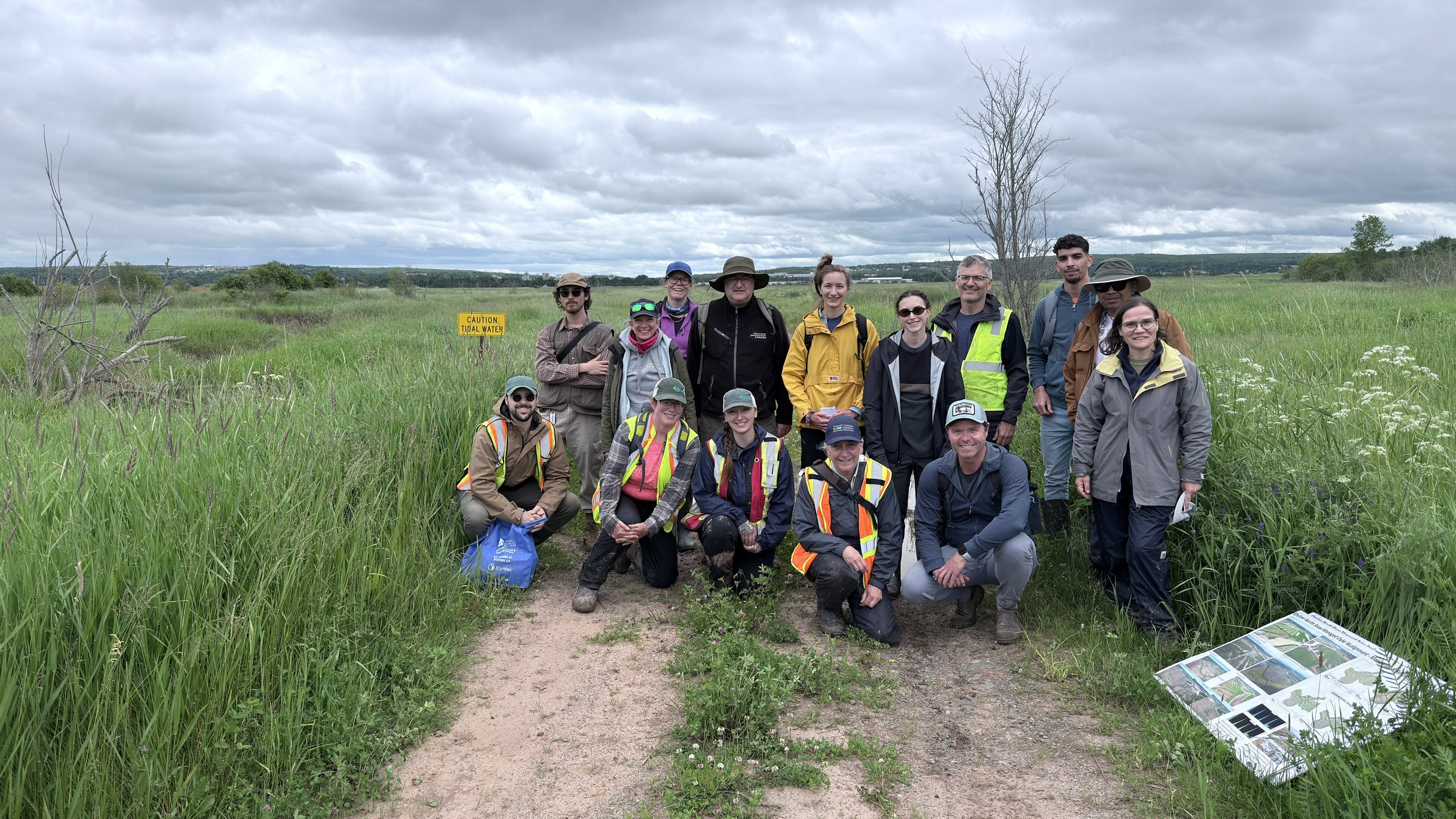
The first trip led participants to the Onslow-North Managed Dyke Realignment and tidal wetland restoration site, just outside Truro, Nova Scotia. The Onslow-North River site is an excellent example of a successful managed dyke realignment project, and restoring tidal flow to a whopping 97 hectares of historic tidal wetland!
This site is located at the confluence of the North and Salmon Rivers, two macrotidal rivers connecting to the Inner Bay of Fundy. The area was susceptible to flooding, due to high water levels and water patterns that contribute to ice jamming. This project was initiated by the Nova Scotia Department of Public Works, supported by the NS Department of Agriculture, and Department of Environment and Climate Change, to address the flooding risk in the region, and to create valuable wetland habitat for fish and other wildlife.
The Province of Nova Scotia collaborated with CBWES, Saint Mary’s University, and Queens University to design and implement a realignment and restoration design, and in 2021, the dyke at the site was breached. The design included building a new section of dyke to protect important nearby infrastructure, removing 3 aboiteaux, levelling large sections of dyke to foreshore level, and excavating tidal channels.
On this trip participants were guided along the remnant dyke by Dr. Danika van Proosdij, learning about the design and implementation process, the pre and post restoration monitoring program, and about the restoration trajectory of the wetland.
-
While some attendees headed up to Cobequid Bay, the other group made their way down to Mahone Bay along Nova Scotia’s South Shore. Before heading south, the group stopped at CP Allen High School to visit the Better with Bees Program. This student-run group is creating a Wabanaki meadow surrounding a Mi’kmaq garden. With a focus on urban environmental sustainability, the club hopes to demonstrate a model for urban sustainability for the surrounding community. Students shared how they designed the garden, engaged with the local Mi’kmaq community, and how their project is helping contribute to pollinator conservation efforts.
After a tea and coffee break at the garden, participants headed down to the Mahone Bay Living Shoreline, where they were welcomed by Coastal Action and CBCL. The project initially restored 60m of tidal wetland habitat to protect the town of Mahone Bay from flooding and coastal erosion. Building on the success of the pilot project, the living shoreline has since been expanded and now protects 140m of coastline in downtown Mahone Bay.
The Living Shoreline combines three key elements: rock sills, tidal wetland habitat, and a vegetated bank, to create a hybrid nature-based solution that enhances coastal resilience while supporting habitat restoration. The design for this project builds off the conceptual designs from CBCL’s Flood Prevention and Shoreline Enhancement Plan (2016). The pilot project was completed in the summer of 2022, and the shoreline planting was supported by numerous community volunteers. Additional community planting events are planned as part of the expansion progress. Since its construction, it has successfully withstood winter storms, hurricanes, and has become a home for fish and birds alike!
June 22: The Human Dimensions of Nature-Based Solutions
Keynote speaker: Dr. Anne Solomon (Simon Fraser University)
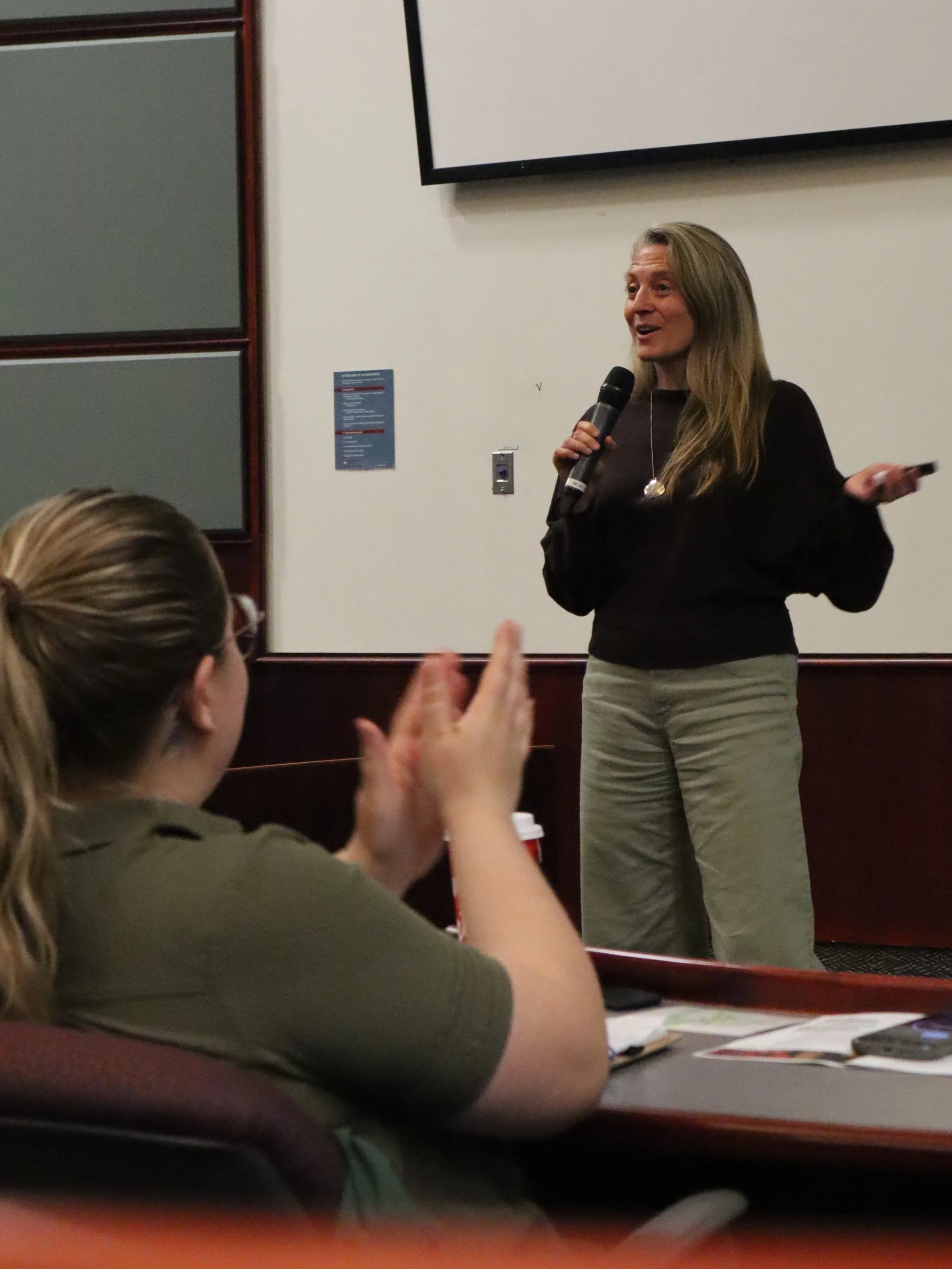
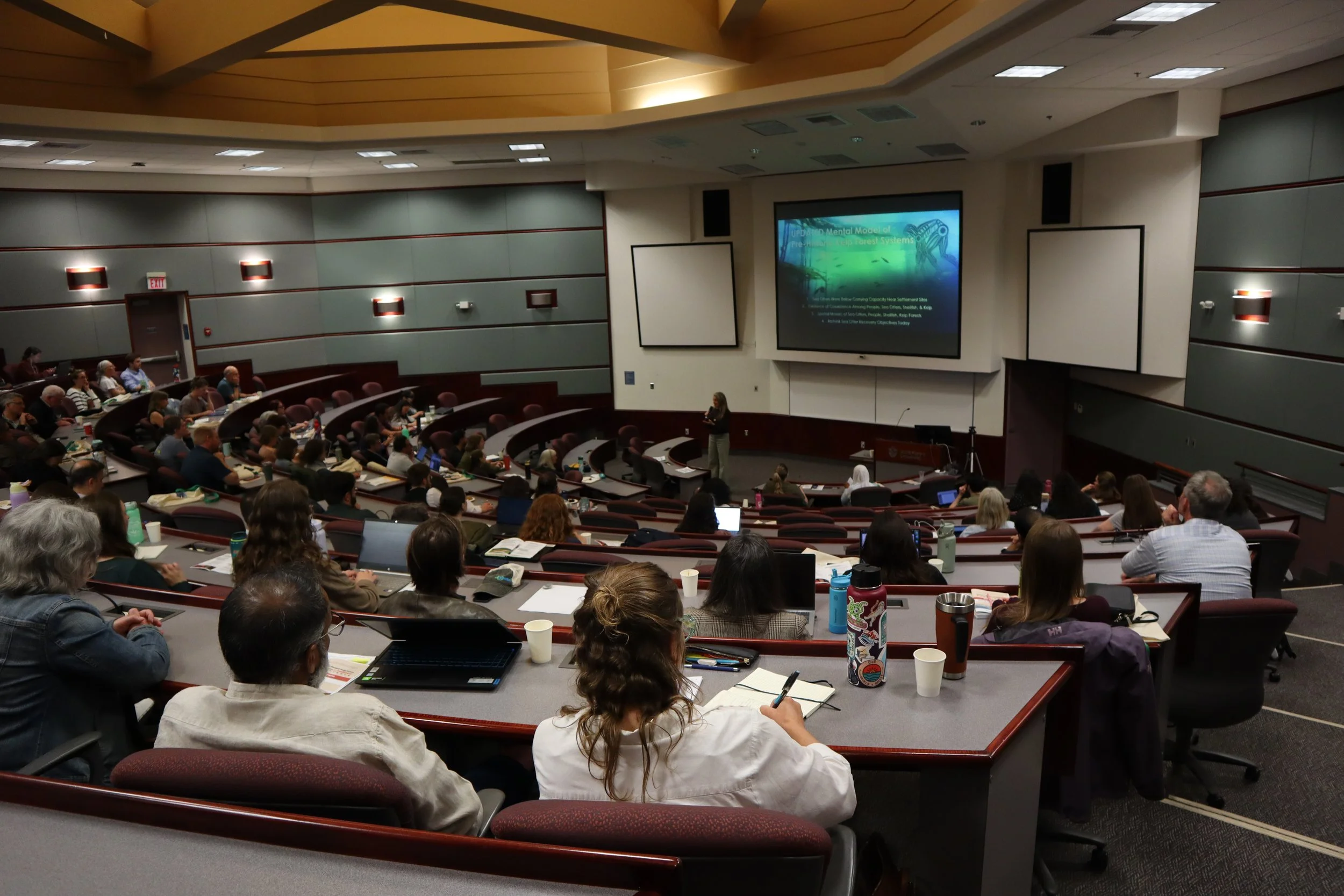
Dr. Anne Solomon opened the conference with a keynote exploring how restoring resilient ocean relationships requires a deeper understanding of the intertwined social and ecological systems that support healthy coastal ecosystems. Challenging the perception that humans are inherently external disruptors of nature, she highlighted archaeological and historical evidence demonstrating that Indigenous stewardship has shaped and sustained productive coastal ecosystems for millennia.
Through case studies, including the dynamics between sea otter, shellfish, and people, and BC’s clam gardens, Dr. Solomon illustrated how Indigenous knowledge and long-term relationships with place can inform modern restoration and conservation efforts. She emphasized the importance of incorporating deep time perspectives, recognizing original rights holders, and embracing “deep care” when planning for ecosystem recovery. Ultimately, restoring resilient ocean relationships will depend on democratizing ocean science and governance, centering Indigenous knowledge systems, and developing policies that support both ecological sustainability and social justice.
Day 1 explored topics such as:
How collaboration accelerates regional resiliency
How social influence and decision-making processes can impact nature-based solutions
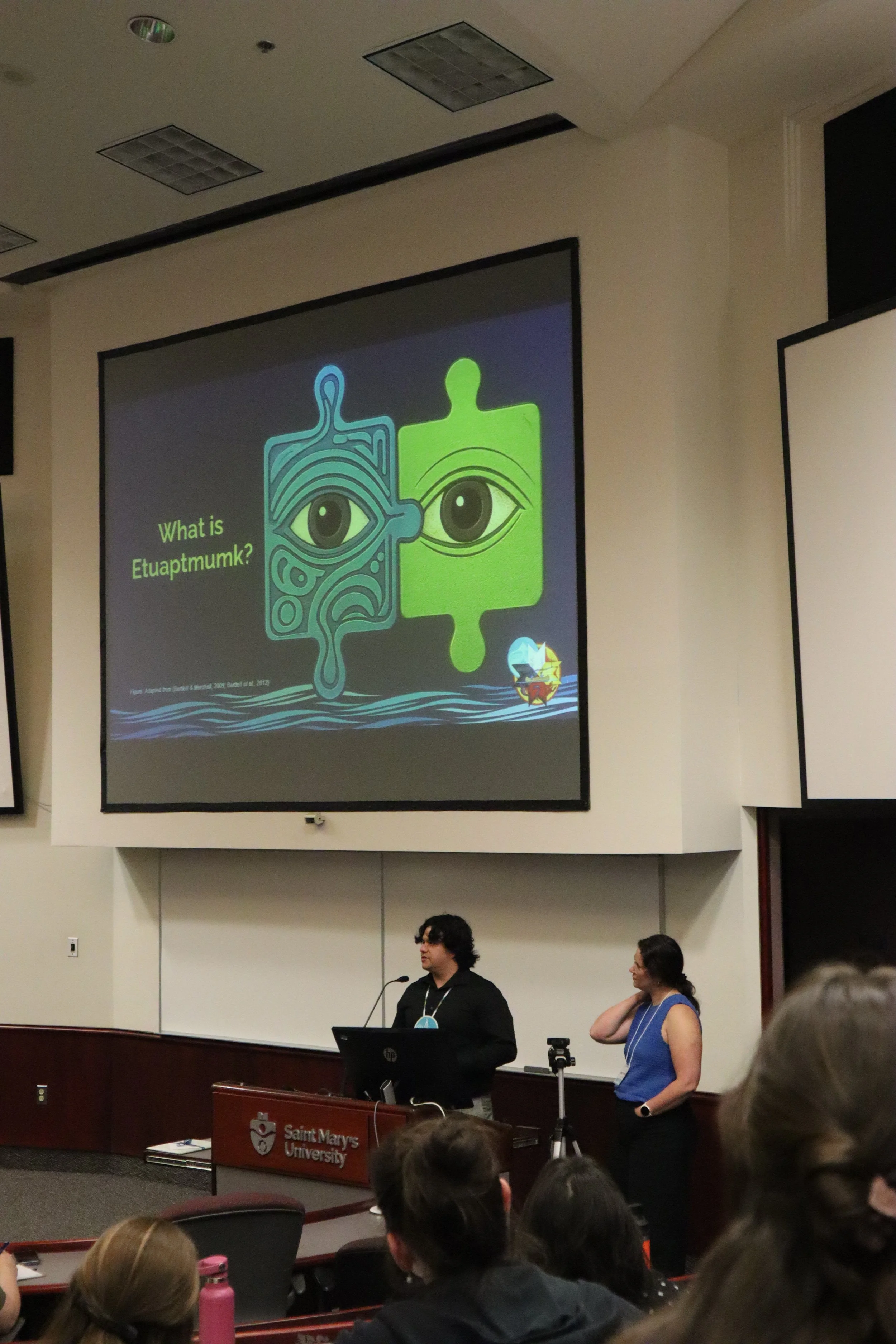
Putting Etuaptmumk (two-eyed seeing) into practice
Rewilding in coastal Europe
June 23: Modelling and Designing Nature-Based Solutions
Keynote speaker: Dr. Nicoletta Leonardi (University of Liverpool)
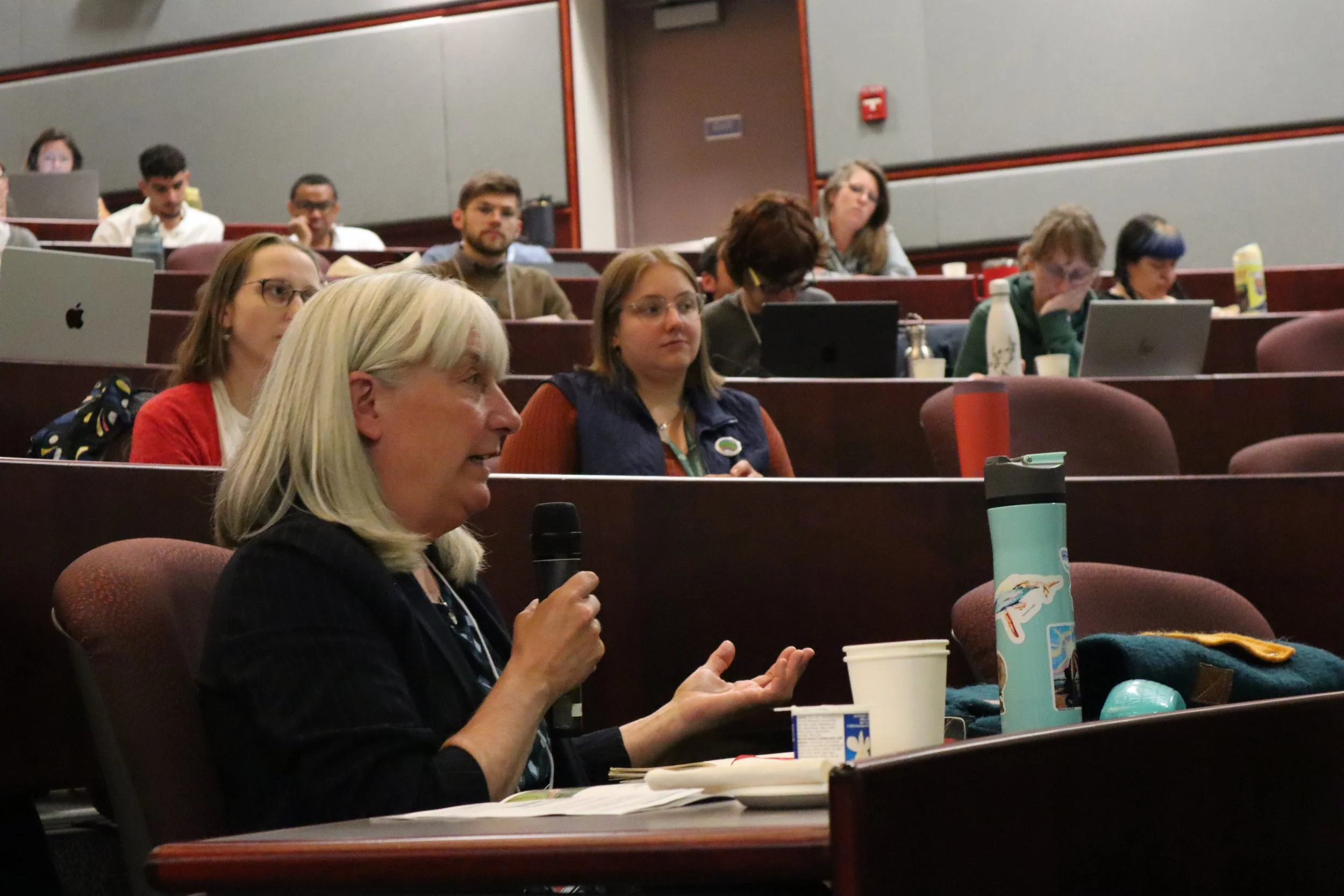
Dr. Leonardi, whose specialty is coastal processes, eco-geomorphology, and hydro-morphodynamic modelling, delivered a keynote examining how emerging technologies can improve our understanding of dynamic coastal environments. Her work addresses climate-driven coastal change, coastal resilience, and the development of nature-based solutions for sustainable coastal management, with particular emphasis on the restoration/implementation of coastal wetlands and seagrass systems.
In her keynote, Dr. Leonardi discussed how machine learning and remote sensing are being integrated to model and predict the evolution of coastal landscapes.She highlighted the use of long-short term memory (LSTM) neural networks as predictive tools for morphological change in coastal systems. These systems can improve our ability to predict shoreline changes and inform adaptive management strategies. By combining large environmental datasets with artificial intelligence, her research offers new opportunities to understand complex coastal processes and support evidence-based decision-making for resilient coastal restoration and planning.
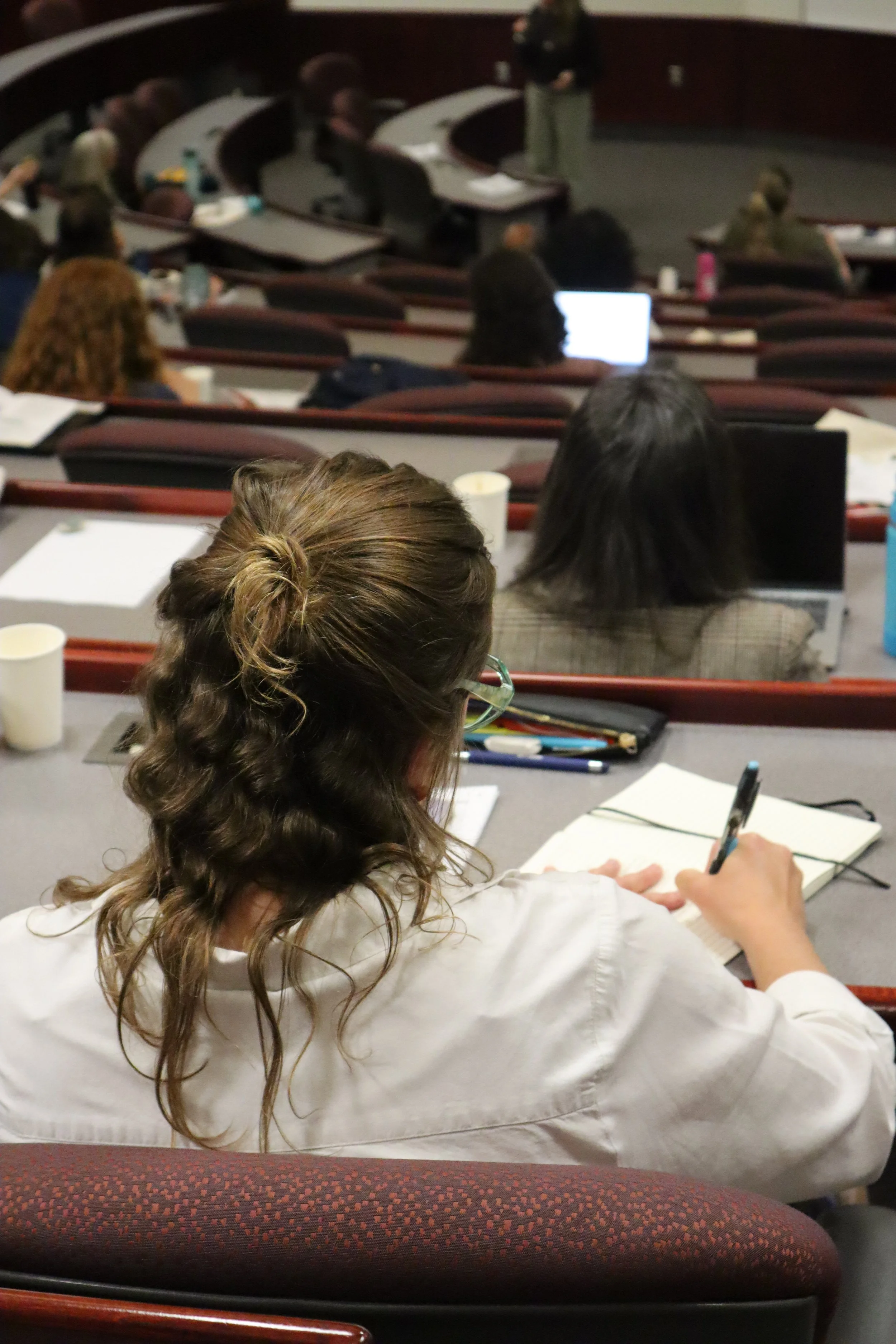
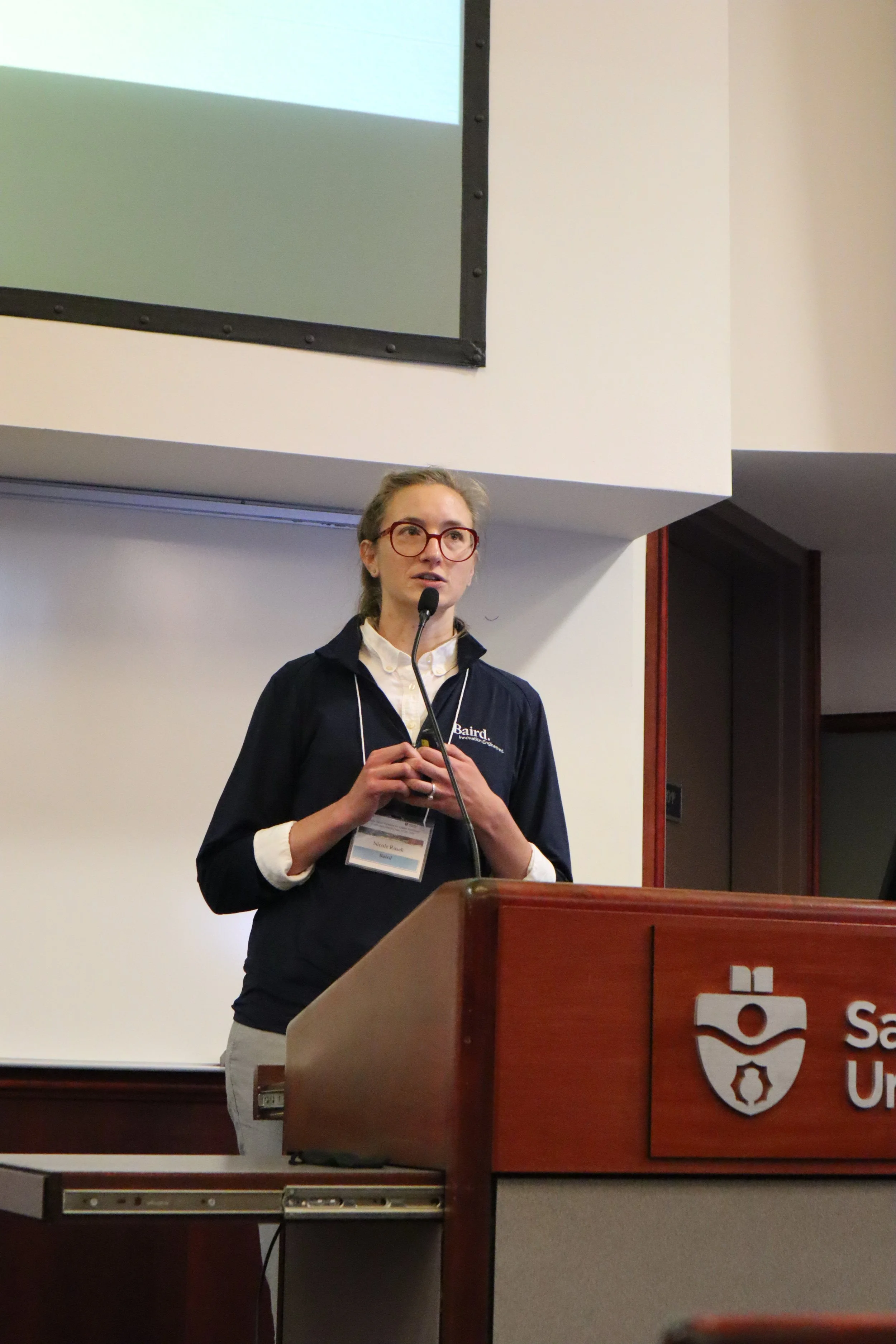
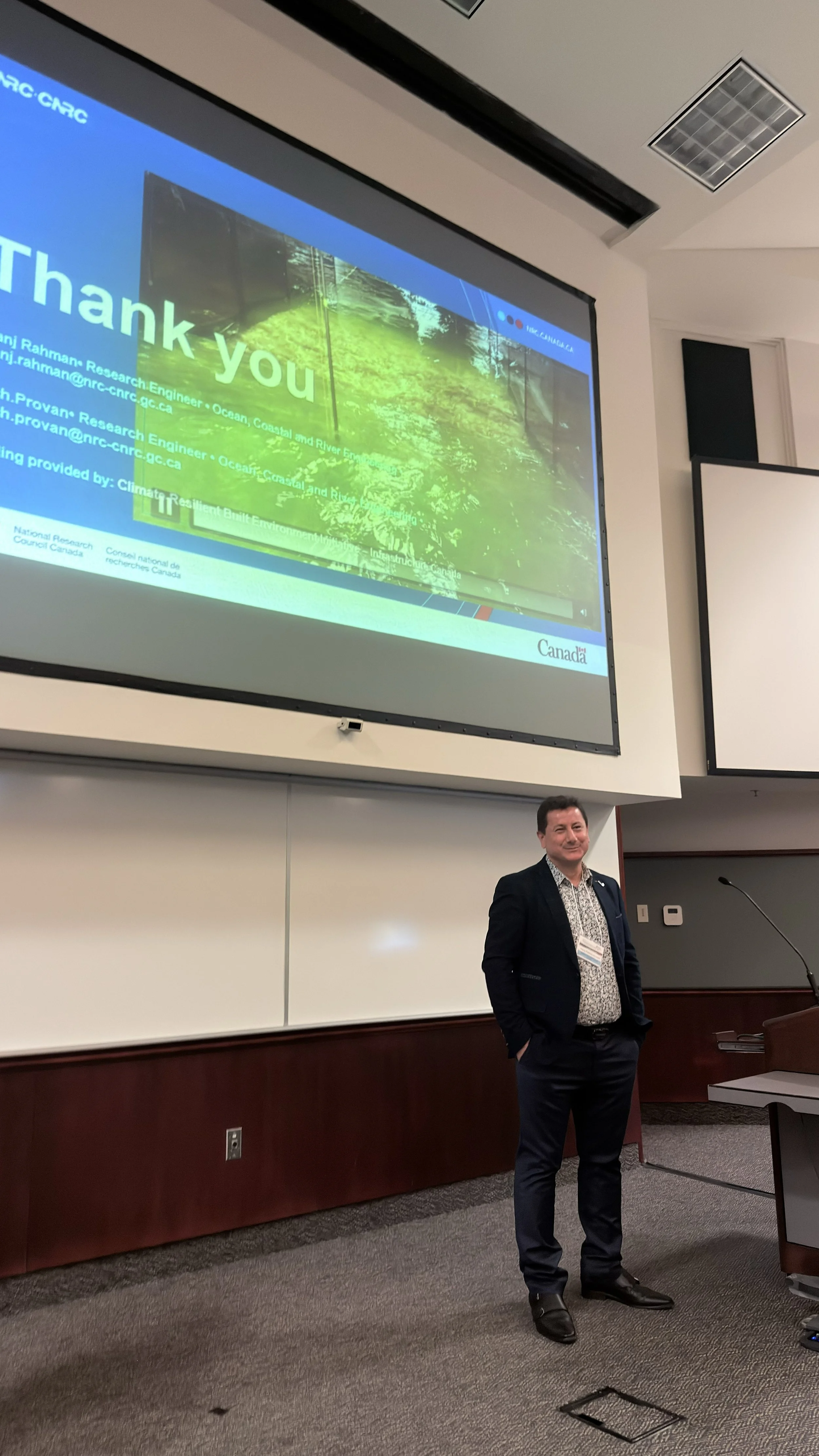
Throughout the sessions, we got to learn about all the interesting and innovative ways people are designing and modelling solutions for coastal protection. Some topics included:
Dynamic modelling of cobble movement
Using loose oyster shells for wave attenuation
Interactive flood mapping
Developing shoreline management plans
Interactive Workshops
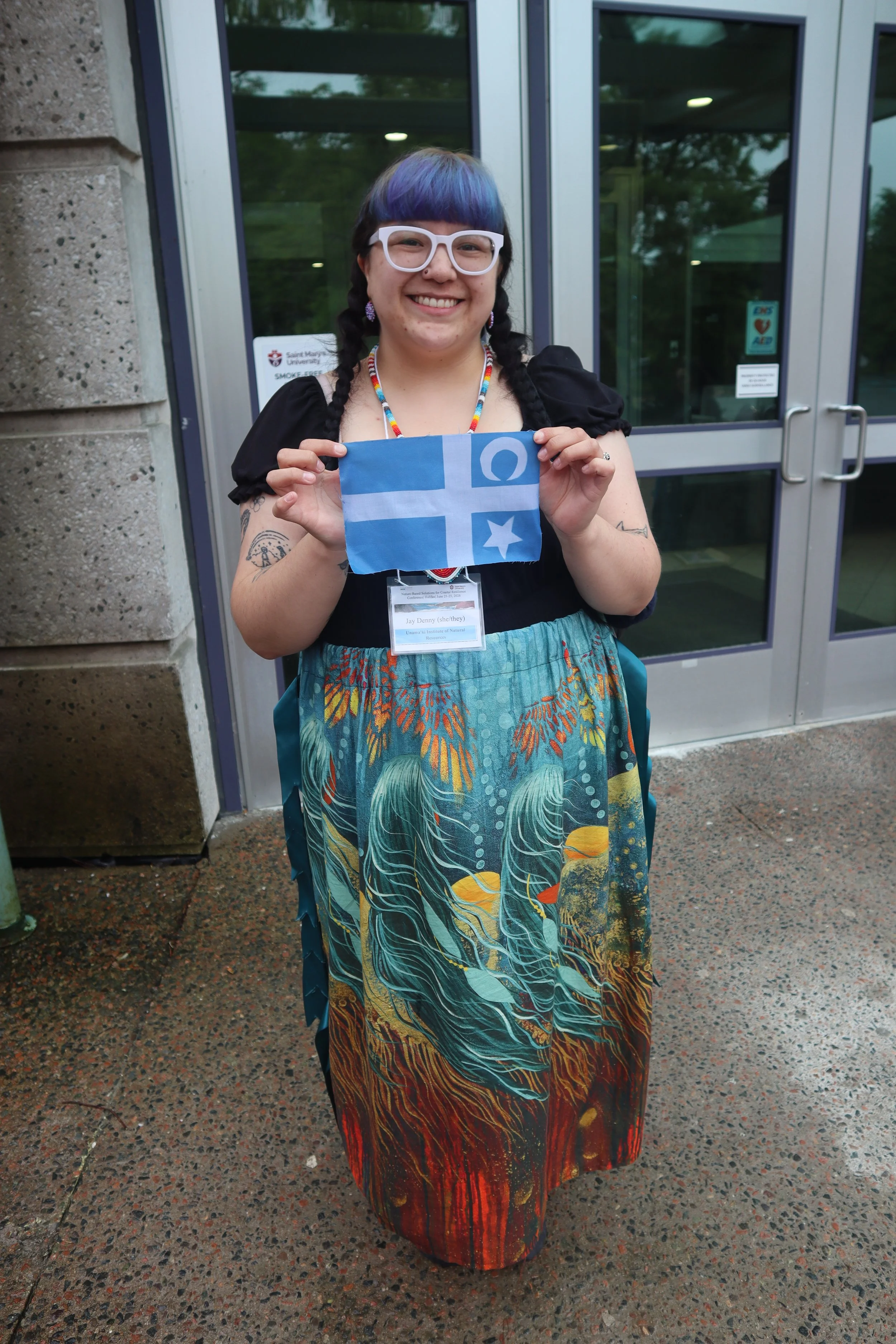
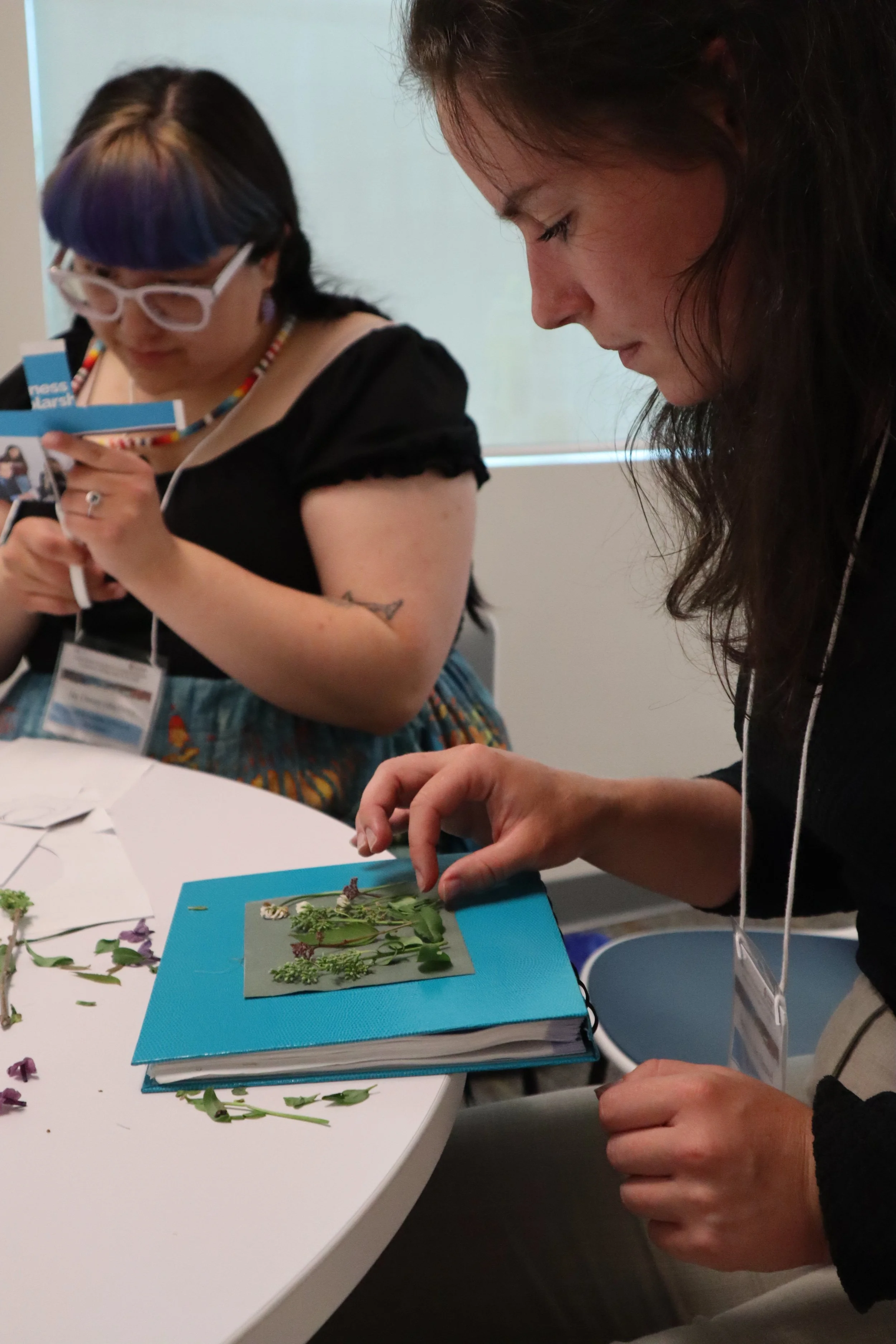
Cyanotype Art x Science Workshop
Facilitated by science communicator, Ive Velikova, participants got the chance to explore the intersection of science and art using cyanotype, a sun-printing technique. Cyanotype is a camera-less photographic printing process that produces a vibrant monochrome blue image by using light-sensitive iron salts that react to UV light. Attendees appreciated an opportunity to pause and create art with their hands amidst a busy conference.
Beyond Land Acknowledgements Workshop
Indigevisor, a local Indigenous women-led and owned advisory corporation, led participants through practical, action-focused approaches to moving beyond land acknowledgements. Participants learned tools to help build accountable relationships with Indigenous communities and integrate reconciliation into daily decision-making.
Guided Plant Walk in Point Pleasant Park
Led by Dr. Jeremy Lundholm, participants in this workshop got the chance to stroll through (rainy!) Point Pleasant Park and learn about the local plant species. Highlights included a seal sighting and learning about how the history of settlement can be seen through the vegetation.
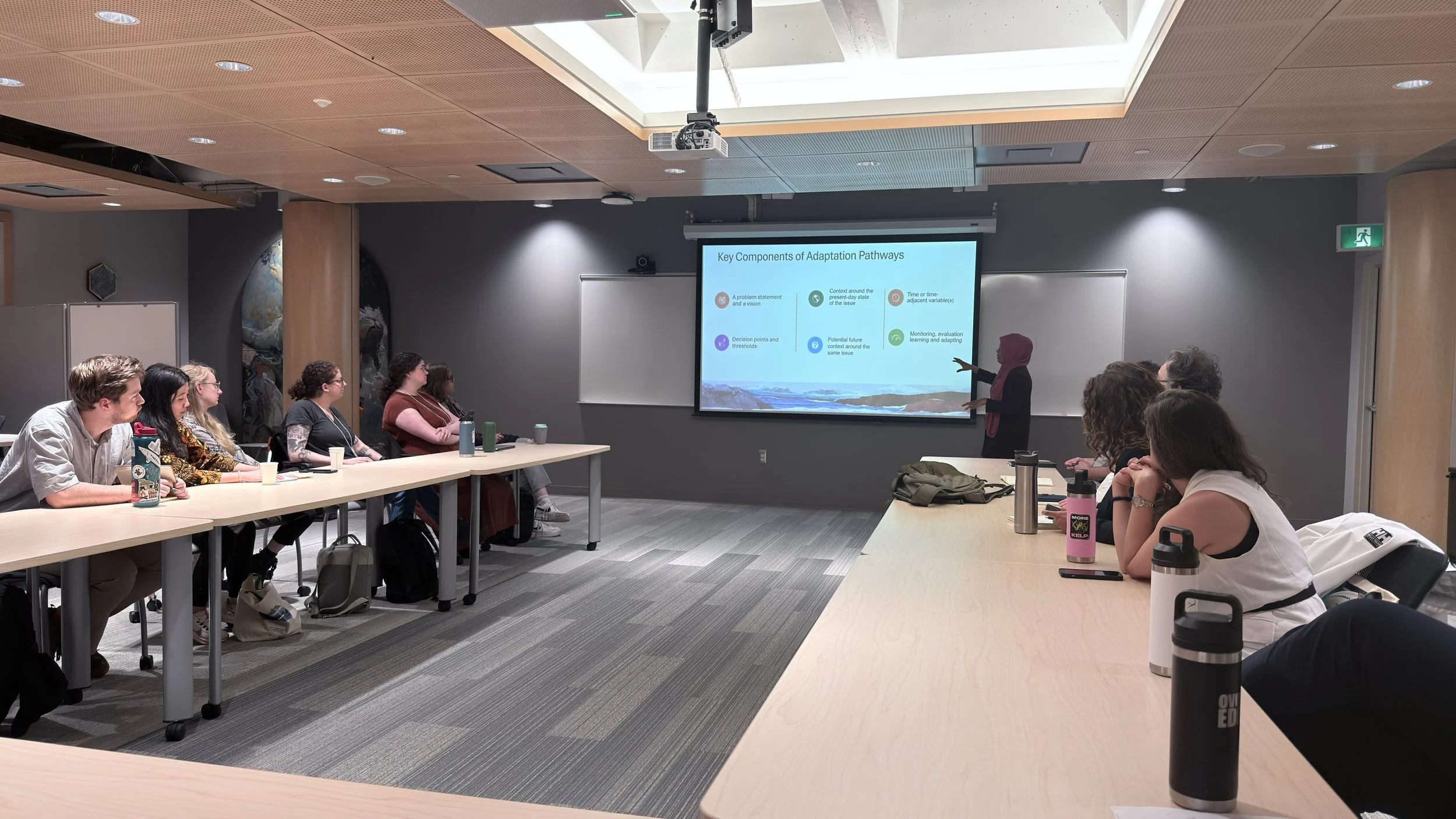
Collective Re-Imagining of Coastal Landscapes
Adaptation Pathways for Resilient Futures Workshop: During this workshop hosted by adaptation pathways experts Dr. Umme Kulsum and Dr. Elson Galang, participants got the chance to work collaboratively with one another and think about how to design flexible, long-term strategies for coastal resilience. Adaptation pathways, a forward-thinking approach to decision-making under uncertainty is a great way to dream up new and innovative solutions for the challenges facing coastal communities. The perfect workshop for our conference theme of reimagining!
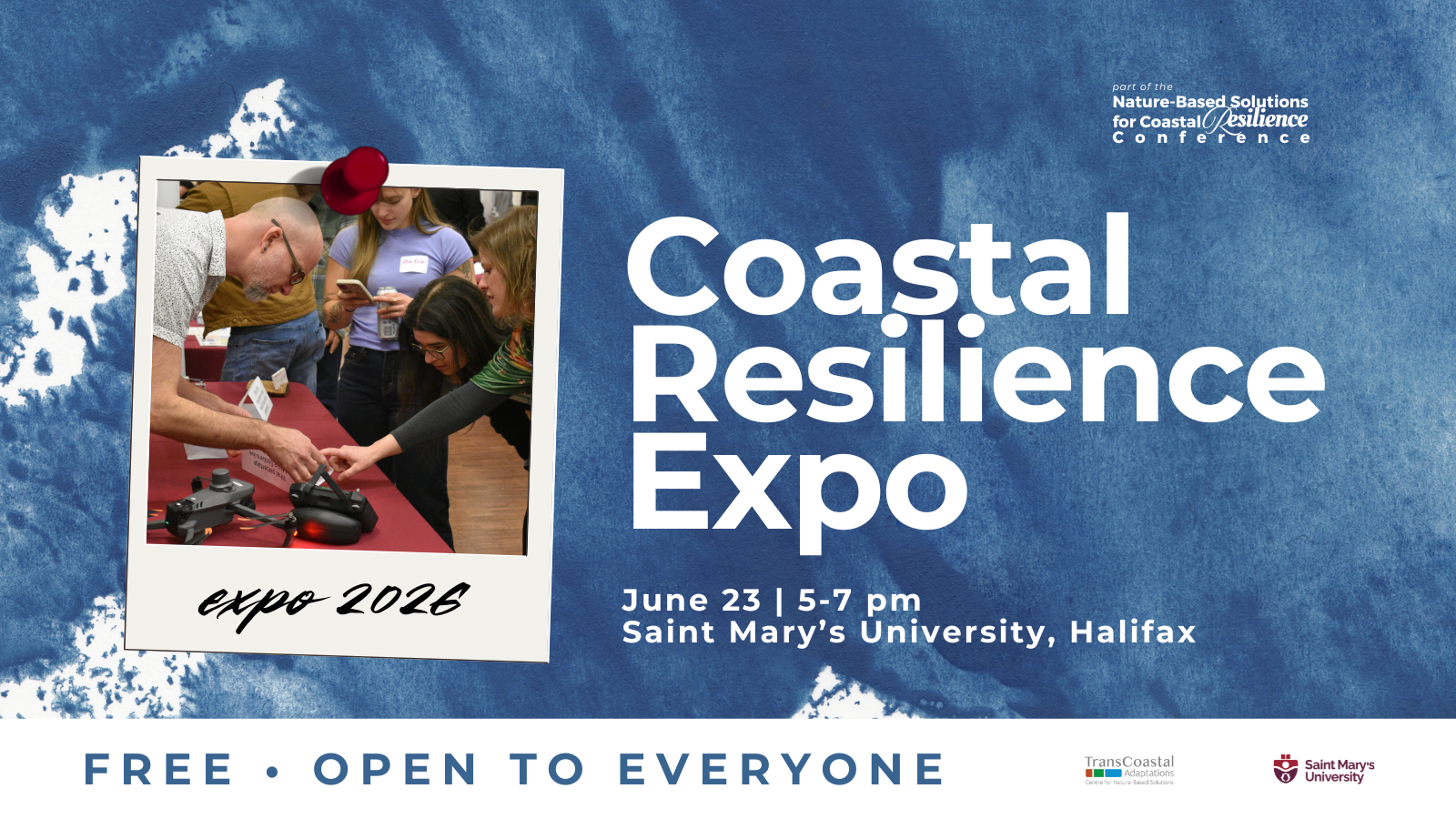
Coastal Resilience Expo & Poster Session
The Coastal Resilience Expo & Poster Session is a free, open community event held during the 2026 Nature‑Based Solutions for Coastal Resilience Conference. Attendees enjoyed a walk‑through gallery of posters featuring new research, field studies, and real‑world coastal projects. The Expo was designed to be approachable for all backgrounds.
June 24: Ecosystems, Reimaging, and the Power of Plants
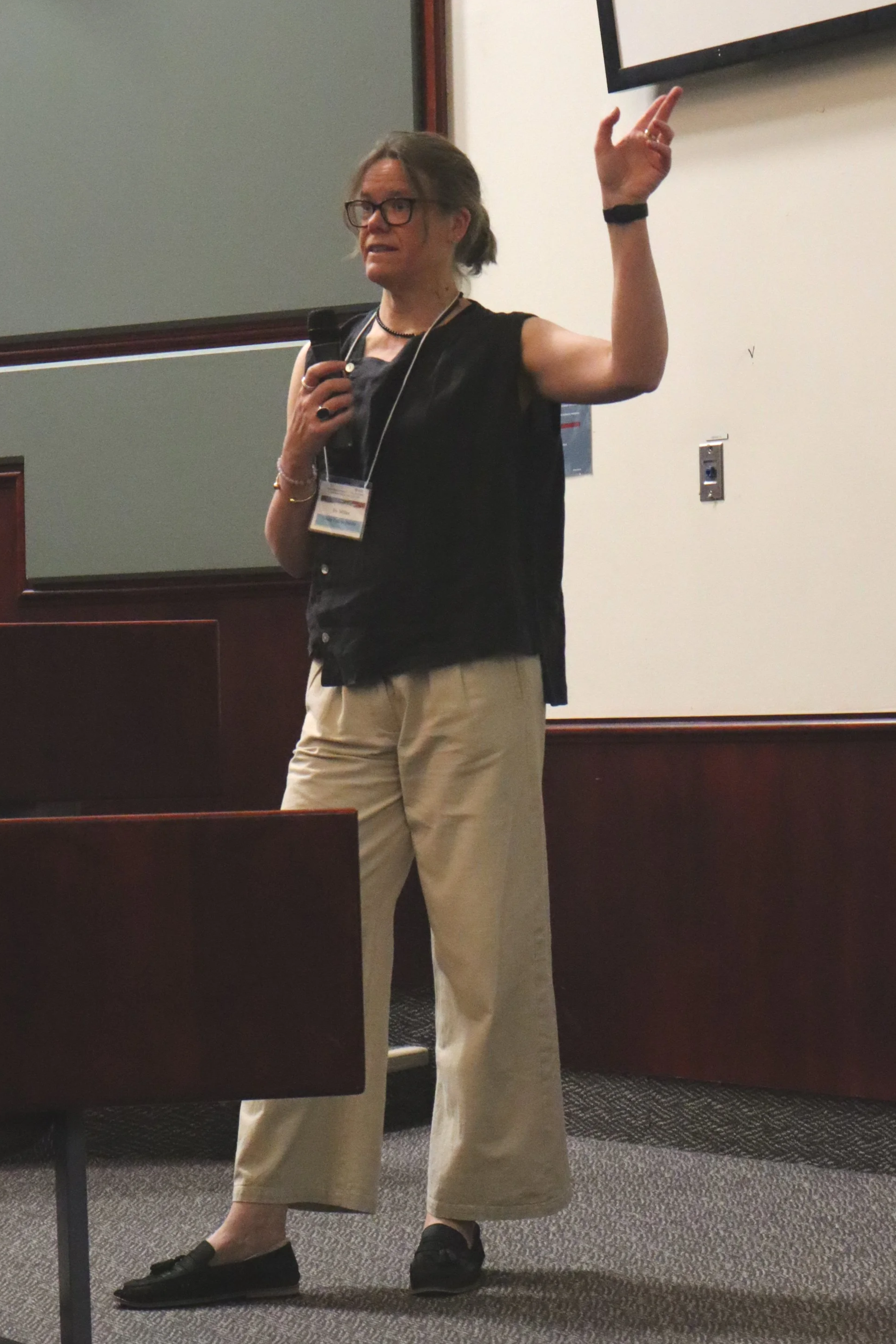
Keynote speaker: Dr. Iris Möller (Trinity College Dublin)
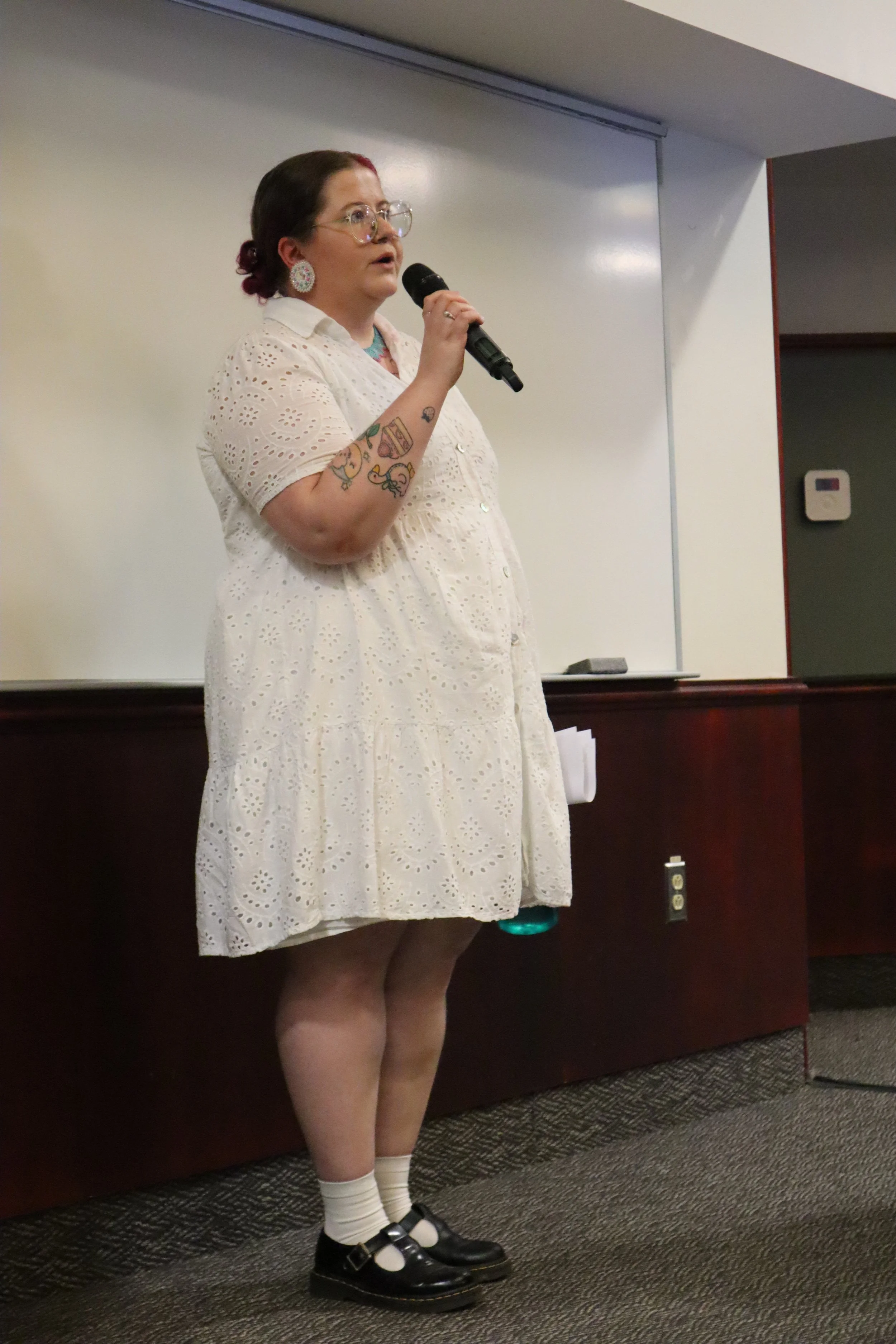
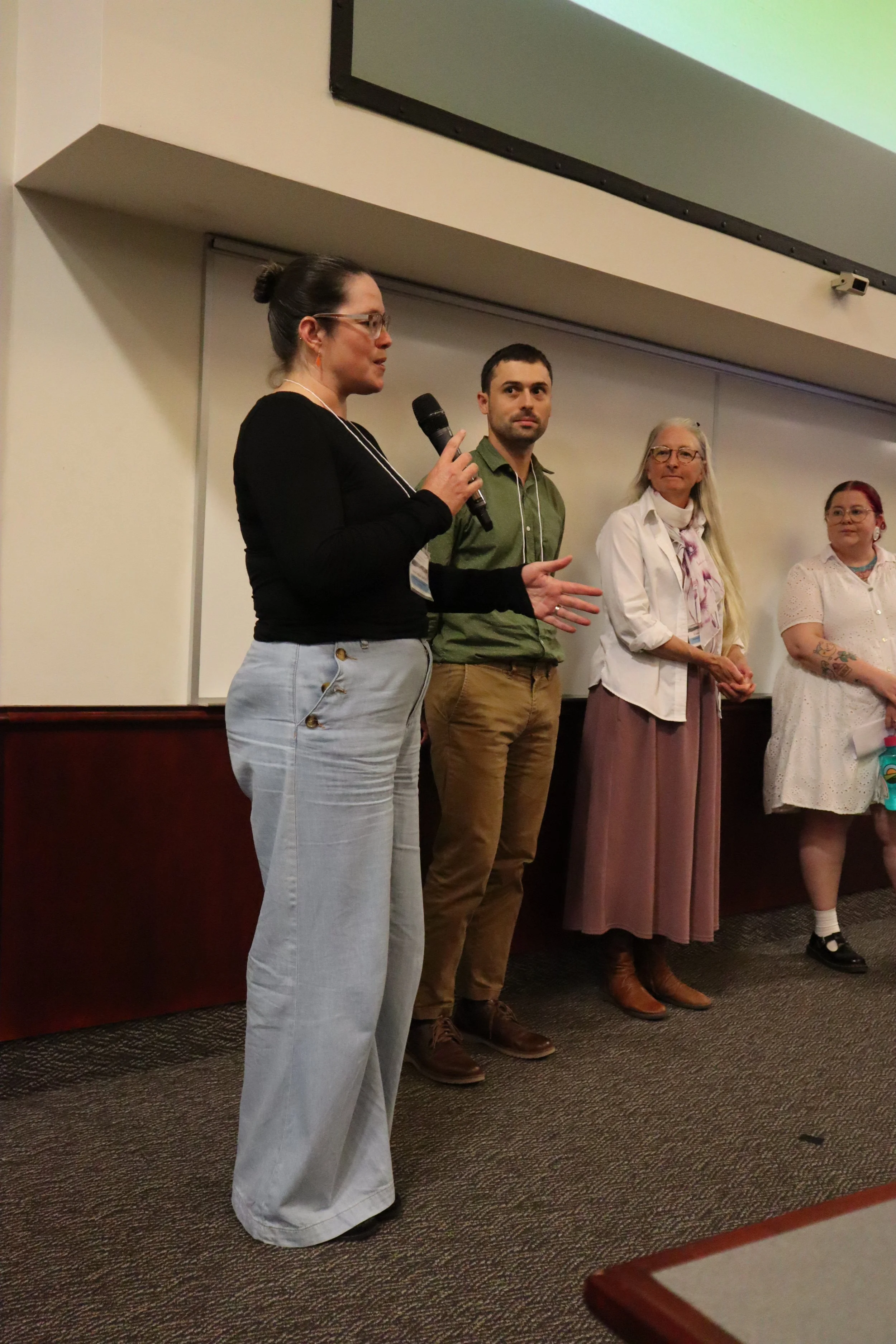
On the third and final day of the conference, we were joined by Dr. Iris Möller, a coastal geomorphologist with decades of research experience in developing integrative solutions for coastal environments. In her keynote talk, Restoration for Coastal Protection: A journey across time, space, and uncertainty, we learned about the importance of coastal landforms, particularly salt marsh vegetation, in protecting against erosion and flooding. Dr. Möller also discussed how we need to change our habit of dividing natural and social processes, as coastal environments are so often affected by human actions. Integrating social science can help transform the way communities think about nature-based solutions and their willingness to adopt them. One of her key takeaway messages was that we need to accept, without fear, that coastal systems have low predictability. Our ability to understand some parts of nature doesn’t equal control of nature, but through continued learning and iterative decision-making, we can still have a big impact on the protection of coastlines and coastal communities.
In our last conference presentation sessions, we learned about:
Successful case studies in coastal wetland restoration
Vegetation recovery at restoration sites
Nature-based solutions for the arctic coast
Integrating indigenous voices in coastal decision-making
June 25: Field Trips
After three action-packed days of presentations, workshops, and networking, the conference concluded with a final day of field trips, giving the participants the opportunity to explore additional restoration projects and learn from experts.
-
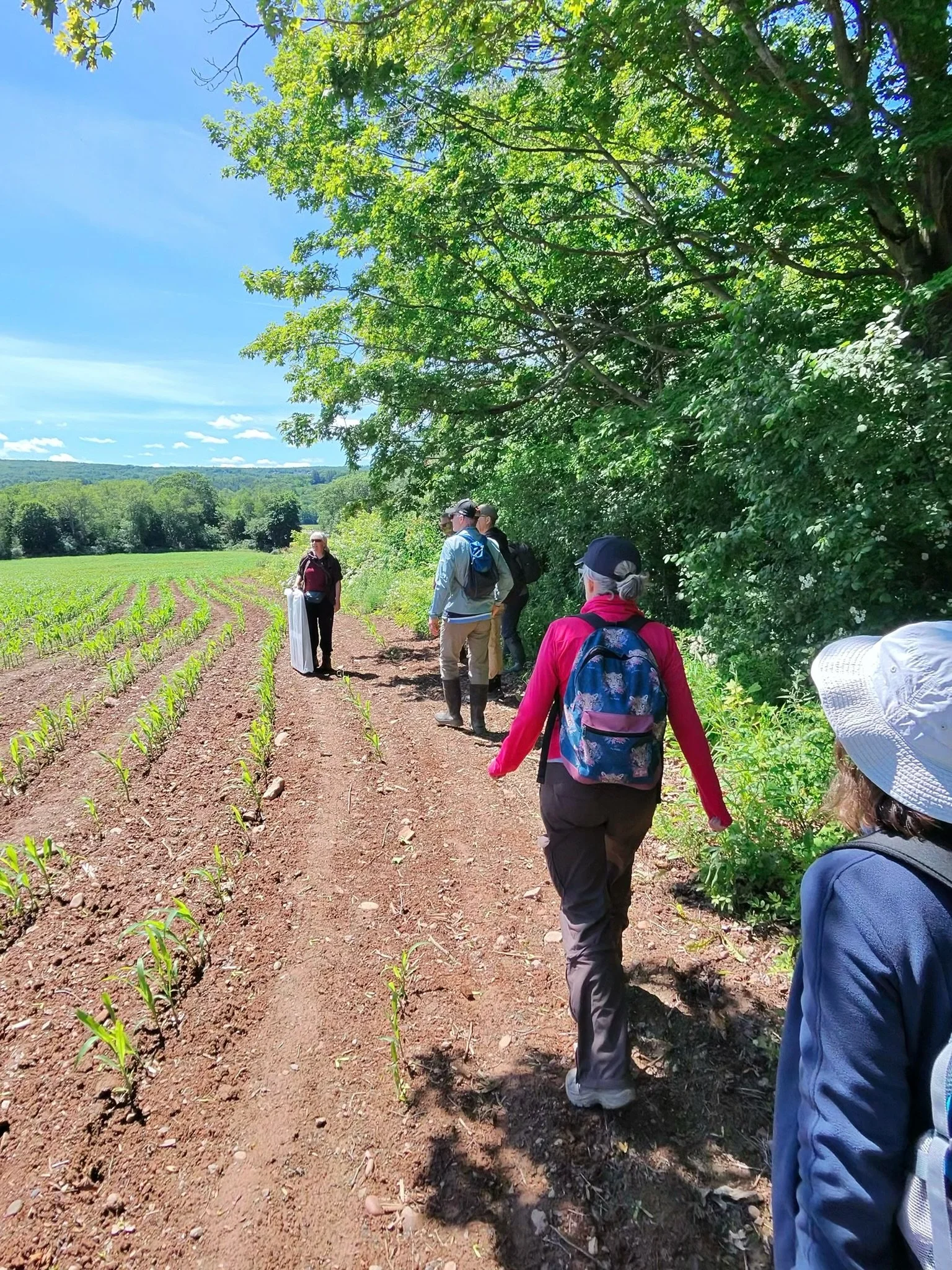
The Chignecto Isthmus trip departed bright and early for one of the longest-standing restoration sites, the Converse Marsh, where participants got the chance to explore the area’s rich history as well as the ongoing research shaping its future.
Along the way, the group stopped at the Masstown Market, before arriving at the Beaubassin and Fort Lawrence National Historic Site Lookoff. There, participants heard an engaging talk about the archaeology of the historic dykelands before continuing to the marsh. Hosted by Tony Bowron (CBWES) and Jeremy Lundholm (TransCoastal Adaptations), everyone got the chance to hear about the site history, identify marsh vegetation, and even experience the distinctive scent of sweetgrass.
The Converse Marsh managed dyke realignment and tidal wetland restoration site is located outside Amherst, NS, on the Nova Scotian side of the Missaguash River. Initiated by the Province of Nova Scotia, this site was restored in 2018 to address significant erosion, and increase protection for nearby historic sites, transportation routes, and private land, and was further funded through Environment and Climate Change Canada’s Wetland Conservation Fund. This project realigned a small section of dyke, raised a section of adjacent road, and breached the existing dyke, restoring ~15 hectares of tidal wetlands.
Following the tour of Converse Marsh, the field trip headed to the Beaubassin Research Station. Operated by Ducks Unlimited Canada, the research station sits adjacent to the restored Aulac salt marsh and supports students and researchers conducting a wide range of wetland and coastal research, in partnership with Acadia University and Irving Oil.
-
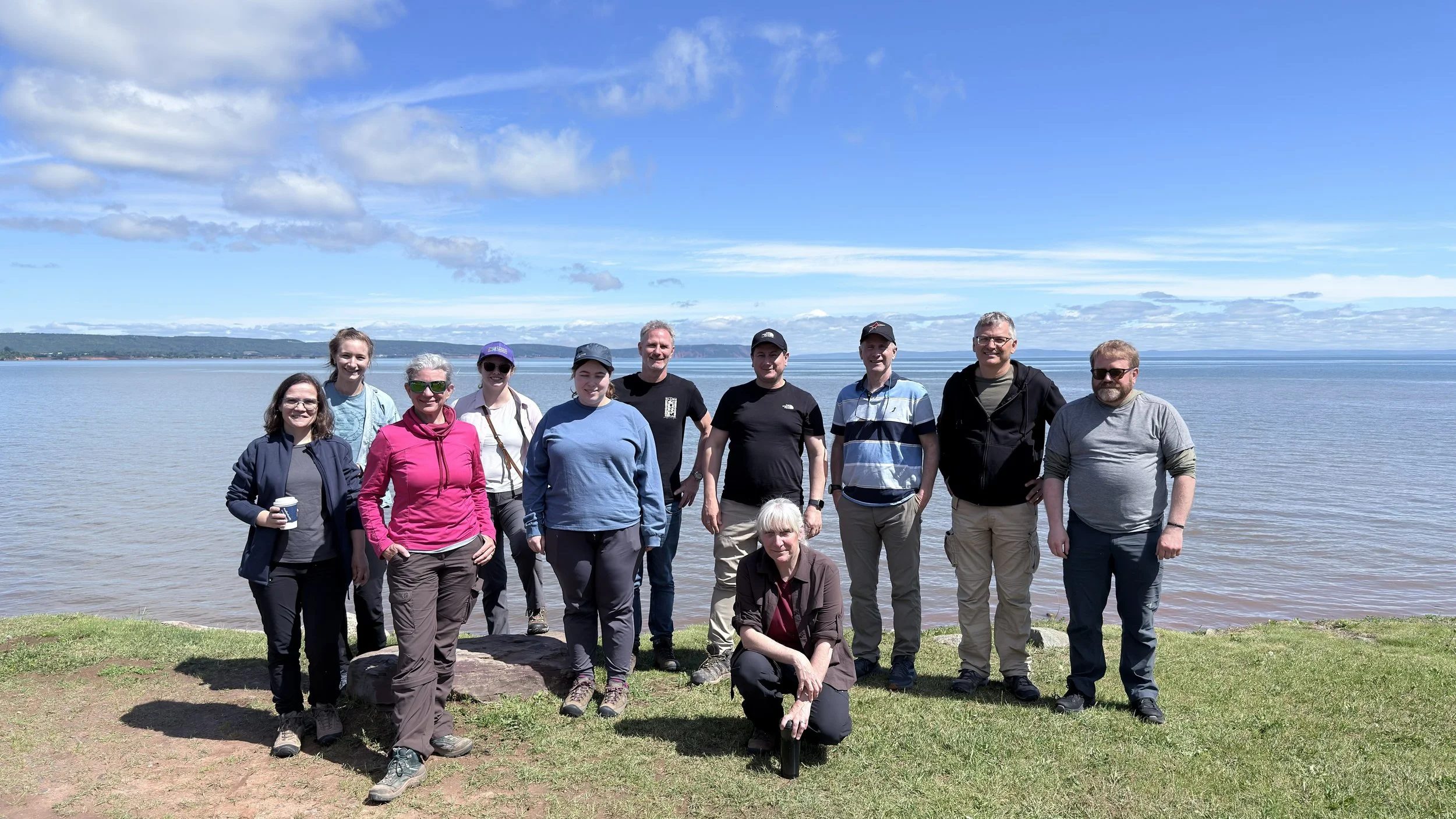
During this fieldtrip, participants had the chance to visit a restoration site in the Minas Basin and learn about local Acadian history.
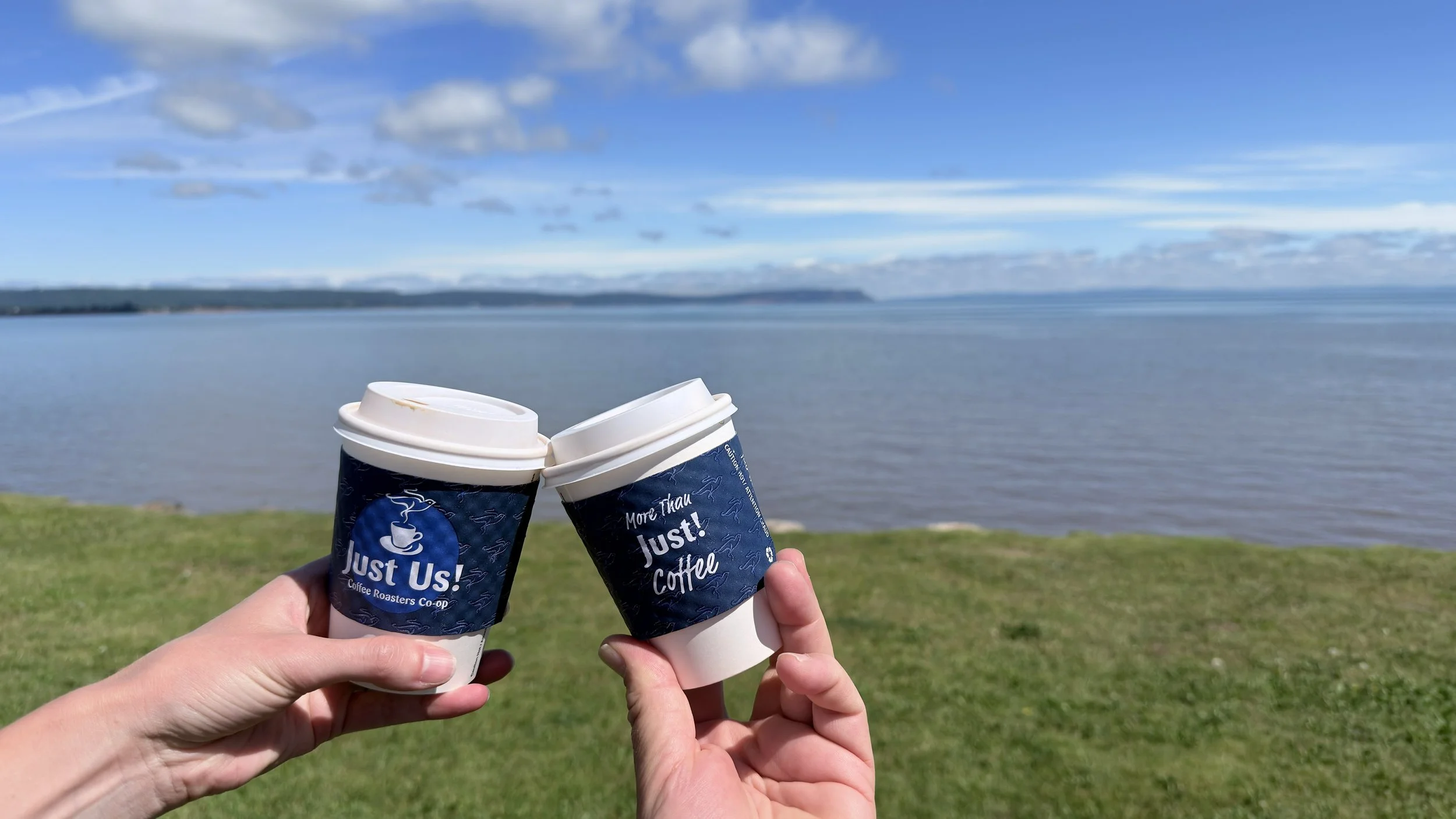
Before heading into the marsh, the group made a quick stop at Just Us! Coffee Roasters, to get fuel up for the day. They then visited Evangeline Beach to experience the Bay of Fundy’s famous high tide before continuing on to the Belcher Street Marsh Restoration Site.
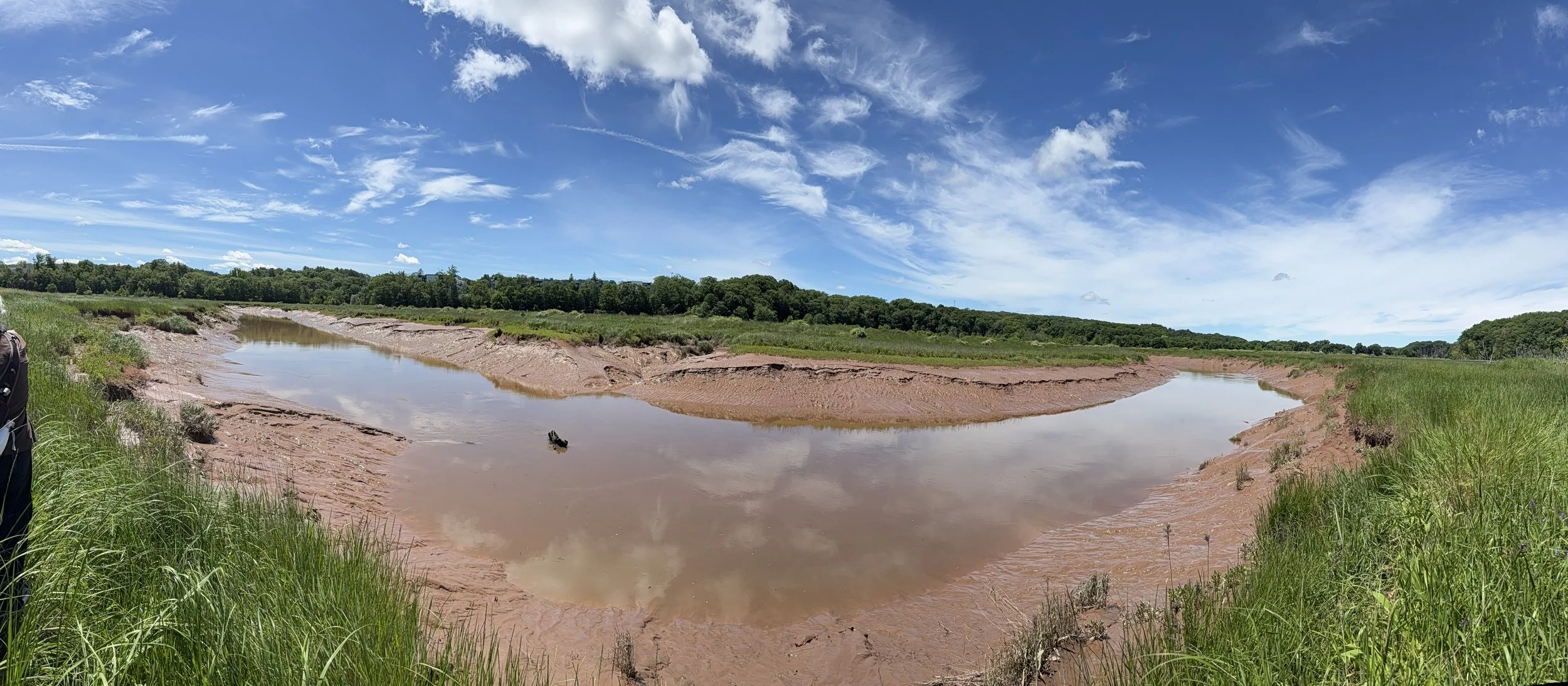
The Belcher Street Marsh is a brackish managed dyke realignment and tidal wetland restoration site on the Jijuktu’kwejk (Cornwallis River). Initiated by the NS Department of Agriculture, CBWES realigned and restored Belcher Street Marsh in 2018. The project was funded by the Department of Fisheries and Oceans Canada’s Coastal Restoration Fund and is part of the first iteration of the Making Room for Wetlands Project. The site underwent a rapid revegetation following the reintroduction of tidal waters, with less than 5% bare ground visible within 4 years. This site is unique in its design, in the inclusion of a living shoreline, composed of inverted rootwads, matting and planted salt marsh species. Since its initial breach, the Belcher Street Marsh has been thriving, with a network of channels developing and with elevations keeping up with the rate of sea-level rise. This site is an example of how nature-based solutions may be implemented into dykeland management, better protecting dyke infrastructure, accommodating and enhancing the important agricultural lands behind it, and restoring important tidal wetland habitat!
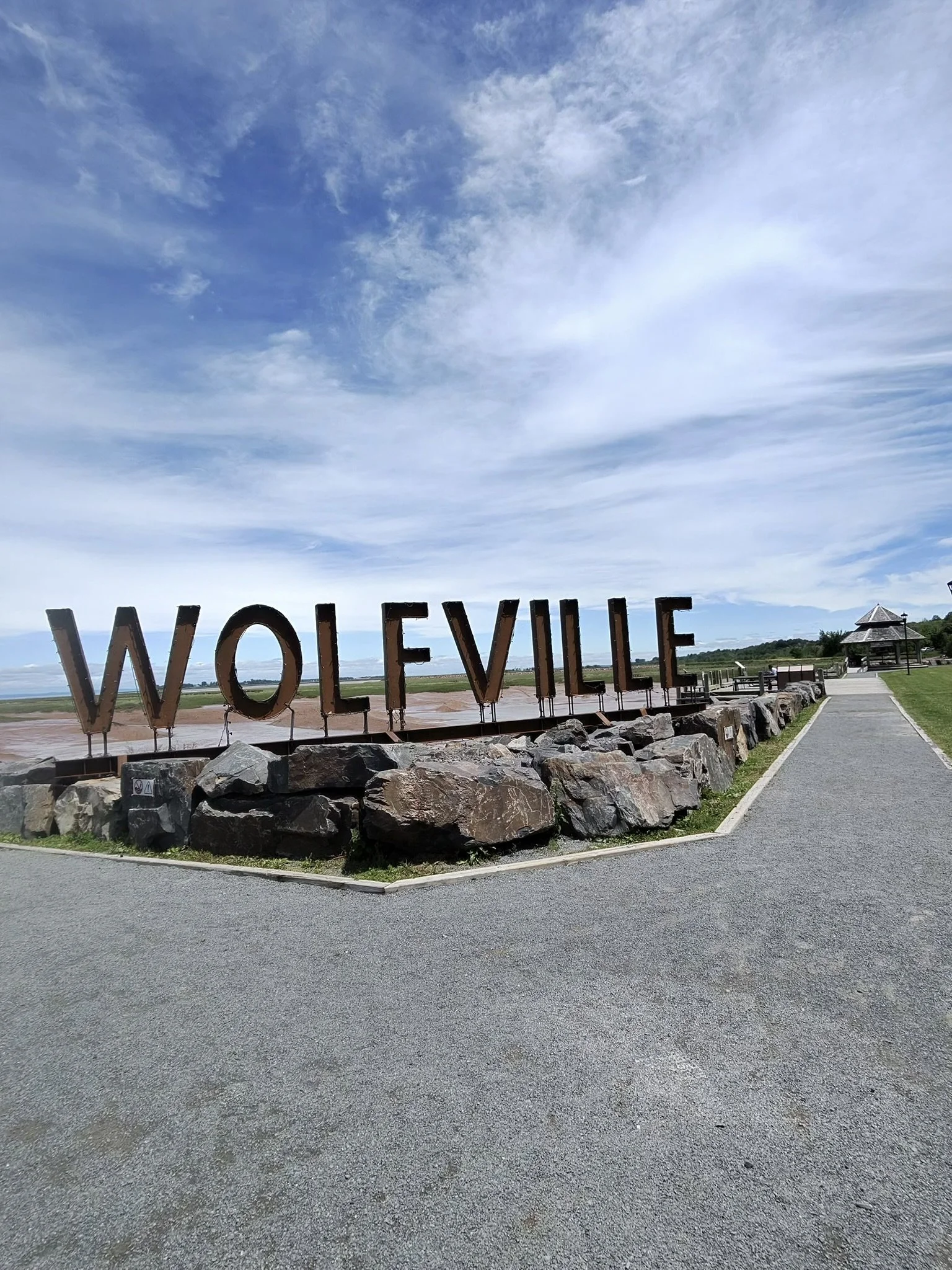
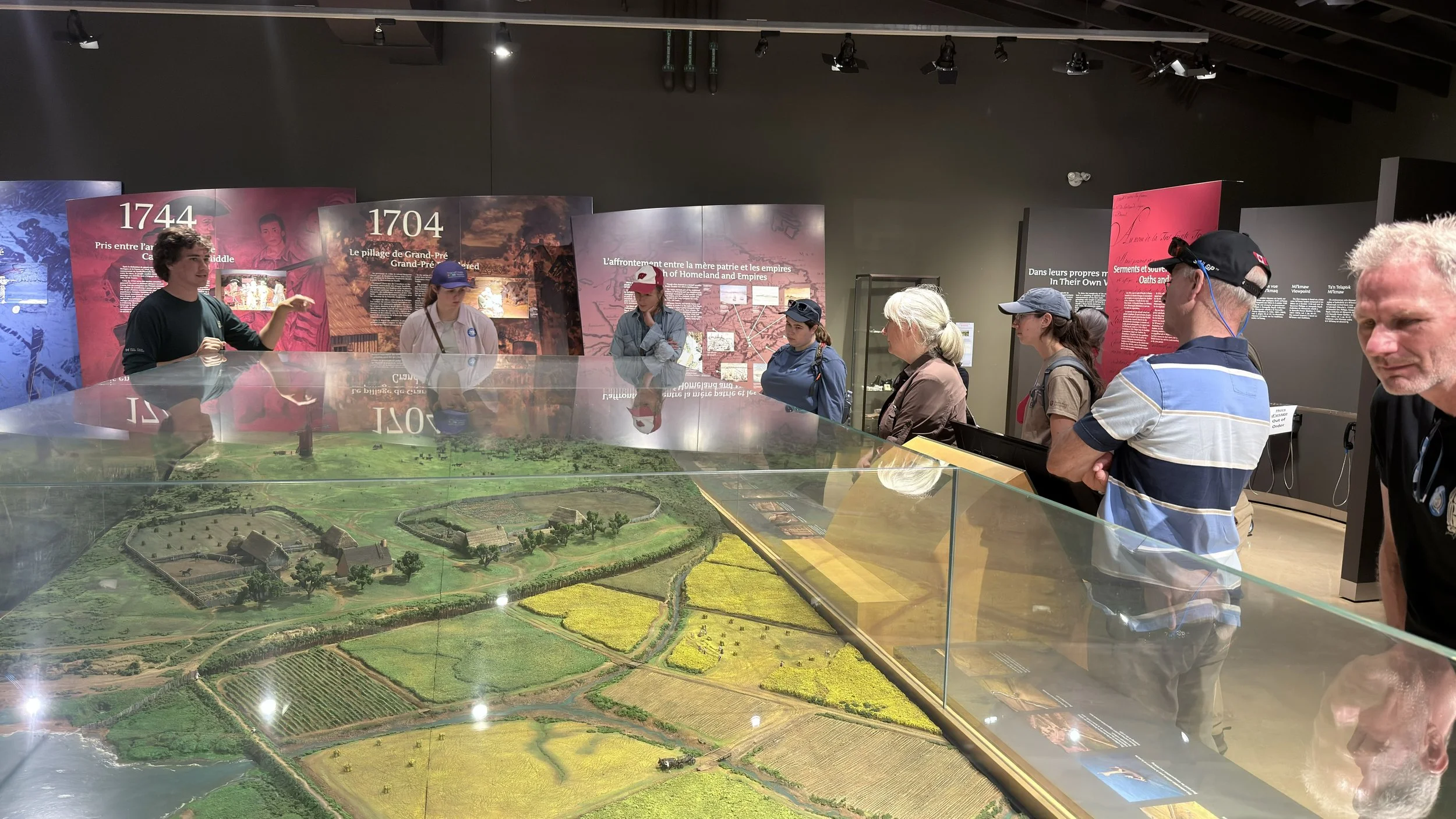
Following a lunch break at the Wolfville Waterfront Park, participants toured the Grand Pré National Historic Site to learn about the history of the Acadian dykelands and the people who built them. The day concluded with a return visit to Evangeline Beach, this time to witness low tide, before one final stop at the Windsor causeway.
Testimonials
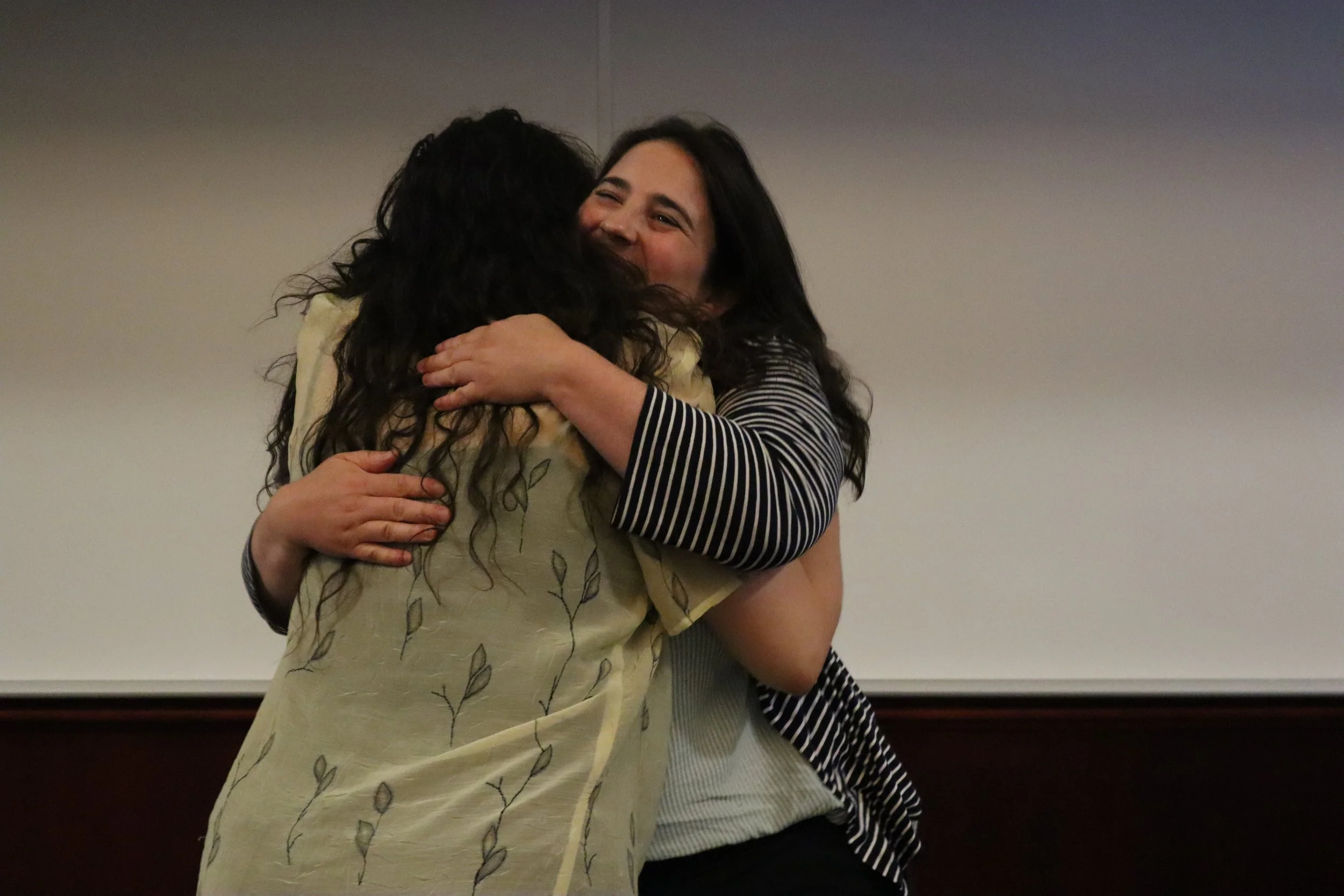
❝There are so many more voices and leaders in this work than I was previously aware of. I'm so excited to plug into this collaborative network moving forward in my career.❞
❝The combination of field trips, posters, workshops, presentations, and keynotes kept the conference interesting and engaging.❞
❝Great sessions, great networking, great catering, terrific space, lovely program. The TCA staff is amazing. Great job!❞
❝I traveled a long way to experience the Bay of Fundy and the restoration work—I was far from disappointed. Getting muddy, meeting the plants, and experiencing the landscape was an awesome, highly immersive experience.❞
❝Since it was a small conference, there was ample opportunity to talk with other participants and attend all of the talks.❞
❝Very knowledgeable staff and well planned and timed.❞
❝I'm excited to plug into this collaborative network moving forward in my career.❞
Conference Schedule
To download the conference program in PDF format, click the button below.
Sponsors & Exhibitors
PLATINUM SPONSORS
Atlantic Chapter
Community of Practice