

Restoring Wetlands, Storing Carbon
What is Blue Carbon?
Carbon dioxide (CO₂) is a vital greenhouse gas that traps heat to keep Earth warm. Human activities release extra carbon dioxide, intensifying this effect and driving global climate change. Our team is studying how restored salt marshes contribute to climate regulation by storing carbon within their systems.
Blue Carbon is carbon that is stored in coastal wetlands including saltmarshes, seagrass meadows, and mangroves. As shown below, blue carbon habitats have the potential to store more carbon per area than terrestrial habitats (Howard et al., 2014).
In our study area within the Bay of Fundy, we found very high initial rates of sedimentation leading to high rates of carbon accumulation in the first years after restoration (van Proosdij et al., 2023).
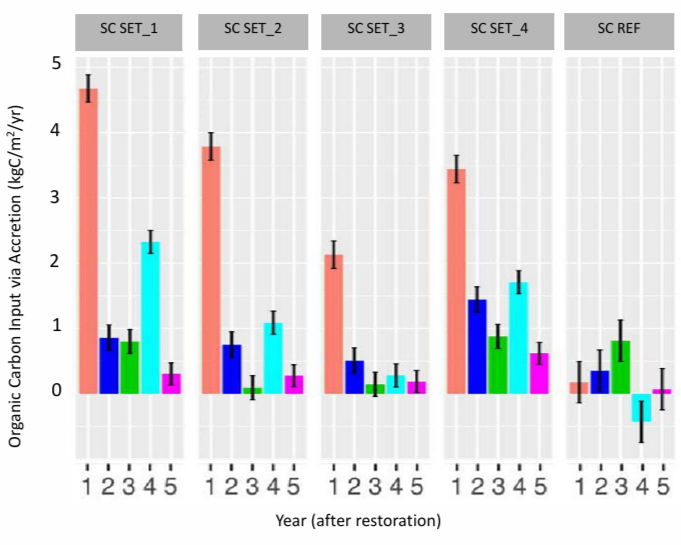
Estimated organic carbon input via sediment accretion over time at St. Croix West restoration site. We can see high initial rates of sedimentation leading to high rates of carbon accumulation in the first years after restoration (salmon pink-coloured band).
Why Saltmarshes?
Salt marshes act as a natural carbon sink, taking up CO₂ through photosynthesis and storing carbon in their soils for long time periods of time, helping to reduce the amount of greenhouse gases in the atmosphere.
Regular flooding creates a lack of oxygen in the groundwater of saltmarshes, which slows down most microbes from being able to break down the carbon and reintroduce it to the atmosphere.
Salinity usually prevents the production of other greenhouse gases in salt marshes, like methane (CH4)
Our Reserach
Our team measures how much carbon restored marshes store in their sediments and how quickly they build up new sediment after restoration. Early results show rapid carbon accumulation in the first years as marshes develop toward more natural conditions.
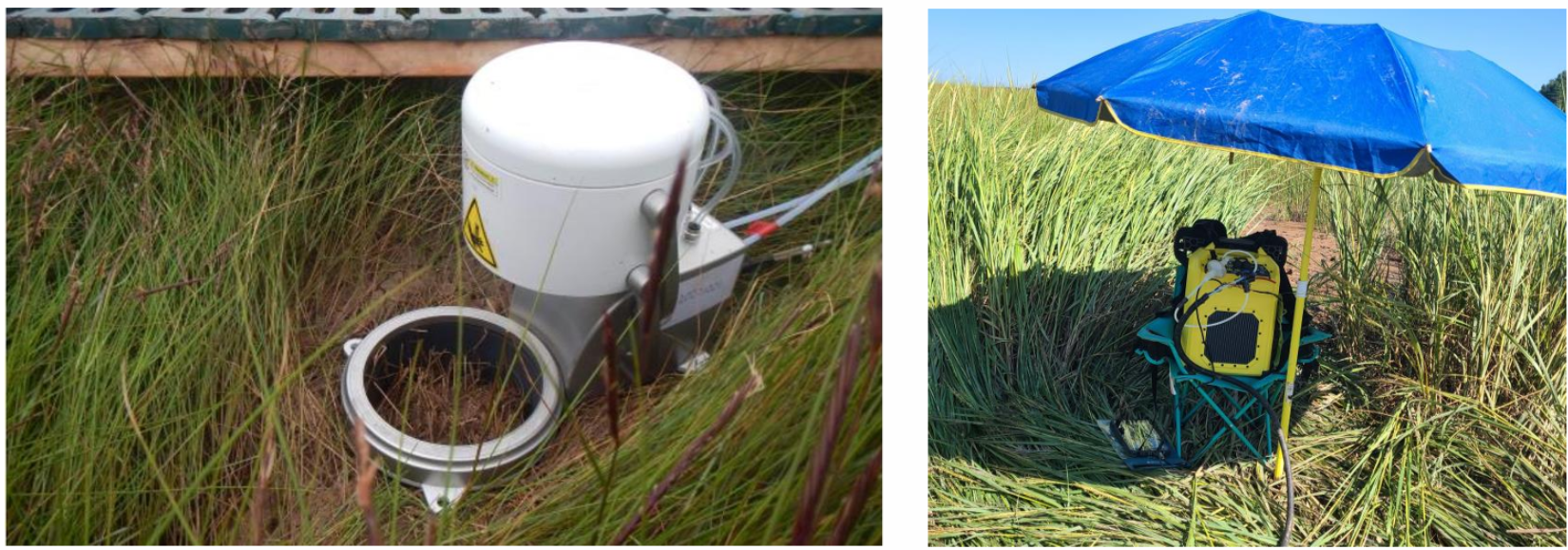
The auto-chamber (left) and gas analyzer (right) are used to measure the amount of greenhouse gases being emitted or absorbed by the soil.
At the same time, we study how wetland plants and sediments influence greenhouse gases such as carbon dioxide and nitrous oxide (N₂O).
By combining these measurements, our work helps us better understand the climate benefits of salt-marsh restoration, how much carbon these ecosystems can store over time, and how wetland health and water quality are connected to climate change.

Meet Evan Rundle, Coastal Carbon Research Associate
Evan conducts long-term monitoring of greenhouse gas emissions and carbon accumulation rates at managed dyke realignment sites and restored tidal wetlands. The goal of the MRFW project is to restore valuable tidal wetland habitat, reduce atmospheric CO₂ by sequestering carbon within restored habitats, and increase the resilience of the province’s dykelands.