

Welcome to the Intertidal Coastal Sediment Transport Lab (IN_CoaST)
Understanding the coastal processes that shape resilient shorelines.
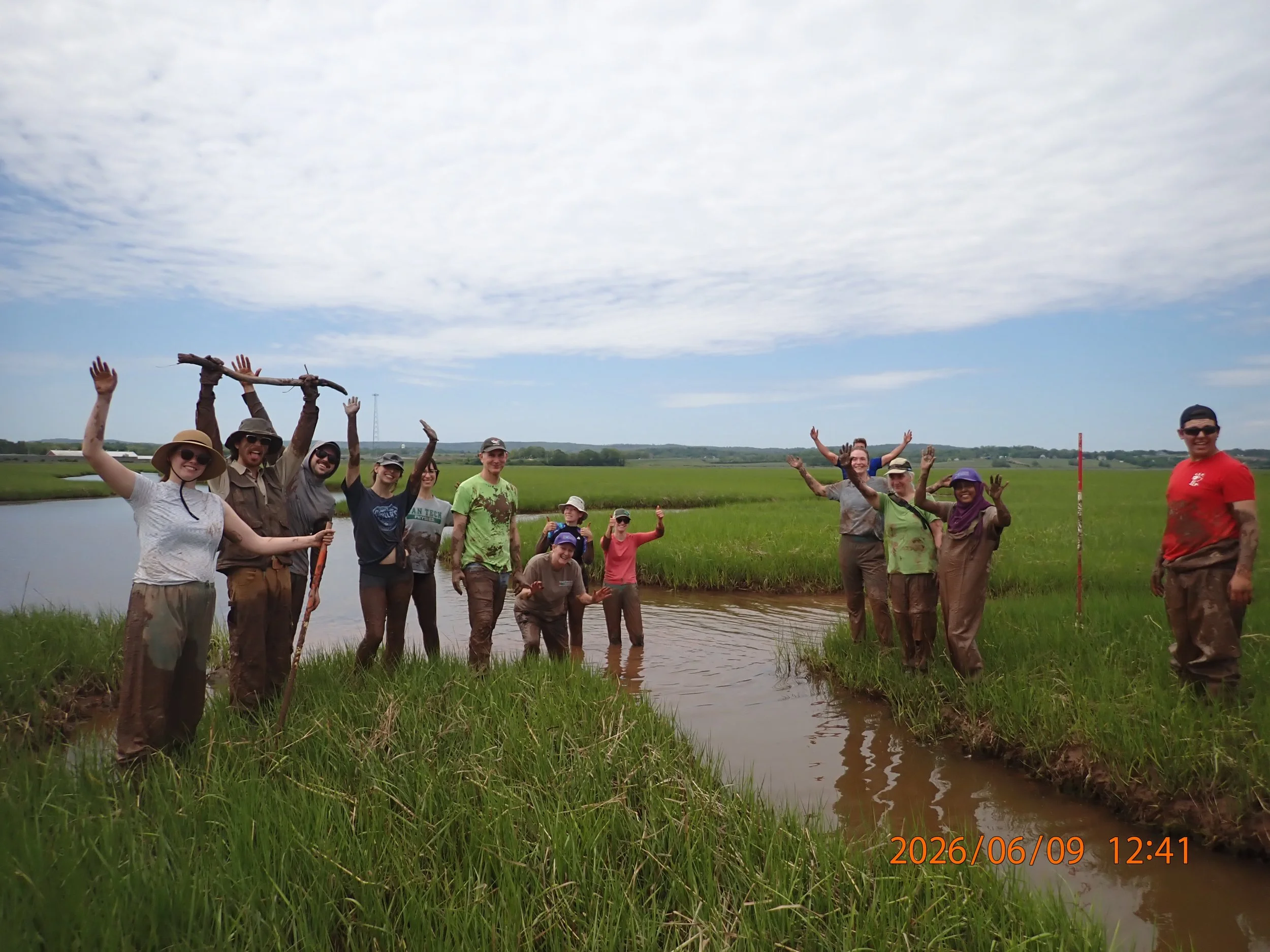
The Intertidal Coastal Sediment Transport Research Unit (IN_CoaST) is a core research laboratory within TransCoastal Adaptations (TCA) at Saint Mary's University. Since 2008, the lab has advanced research on coastal processes, sediment dynamics, and nature-based adaptation, providing the scientific foundation for many of the Centre's projects across Atlantic Canada.
Research Areas
IN_CoaST investigates the interactions between coastal landscapes, ecological systems, and physical processes to better understand how shorelines evolve over time.
Research focuses on the relationships between:
Coastal Geomorphology (how shorelines evolve)
Blue Carbon
Sediment Dynamics (erosion, deposition, and sediment transport)
Hydrodynamics
Climate Change Adaptation (assessing coastal response to sea-level rise and changing environmental conditions)
Human Impacts (how infrastructure such as dykes and causeways influence coastal systems)
By examining these interactions across multiple spatial and temporal scales, the lab supports evidence-based approaches to climate adaptation and nature-based infrastructure. IN_CoaST provides the field observations, monitoring, modelling, and coastal process expertise that inform TCA’s applied research.
Methodologies & Instruments
Laboratory Facilities
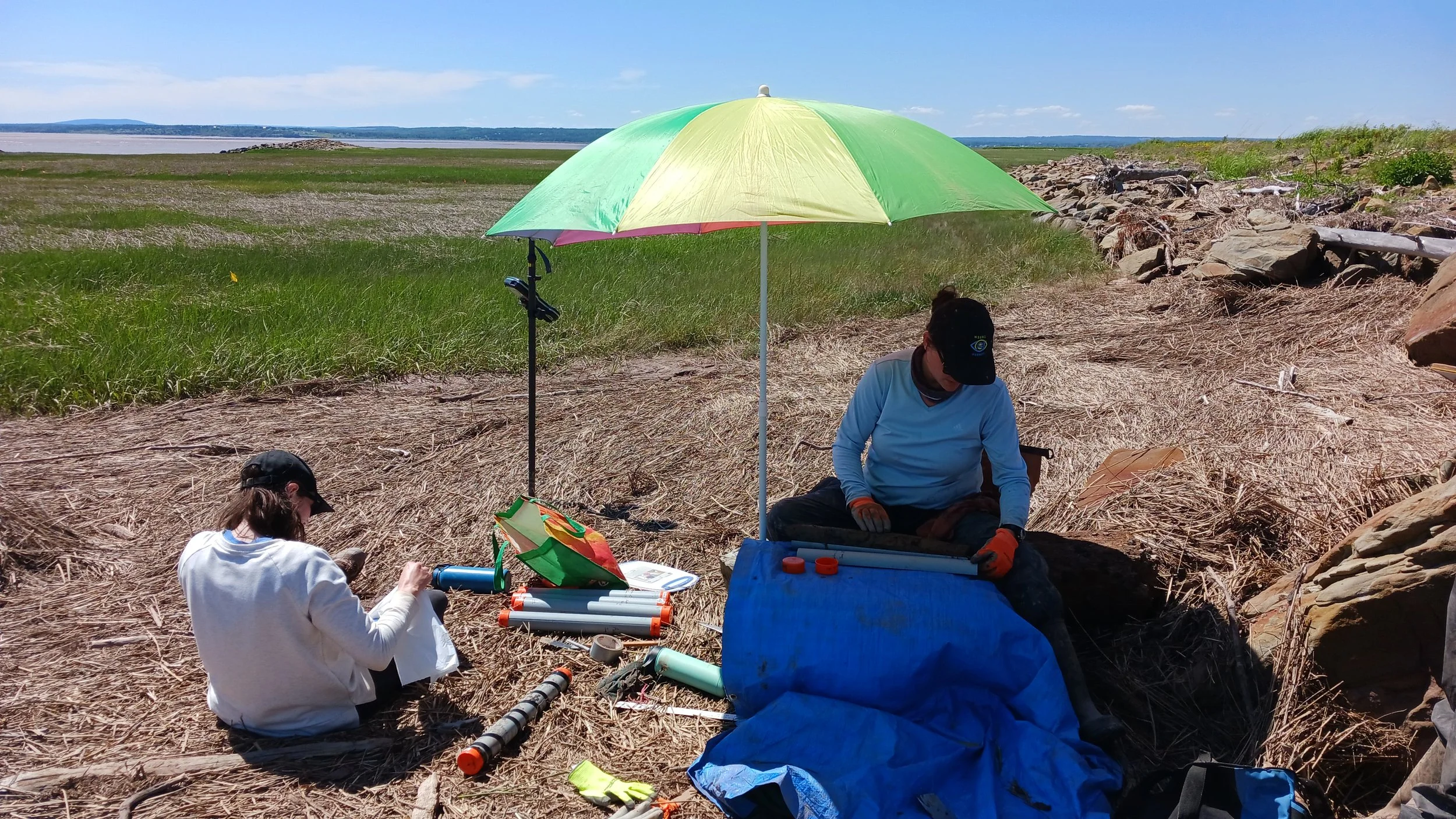
Located in the Science Building at Saint Mary's University, the laboratory supports detailed sediment analysis and sample processing. Equipment includes:
Coulter Multisizer 4E
Sediment analysis facilities
Sample preparation workspace
Tub for testing instruments
Field Research
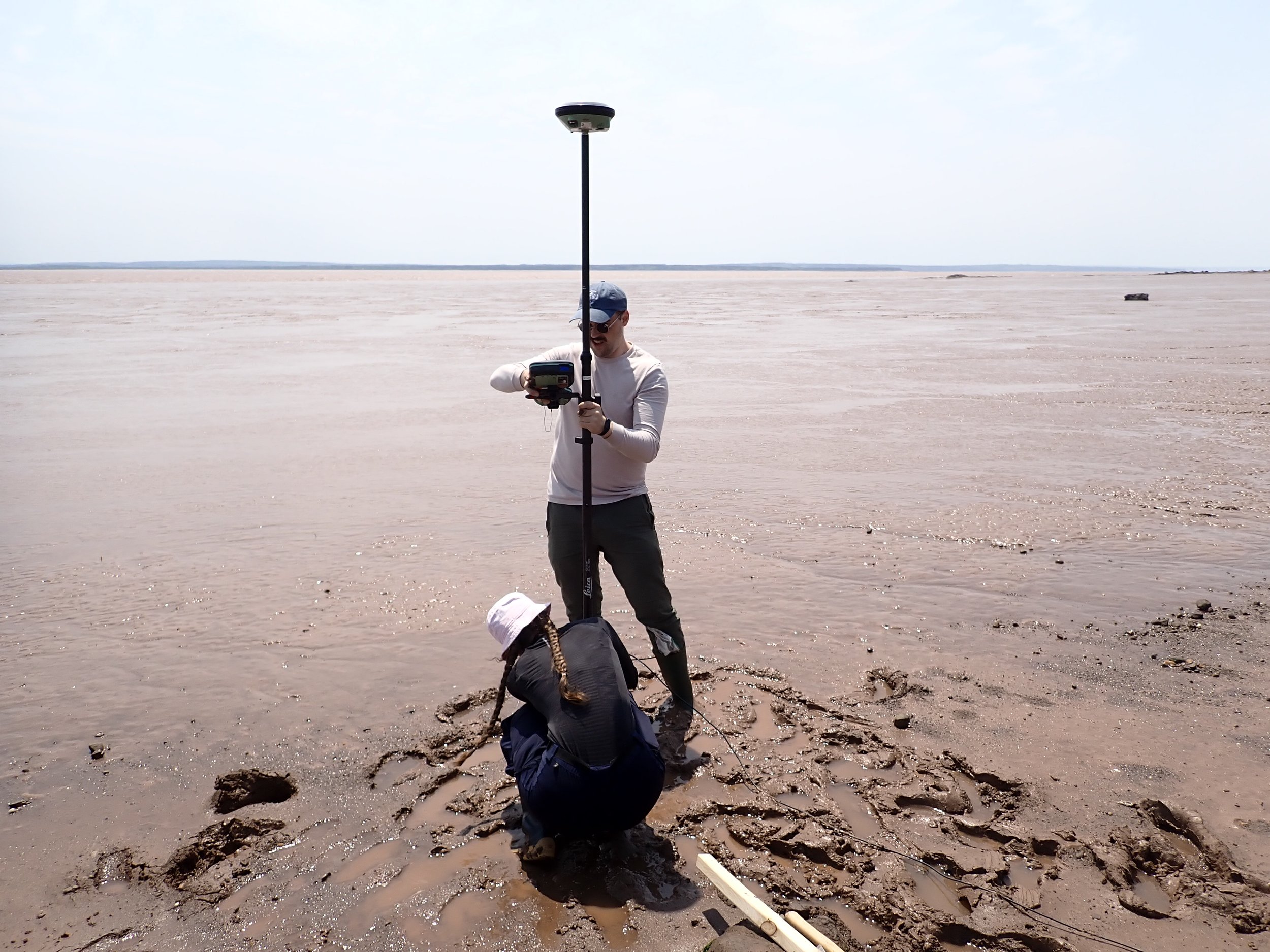
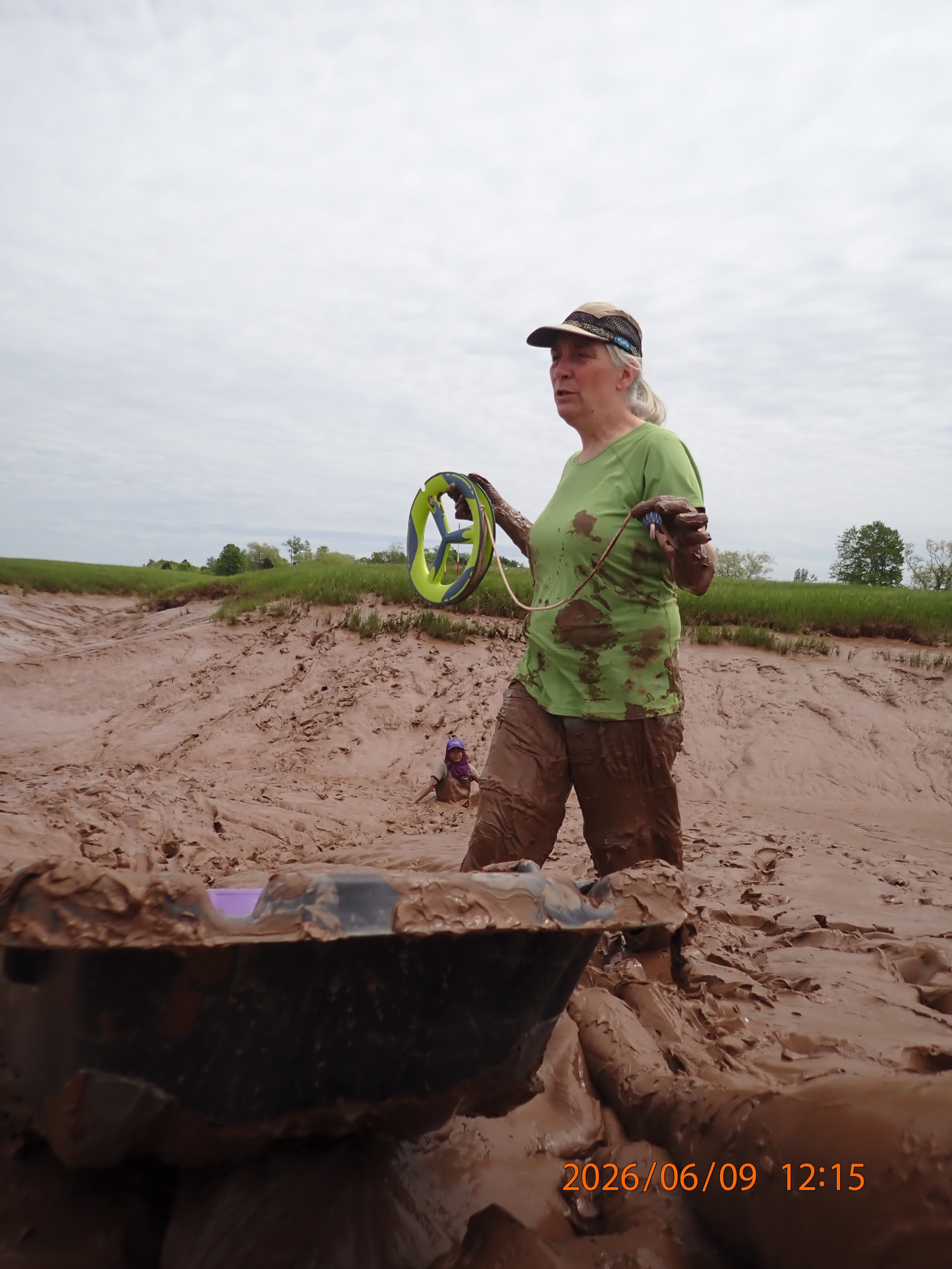
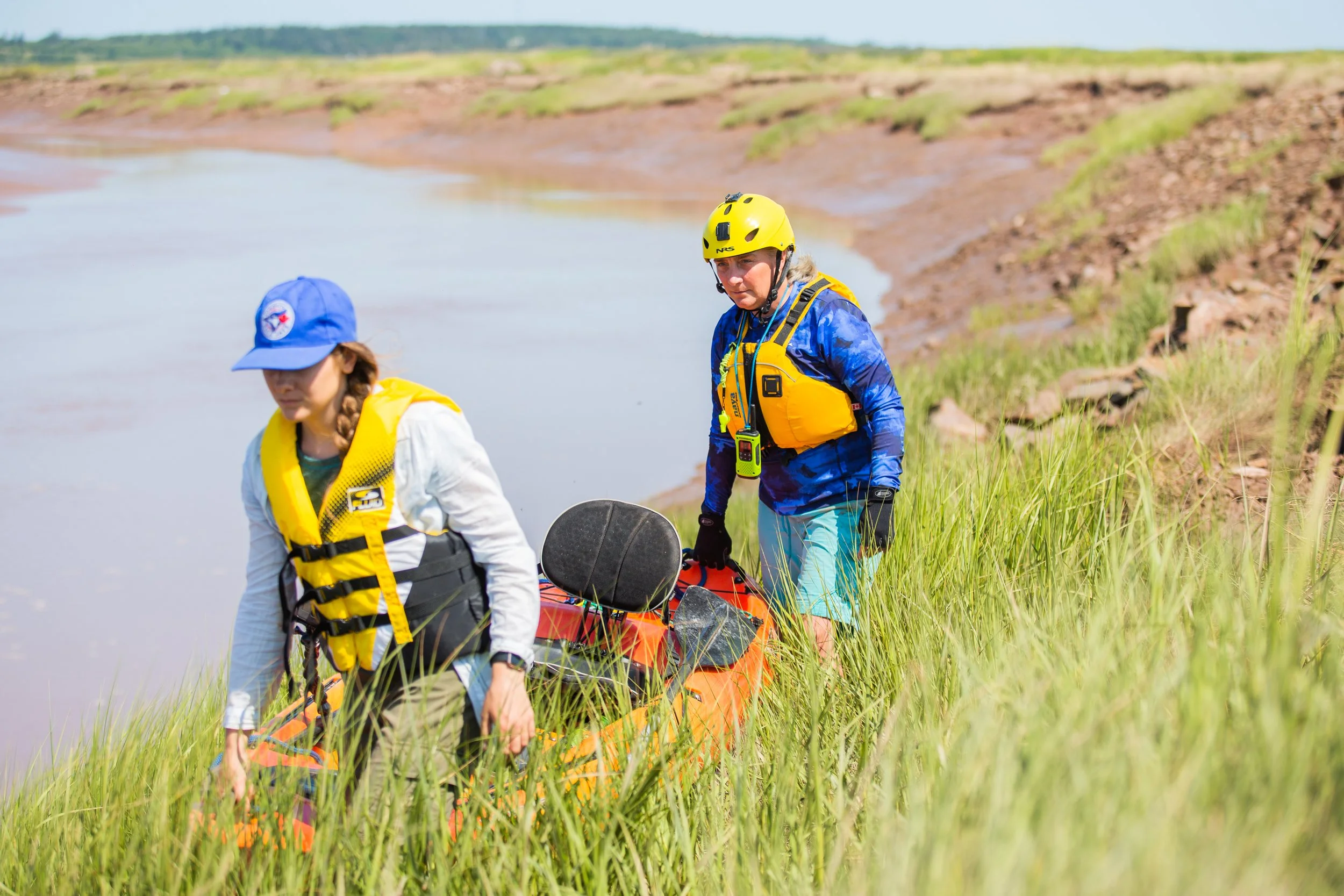
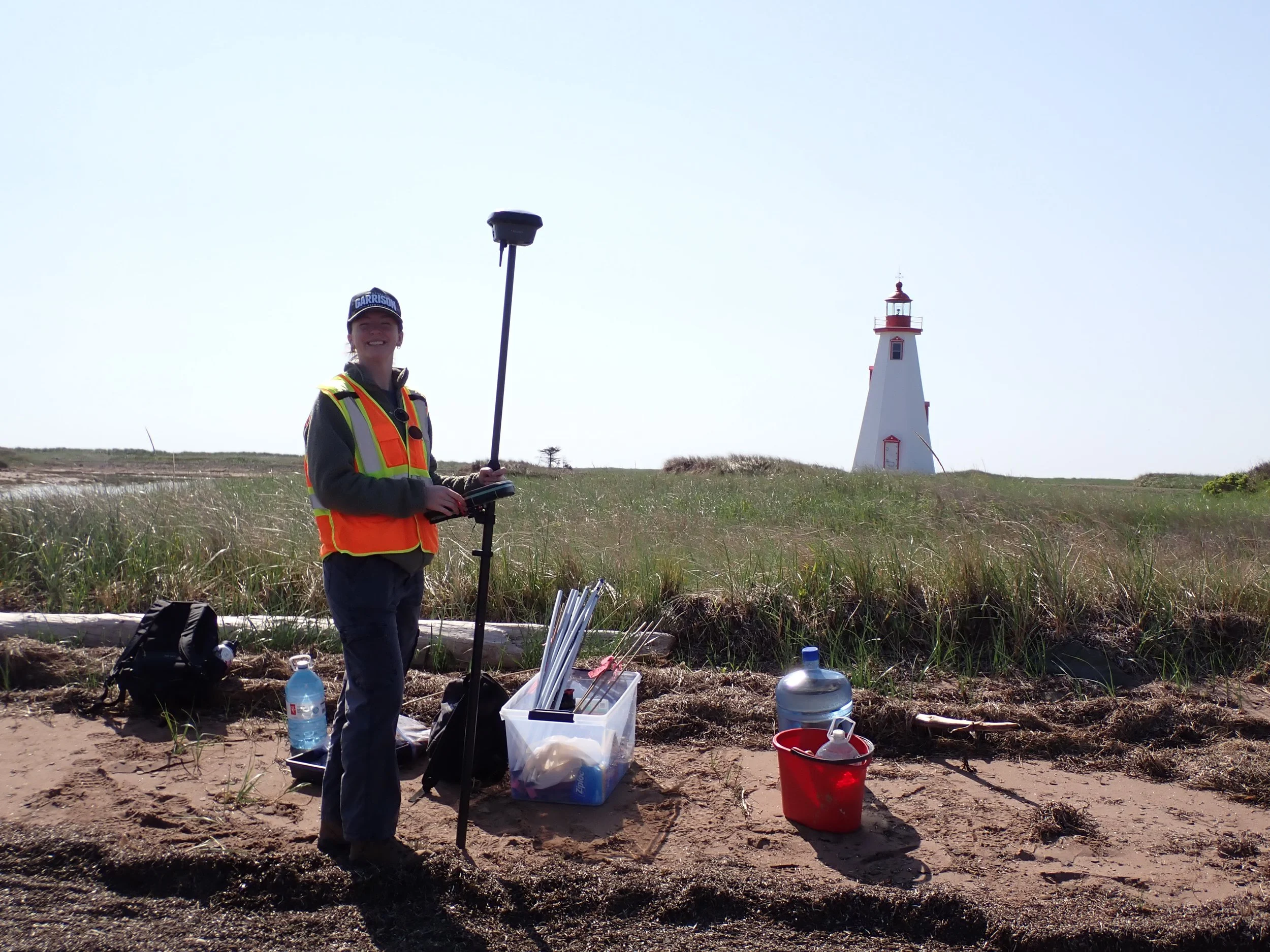
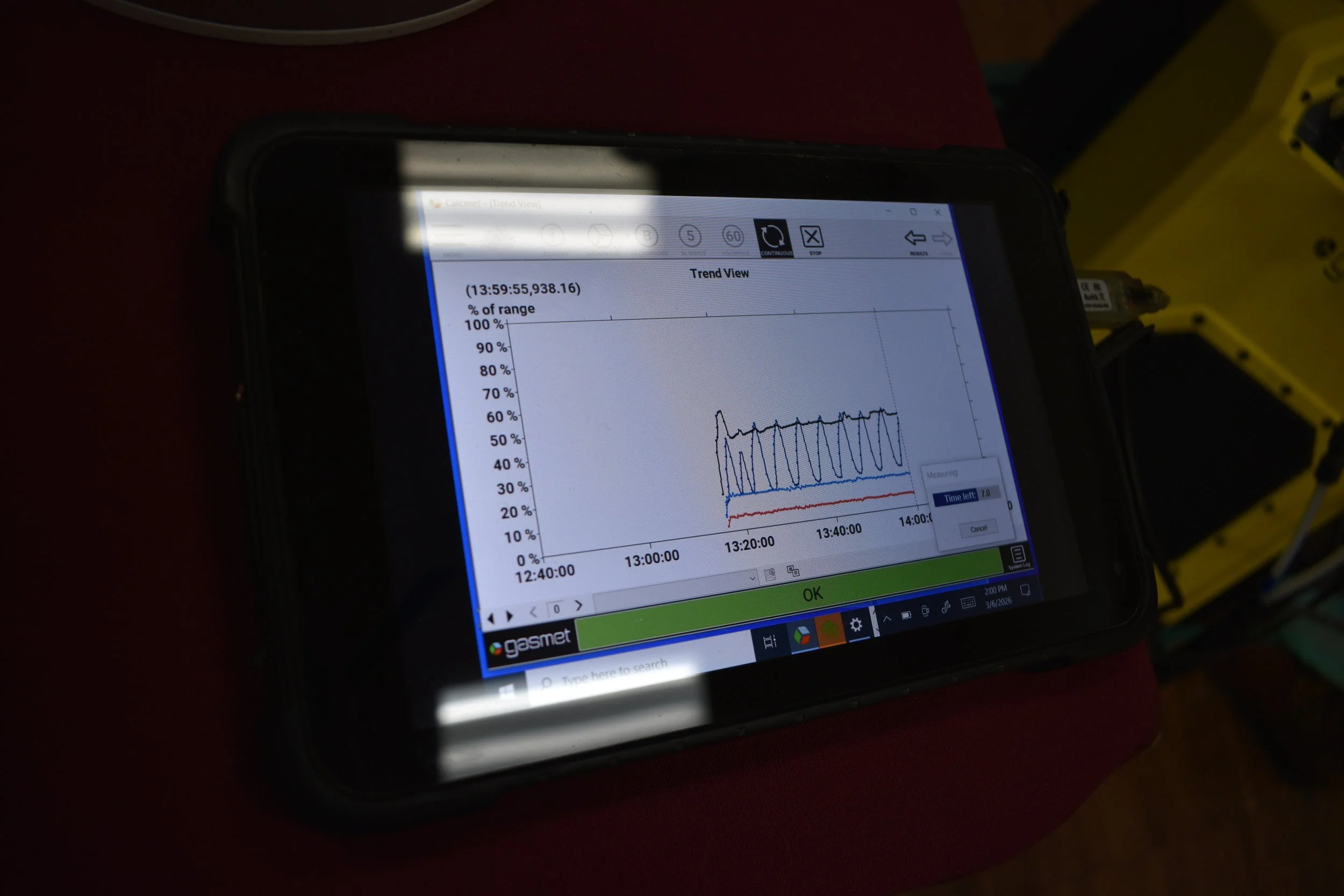
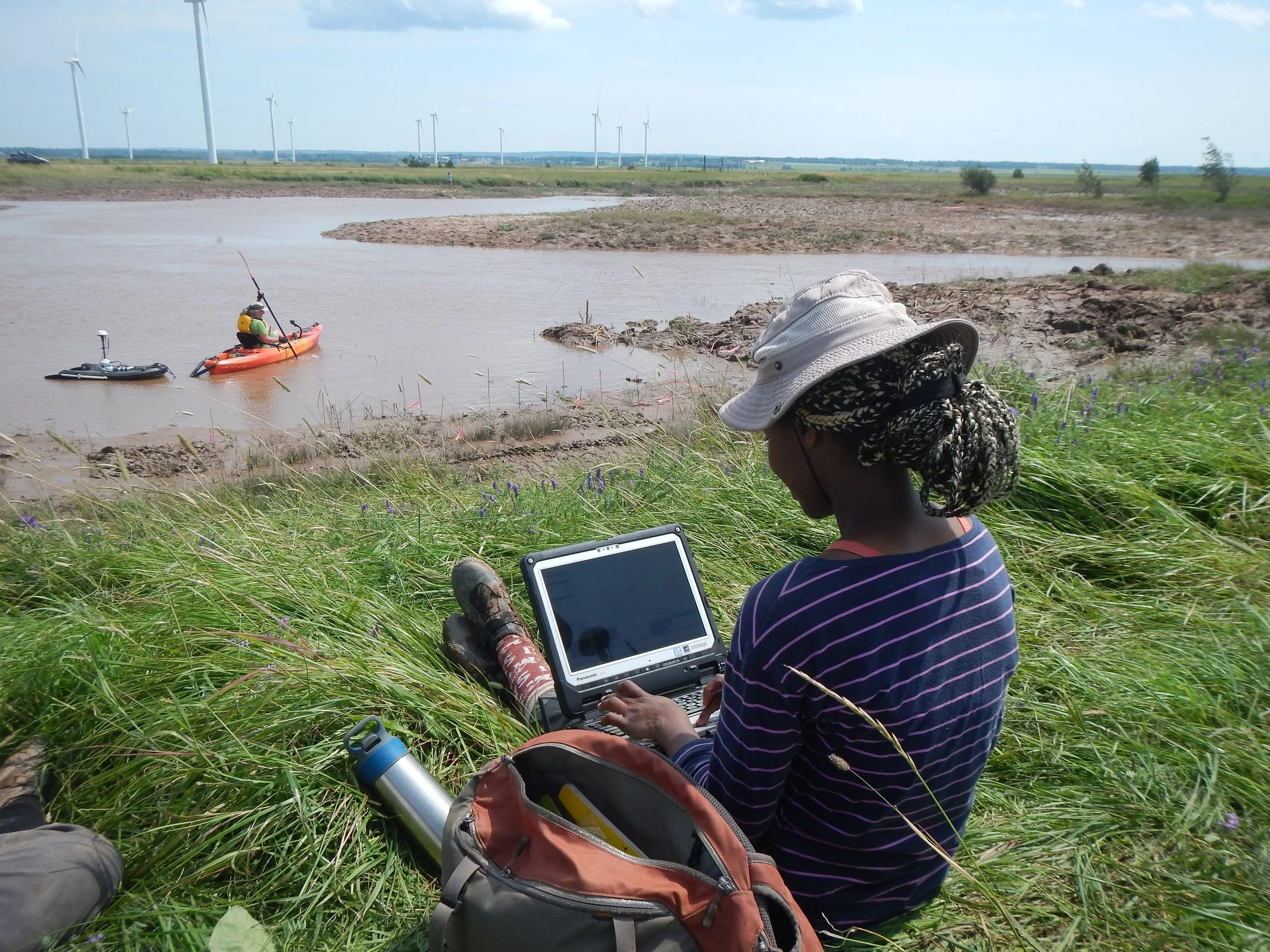
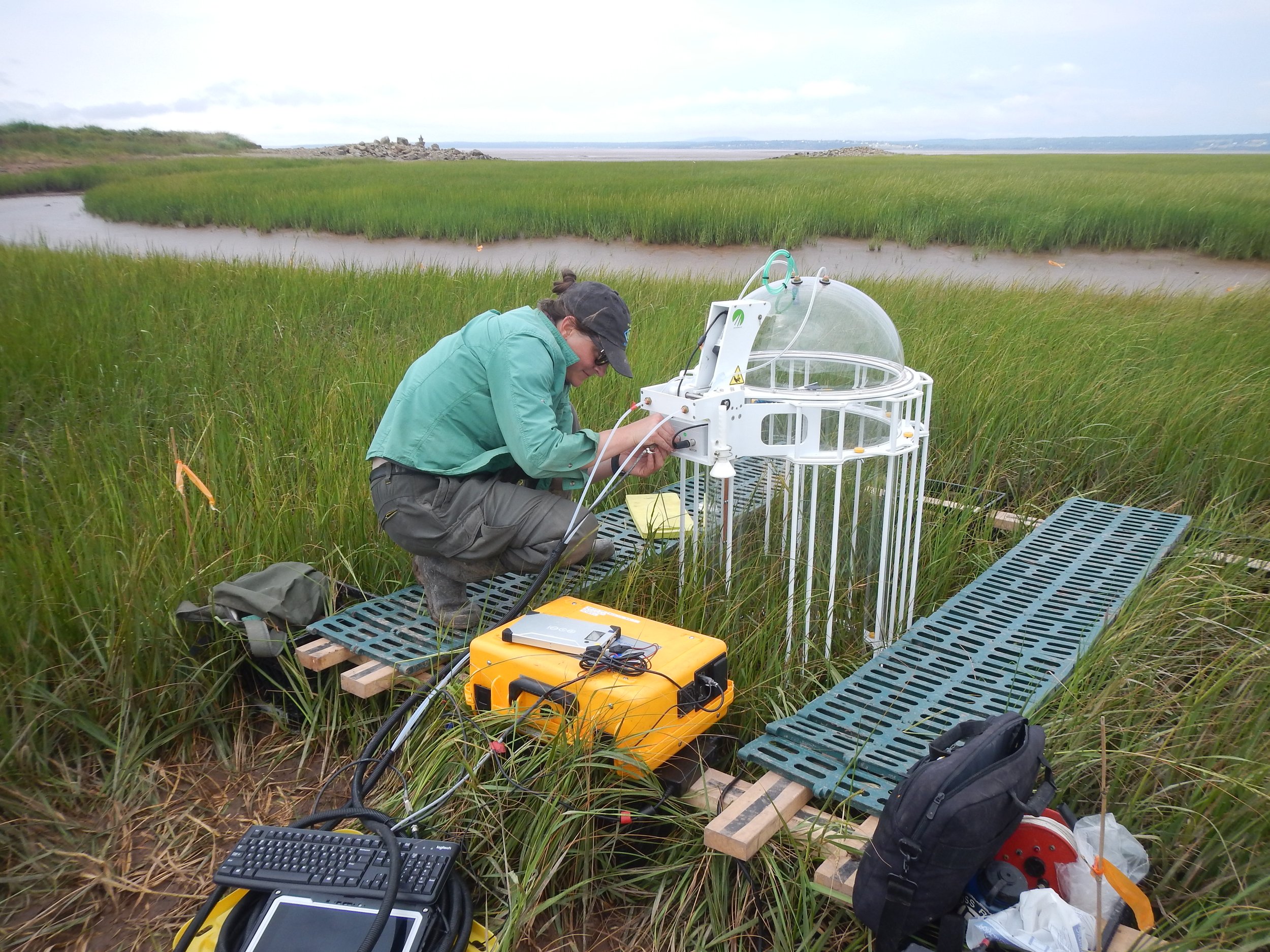
IN_CoaST maintains a suite of instruments for monitoring coastal environments. Equipment includes:
Nortek ADV
Nortek ADCP
Nortek ECO ADCP
Sontek M9 ADCP
Hydroboard survey platform
Survey kayak
ISCO automated water sampler
HOBO water level loggers
HOBO Conductivity loggers
HOBO RX3000 weatherstations
RBR wave loggers
RBR CTD (Conductivity, Temperature, Depth)
RBR Turbidity loggers (high and low concentration)
Radar tide gauge
SOFAR wavespotter buoy
Knudsen echo sounder
YSI ProQuatro water quality meter
Castaway CTD
For any questions about instruments and equipment, reach out to Coastal Wetland Research Technician Jordan Dunham: jordan.dunham@smu.ca.
Key Collaborators
-
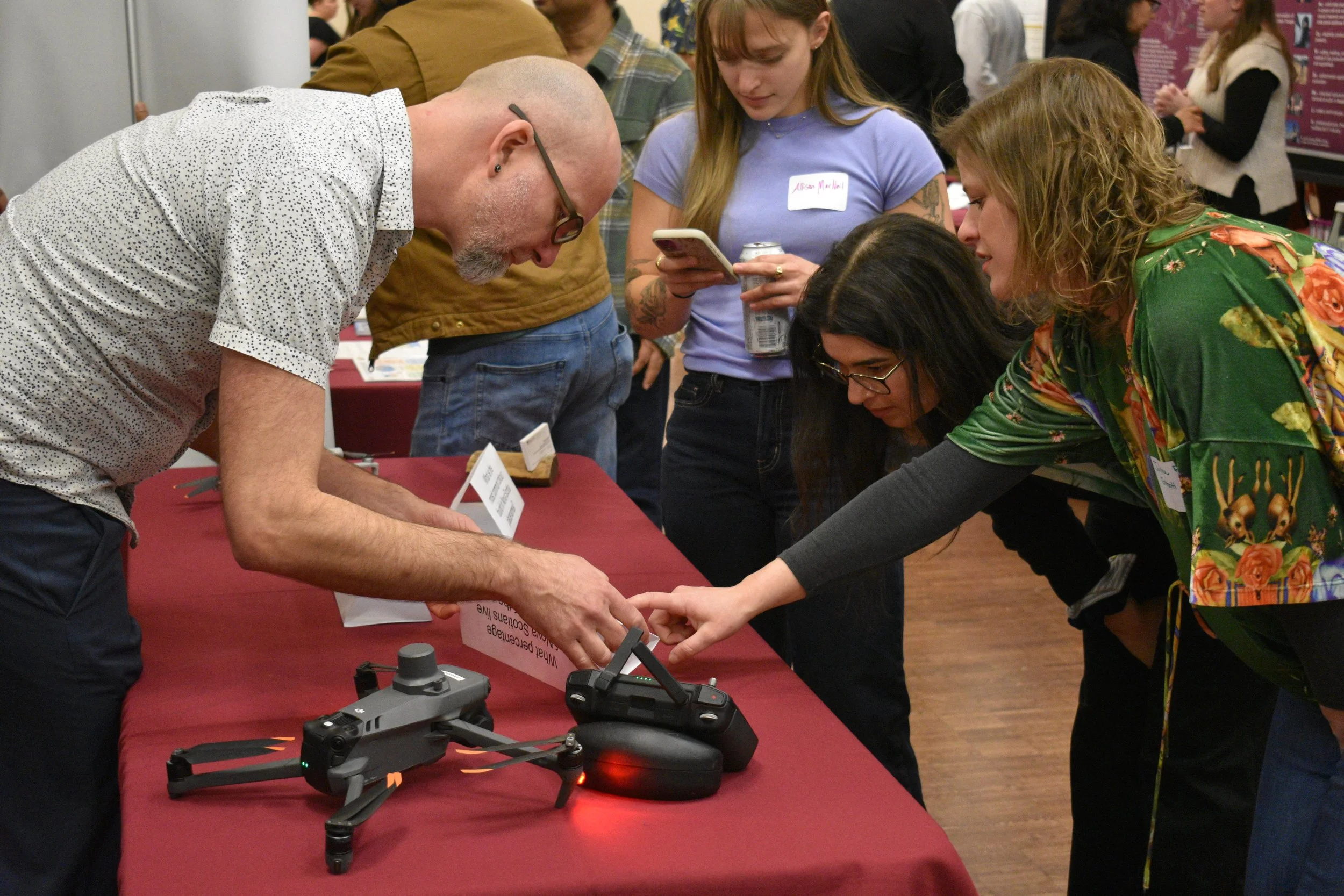
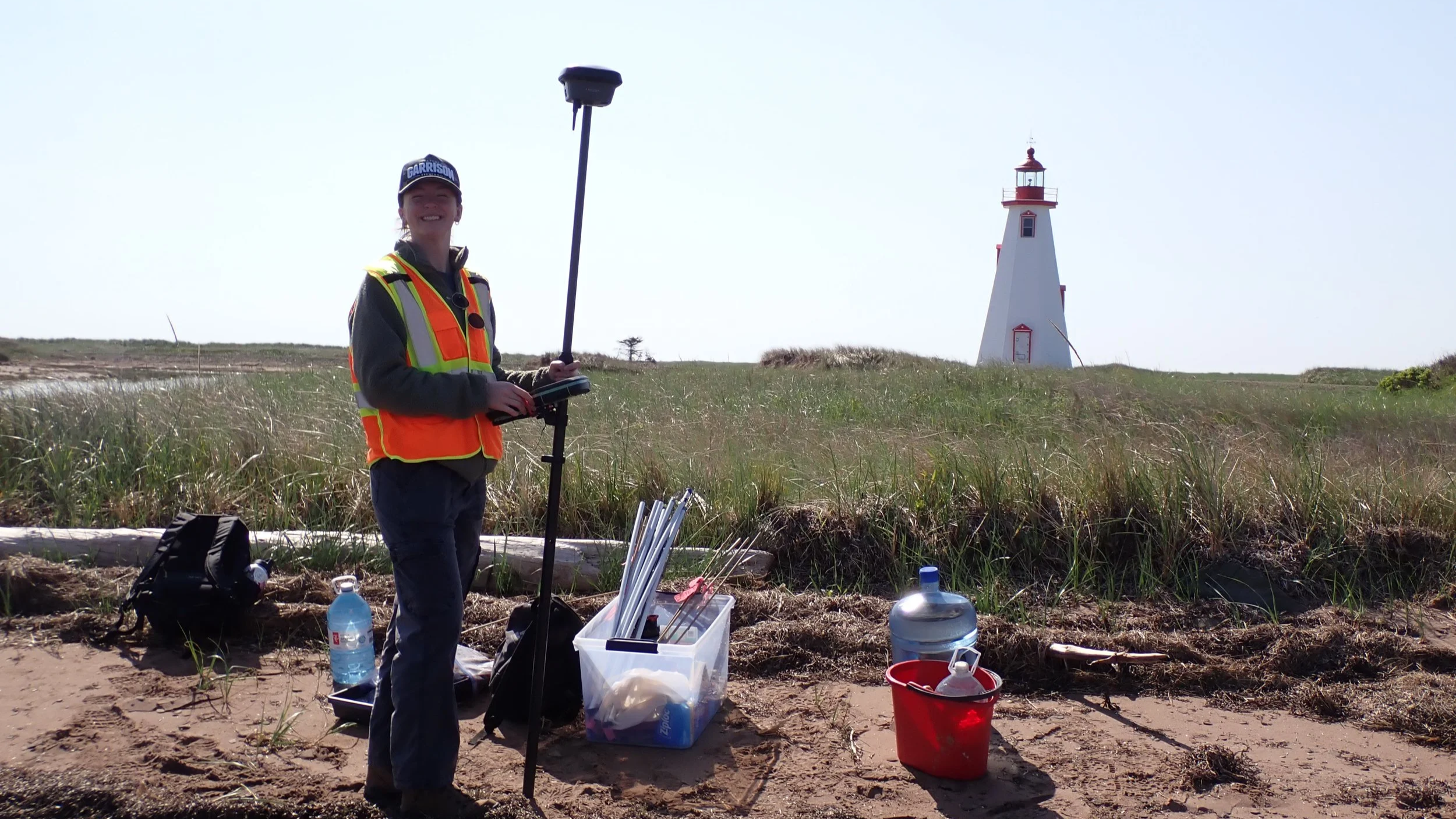
IN_CoaST collaborates closely with MP_SpARC to integrate geomatics, GIS, remote sensing, drone technologies, and spatial analysis into coastal research. MP_SpARC supports projects through:
Geographic Information Systems (GIS)
Remote sensing
Surveying
Drone operations
Spatial modelling
Coastal mapping
-
CBWES leads projects in habitat restoration (tidal wetlands, fish, species at risk), climate change adaptation, nature-based solutions, shoreline stabilization, ecology of coastal barrens, and green roof technology. Since being founded in 2005, CBWES Inc. has collaborated with government, academic, private sector and NGO partners in restoring over 430 ha of Atlantic Canada’s wetlands.
Recent Publications
2026
Brunetta, R., Crowell, S., Elliott, M., Van Proosdij, D., & Ciavola, P. (2026). Morphological instability in restored intertidal flats: How anthropogenic structures drive early‐stage evolution. Earth Surface Processes and Landforms, 51(3), e70260.
Galang, E. I. N. E., Sherren, K., van Proosdij, D., Bowron, T., & Cormier, J. (2026). The Agricultural Heritage System framework for collaborative environmental governance: A case for the Bay of Fundy's dykelands and foreshore marshes. The Canadian Geographer/Le Géographe canadien, 70(1), e70064.
Sampson, K., Lundholm, J., van Proosdij, D., & Walker, A. (2026). Arbuscular mycorrhizal fungal establishment in cordgrasses (Sporobolus spp.) at restored and natural Bay of Fundy salt marshes. The Canadian Field-Naturalist, 139(2), 115-125.
2025
Crowell, S., Elliott, M., Nichols, K., van Proosdij, D., Poirier, E., Graham, J., ... & Lundholm, J. (2025). Legacy vegetation and drainage features influence sediment dynamics and tidal wetland recovery after managed dyke realignment. Land, 14(3), 456.
Cornejo, L., Sherren, K., Lundholm, J., van Proosdij, D., & Bennett, E. M. (2025). Using a causal conceptual model of managed dyke realignment as a boundary object promotes multi-stakeholder collaboration and co-production. Nature-Based Solutions, 8, 100253.
Richardson, E., Millard, K., & van Proosdij, D. (2025). On the Use of Post-Classification Change Analysis for Monitoring Salt Marsh Extent in Support of Carbon Inventory Reporting. Remote Sensing Applications: Society and Environment, 101862.
Thomas, J., George, J., Van Proosdij, D., & Murphy, E. (2025). Wave dynamics and potential longshore sediment transport at Shippagan, Gulf of St Lawrence: insight into seasonal variability and extreme weather events. Frontiers in Marine Science, 12, 1579807.
2024
Sherren, K., Rahman, H. M. T., Manuel, P., Wells, E., Rapaport, E., & van Proosdij, D. (2024). Reimagining nature‐based coastal adaptation: A nested framework. Journal of Flood Risk Management, 17(4), e13026.
Thomas, J., & van Proosdij, D. (2024, February). The impact of Sub-inertial Oscillations on Flooding during Fiona Hurricane along the Atlantic Coast. In American Geophysical Union, Ocean Sciences Meeting (No. 1987, pp. CP44E-1987).
2023
van Proosdij, D., Graham, J., Lemieux, B., Bowron, T., Poirier, E., Kickbush, J., ... & Lundholm, J. (2023). High sedimentation rates lead to rapid vegetation recovery in tidal brackish wetland restoration. Frontiers in Ecology and Evolution, 11, 1112284.
Past Research Projects
Masters Projects
-
Allison MacNeil, SMU MSc, 2026. Marsh elder (Iva frutescens) for living shoreline applications : habitat characterization and planting techniques
-
Hodgson, Emily. SMU MSc, 2025. Tidal wetlands in Nova Scotia : plant community composition and environmental influences across Atlantic coastal, Northumberland/Bras d’Or, and Fundy Shore ecoregions.
Frank Kwaku Aazore. SMU MA, 2025. Nature-based coastal adaptation approaches : spatial modelling and community perception of barriers and opportunities in Ghana.
-
Makadunyiswe Doublejoy Ngulube. SMU Msc, 2024. Comparing the provision of ecosystem services of an anthropogenically modified salt marsh to a natural salt marsh.
-
Kayla Williams. SMU MSc, 2023. Understanding parameters for site characterization and their influence on restoration trajectory in tidal marshes in Nova Scotia, Canada.
Rebecca Payne. SMU MA, 2023. Understanding the Villa di Tito and the Velino Valley within Central Italy by creating Spatial Connections.
Kendra Sampson. SMU MSc, 2023. Assessing arbuscular mycorrhizal fungi and sediment organic carbon density in Nova Scotia salt marshes
Megan Elliott. SMU MSc, 2023. The Connections Between Temporal Variation of Managed Realignment Inlet Conditions and Deposition Variation Across a Restored Marsh Surface.
-
Samantha Lewis. SMU MSc, 2022. Characterizing the evolution of a restoring salt marsh landscape with low altitude aerial imagery and photogrammetric techniques.
Francois Malenfant. SMU MSc, 2022. Rapid coastal erosion of ice-bonded deposits on Pelly Island, southeastern Beaufort Sea, Inuvialuit Settlement Region, western Canadian Arctic.
-
Brandon Champagne. SMU MA, 2021. The future of Nova Scotia's dykelands: understanding the landowners’ perspective.
Stockley, Lori Ann. SMU MA, 2021. Drivers of community engagement in protecting heritage assets in the context of a dynamic coastal landscape.
Wesley James Weatherbee. SMU MA, 2021. Where’d the coast go? : geoarchaeological exploration of upper Bay of Fundy coastal histories in Nova Scotia.
-
Graeme Matheson. SMU MSc, 2020. Enhancing dykeland resiliency in a hypertidal estuary.
Julia Purcell. SMU MSC, 2020. Application of managed dyke realignment and hydrodynamic modelling for flood mitigation in Truro, Nova Scotia.
Tasha Rabinowitz. SMU MSc, 2020. Methods of accelerating re-vegetation at Bay of Fundy salt marsh restoration sites: a practical comparison.
Reyhan Akyol. SMU MSc, 2020. Mapping and Quantifying Early Tidal Wetland Evolution Using Remotely Piloted Aircraft System Imagery and Object-Based Image Analysis.
Brittany MacIsaac. SMU MA, 2018. An investigation of factors that influence coastal communities’ ability to adopt or participate in climate change adaptation planning in the Atlantic Provinces.
Christa Skinner. SMU MSc, 2016. The biogeochemistry of a restoring macrotidal salt marsh : Cheverie Creek, Nova Scotia.
Samantha Page. SMU MSc, 2015. Development and Application of a Relative Geomorphic-Based Vulnerability Index for Assessing Coastal Vulnerability under wave energy scenarios associated with a climate change.
Emma Poirier. SMU MSc, 2014. Seasonal influences on the ecomorphodynamics of a hypertidal salt marsh and tidal creek system.
Ben Lemieux. SMU MSc, 2012. Controls on Spatial and Temporal Patterns of Vegetative Recovery on a Macro-tidal Floodplain Restoration Project.
Jennie Graham. SMU MSc, 2012. Considerations for Restoration Design in a Macro-tidal Marsh.
Casey O’Laughlin. SMU MSc, 2012. Effects of Energy Extraction on Sediment Dynamics in a Sheltered Hypertidal Salt Marsh Creek.
Michael Fedak. SMU MSc, 2012. Coastal Vulnerability Modeling for Macrotidal Dykelands.
Jeremy Tibbetts. SMU MSc, 2012. Coastal Vulnerability Assessment for a Macro-tidal Region.
Undergraduate Projects
-
-
Erin Nelson. SMU BSc, 2022. Assessing the suitability of living shoreline techniques for coastal erosion in Prince Edward Island, Canada.
-
Makadunyiswe Ngulube. SMU Environmental Science, 2021. The wave dissipation potential of Spartina alterniflora in the Bay of Fundy.
Elise Rogers. SMU BSc, 2021. Spatial and temporal variations in sediment composition within newly restored salt marshes.
Frejhan Jn Baptiste. BSc, 2021. Assessing coastal vulnerability to sea level rise in St. Lucia and the resiliency of beaches.
-
Sade Hanley. SMU Honours Environmental Studies, 2019. A Coastal Vulnerability Assessment of the St. Kitts Old Road Bay to the Impacts of Climate Change Hazards and Potential Adaptation Measures.
Larissa Sweeney. SMU Honours Geography, 2019. Determining Trajectory using Ecological Indicators at the Cogmagun River Salt Marsh, Eight-Years Post Restoration.
Samantha Cunningham. SMU Honours Environmental Science, 2019. Consideration for the Assessment of Blue Carbon Potential in Managed Realignment Projects.
Iain Wilson. SMU Bachelor of Environmental Studies, 2019. Using unmanned aerial systems to classify land cover and assess productivity in forested wetlands in Nova Scotia.
Logan Horrocks. SMU Honours Geography, 2018. An Analysis of Multispectral UAS for Salt Marsh Edge Land Cover Classification and DEM Generation.
Jenna Miller. SMU Honours Geography, 2017. Coastal vulnerability assessment and adaption planning Fundy National Park.
Dylan Colbourne. SMU Honours Geography, 2015. Measuring Vulnerability & Adaptive Capacity of the South Western Coast of Tobago.
Brenden Blotnicky. SMU Honours Environmental Science, 2013. A comparison between suspended sediment composition and deposition within a macro-tidal salt marsh creek.
Christa Skinner. SMU Honours Environmental Science, 2013. Analysis of the relationship between vegetative community structure and geodetic elevation for salt marsh restoration in hypertidal systems.
Emma Poirier. SMU Honours Environmental Science, 2012. Sedimentary dynamics within a hypertidal salt marsh and tidal creek system.
Samantha Page. SMU Honours Environmental Science/Geography, 2011. The role of flow resistance of different coral morphologies on small scale sedimentation patterns in Isla de Utila, Honduras.
Ben Lemieux. SMU Honours Geography/Biology, 2010. The influence of the soil seed bank and hydrochory on the early re-colonization dynamics on two salt marsh restoration projects.
Lyndsay Greene. SMU Honours Environmental Studies, 2009. The role of ice in an upper Bay of Fundy salt marsh: dispersal agent of sediment and vegetation.
Casey O’Laughlin. SMU Honours Geography, 2009. Comparison of vertical and temporal variations in hydrodynamics on macro-tidal mudflat and salt marsh surfaces.
Amber Silver. SMU Honours Geography, 2009. The Influence of Vegetation on the Sedimentary Processes within a Macro-tidal Salt Marsh.
Alison R. Mackenzie. SMU Honours Geography, 2007. The potential of using managed realignment to mitigate the impacts of sea level rise in the Cornwallis Estuary.
Sarah Ainsworth. SMU Honours Geography, 2005. GIS Assessment of Impacts of Hurricane Juan on Forest Fire Hazard in Nova Scotia.
Melissa Landry. SMU Honours Environmental Studies/Geography, 2004. Structure and Function of a Mangrove Forest in the Biosphere Reserve of “Los Petenes”, Campeche, Mexico.
Amanda Pike. SMU Honours Environmental Studies/Biology, 2004. Comparative Assessment of Growth Characteristics of Spartina alterniflora on three salt marshes, Minas Basin, Bay of Fundy.
Nancy Chiasson. Dalhousie Honours Biology, 2003. Controls on Vegetation Characteristics in a Tidally Restricted Salt marsh in the Bay of Fundy.
Sarah Townsend. SMU Honours Geography, 2002. Spatial Analysis of Spartina alterniflora Colonization on the Avon River Mudflats.