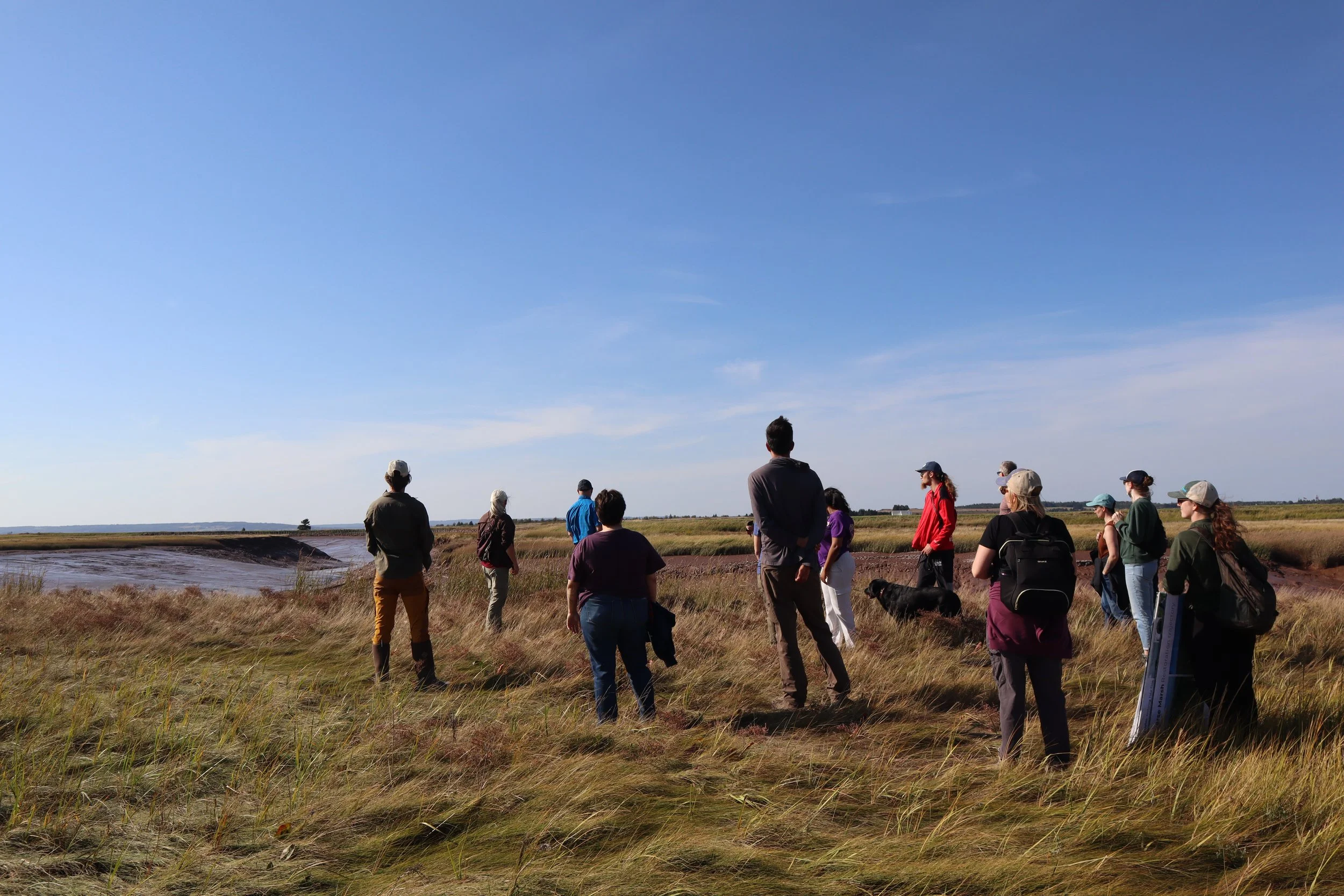
A “Meet the Marsh” community walk at Missiquash or Missaguash, a Mi'kmaq name meaning “marsh river.” It is located within the broader region known as Siknikt (Chignecto), or “drainage place.”
Mi’kmaw Knowledge & Indigenous Resources
Guiding Relationships in Coastal Adaptation
TransCoastal Adaptations (TCA) works on lands and waters that have been cared for by Mi’kmaq people since time immemorial. We work in Mi’kma’ki, the unceded territory of the Mi’kmaq People. This land is governed by the Treaties of Peace and Friendship, which affirm Mi’kmaw rights and responsibilities and outline the basis for ongoing nation‑to‑nation relationships.
As we advance nature‑based solutions for coastal resilience, we recognize that meaningful climate adaptation must be grounded in relationships with communities, with place, and with the knowledge systems that have shaped Mi’kma’ki since time immemorial. This page shares the values resources that guide our work and support our commitment to learning, respect, and collaboration.
Ways of Knowing in Coastal Adaptation
Coastal resilience is strengthened when multiple knowledge systems are brought together with respect and intention. Each knowledge system carries its own strengths, shaped by lived experience, cultural teachings, and long relationships with place.
TCA’s work is informed by the principle of Etuaptmumk (Two‑Eyed Seeing), shared by Mi’kmaw Elder Dr. Albert Marshall. Two‑Eyed Seeing encourages us to:
See with the strengths of Mi’kmaw knowledge and ways of knowing
See with the strengths of western scientific knowledge
Use both eyes together for the benefit of all
This approach guides how we design projects, build partnerships, and understand coastal change.

Mi’kmaw Knowledge
Mi’kmaw knowledge is rooted in relationships with the land, water, and all living beings. It is carried through stories, teachings, ceremony, and lived experience. Two core Mi’kmaw values that inform coastal stewardship include:
Msit No’kmaq (“All My Relations”)
Msit No'kmaq (pronounced Mm-sih Noh-goh-mah) is a core Mi’kmaw phrase meaning "All My Relations," representing the profound interconnectedness of all living and non-living things. It signifies that all creatures, humans, plants, and elements of nature are family and must be treated with respect
Netukulimk
Netukulimk (pronounced neh-doo-goo-limk) means ot take only what you need. This practice ensures that resources are available for ancestors, the present, and future generations.
TCA is grateful to learn from Mi’kmaw partners who share knowledge, guidance, and perspectives that help shape our projects in ways that honour these values.
Local Knowledge
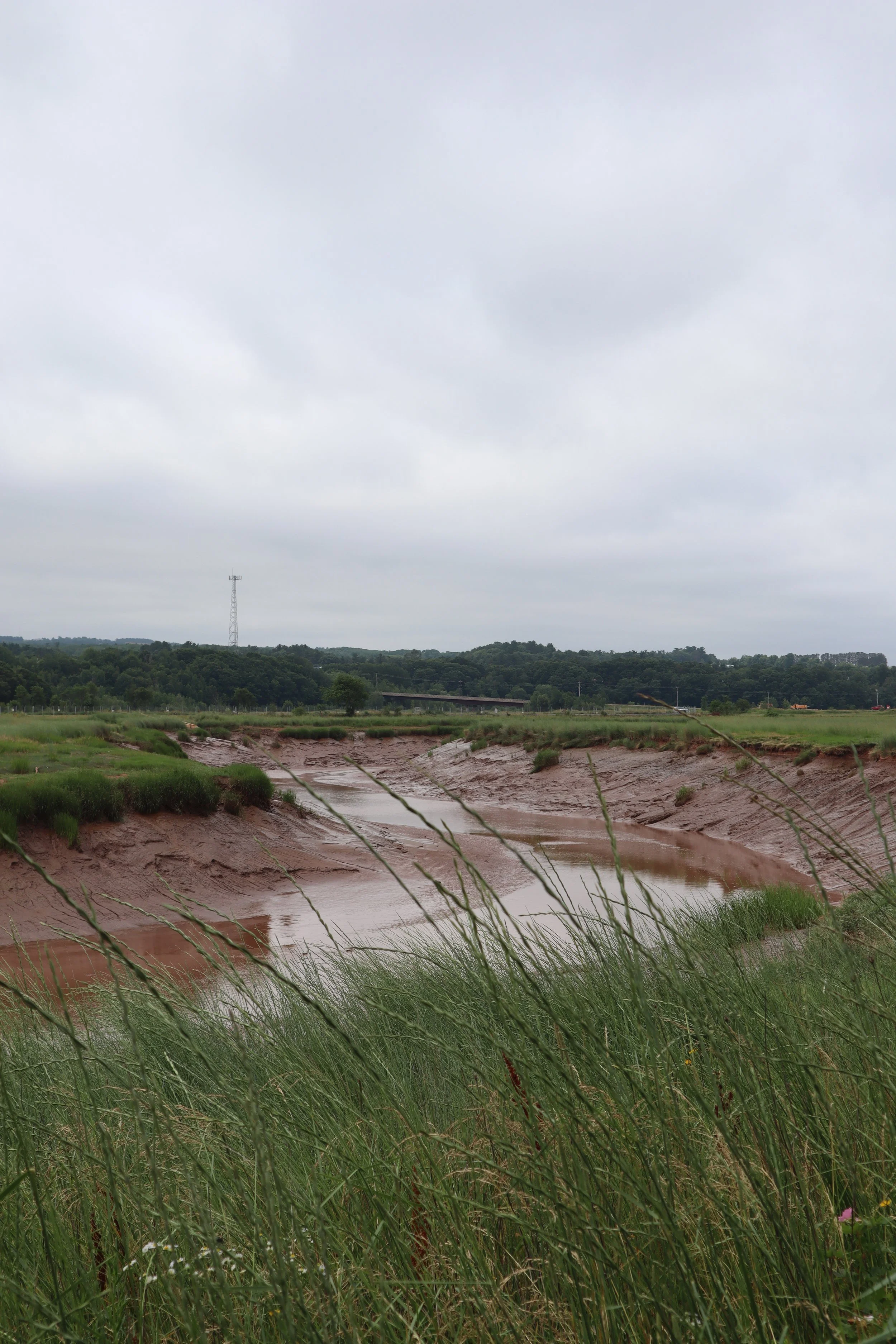
The Belcher Street Marsh, located along the Jijikwtuk River.
Local knowledge is built through lived experience, including generations of observing tides, storms, erosion, and seasonal change. In coastal communities across Nova Scotia, this knowledge is essential for:
Understanding site‑specific risks
Timing fieldwork safely
Interpreting long‑term changes in shorelines and marshes
Identifying community priorities and concerns
Local knowledge holders, including landowners, fishers, farmers, and community stewards, help ensure that nature‑based solutions are grounded in the realities of place.
Western Scientific Knowledge
Western scientific knowledge provides tools and methods that help us understand coastal processes and evaluate adaptation strategies. At TCA, western science is one part of a broader knowledge framework. When combined with Mi’kmaw and local knowledge, it contributes to a more complete understanding of coastal ecosystems and supports more resilient, community‑driven solutions.
Working Together in Mi’kma’ki
TCA’s projects increasingly involve collaboration with Mi’kmaw communities, organizations, and knowledge holders. These partnerships help ensure that:
Mi’kmaw values and priorities are reflected in project design
Cultural and ecological knowledge informs restoration decisions
Community voices guide how land and water are cared for
Adaptation strategies support long‑term stewardship
Recent examples include the naming of Wepe’k Mtasoq Marsh, where Mi’kmaw language and place‑based knowledge helped shape the restoration process and deepen the connection between community and site.
Our Commitments
TCA commits to:
Listening first and building relationships based on trust and respect
Honouring Mi’kmaw leadership in land and water stewardship
Supporting co‑learning between knowledge systems
Upholding treaty responsibilities
Ensuring project benefits extend to communities
Continuing education for our team on Mi’kmaw history, culture, and rights
Learn More & Explore
These resources offer pathways for deeper learning about Mi’kmaw history, culture, and stewardship:
Mi’kmaw Place Names Digital Atlas
Explore the original names, stories, and relationships embedded in the landscape.The Confederacy of Mainland Mi’kmaq (CMM)
Learn about programs, governance, and community initiatives.Unama’ki Institute of Natural Resources (UINR)
A leader in Mi’kmaw‑led environmental stewardship.The Assembly of First Nations’ National Climate Strategy
The AFN National Climate Strategy outlines a path for climate action grounded in inherent rights and self-determination.Reconciliation Resources (SMU)
Educational materials for understanding history and supporting reconciliation.Truth and Reconciliation Resources with Every One Every Day
Every One Every Day is a Truth and Reconciliation initiative of the Mi’kmaw Native Friendship Centre. They work with urban Indigenous and North End communities to bring opportunities for reconciliation at the neighbourhood level. You can read more about their Truth and Reconciliation framework in their blog post, Meet ‘Kokum’, Our Approach to Truth and Reconciliation.
